Two years on from the murder of George Floyd: United struggle against racism and capitalism still needed

Ibrahim Yassin, Cardiff Socialist Students

The brutal extrajudicial killing of George Floyd on 25 May 2020 sent shockwaves around the world, with demonstrations of hundreds of millions of people globally against systemic racism and inequality inherent at the heart of the system of capitalism. It was a heartening glimpse of a mass international movement of working class youth united in common cause – the Black Lives Matter (BLM) movement.

Despite this mass demonstration of working-class anger, the leaders of BLM completely failed to direct the anger and outpouring of energy towards any specific concrete demand, such as democratic control of the police or the demilitarisation of state police forces in the US. In two years, the movement has achieved virtually no systemic change. Since George Floyd was murdered, high-profile killings of unarmed black people have continued at a virtually unchanged pace.

In 2020 at least 19 unarmed black people including George Floyd were killed by US law enforcement. In 2021, it was 17. In 2022 so far, this figure stands at eight as of 28 July. Possibly the most egregious of these was the killing of Jayland Walker on 26 June – where, during a routine traffic stop, Jayland was shot at more than 90 times, sustaining 60 gunshot wounds.

Of course, the UK is not innocent in this regard either, with two Black young men – Mouayed Bashir and Mohamud Hassan – dying in South Wales Police custody in 2021, and the recent notable case of Child Q, a black schoolgirl who in 2020 was strip searched by Metropolitan police with no other adults present and while menstruating, after being wrongly accused of carrying cannabis at her East London school. And just last week, an unarmed black man, Chris Kaba, was shot dead by police in South London.

Despite the relentless press of these harrowing events, there have been no demonstrations of the scale and energy seen in 2020. This isn’t a reflection however of the lack of willingness for a fight against racism and capitalism. The leadership of the Black Lives Matter movement failed to establish and develop democratic organisational structures, which would have been able to harness the energy of the huge marches which took place in the wake of George Floyd’s murder, and provide a space to democratically debate out a programme of demands the movement could mobilise around, as well as a strategy for how to win them.

The resultant lack of direction, strategy and concrete demands by the movement allowed the energy of the movement to dissipate into the ether, instead of being organised and directed at the ruling class to win improvements to the lives of BAME workers and youth. The initial BLM protests will have been the first marches for many who attended them, searching for a strategy to build the movement.

Needed were democratic organisational structures, which would have been able to harness the energy of the huge marches which took place in the wake of George Floyd’s murder, and provide a space to democratically debate out a programme of demands the movement could mobilise around, as well as a strategy for how to win them.

Socialist Students puts forward the demand that the police should be subject to democratic control and oversight by workers and the communities they claim to serve, including by the trade union movement. This would give workers and young people the power to set policing policy, as well as the powers of hiring or firing members of the service.

Unfortunately the problem goes deeper than policing. While poor and falling wages affect huge swathes of the working class, black people are often overrepresented in demographic markers of poverty, such as housing status, low pay, unemployment levels, and chronic underinvestment in their local areas. Fundamentally, these day-to-day class issues facing BAME workers and youth have remained unresolved.

How can concrete victories on these issues facing BAME workers and youth be achieved going forward? The summer has seen the development of a strike wave which has involved workers from across various sectors fighting for better pay and conditions. These strikes have been met with widespread support from workers and young people, leading to a domino effect where workers see others striking and winning, and decide to struggle for their own rights, pay and conditions.

It’s within the workplaces that workers from all manner of different backgrounds come together and interact on a day-to-day basis. The trade union movement therefore has a central role to play in the fight against racism – uniting workers regardless of race, religion, gender or sexuality in a common struggle for decent wages, jobs, homes and services for all, and cutting across the divide-and-rule tactics of the bourgeoisie.

But the struggle against racism cannot only be conducted on the industrial plane, but needs a political arm as well. In the heyday of Corbynism, many people of colour (in particular youth) turned to the Labour Party as a potential political vehicle to fight for Corbyn’s programme.

Following the defeat of Corbynism within Labour, Keir Starmer has made clear his thoughts when he described the demonstrations as a “moment, not a movement”. That’s why Socialist Students stands for the building of a new party for workers and young people. Such a party could act as a political voice for the majority – against inflation austerity, and for renationalisation of the energy companies, water, the railways, and major banks and monopolies to provide the majority with a decent future, and to bring the disaffected and discriminated members of society back into the fold by articulating the concerns of ethnic minorities and their communities.

Such a party could also act as a forum for discussion on how a mass movement against racism in the workplaces, in the places of education and within wider society could be built. Socialist Students says that the struggle to eradicate racism has to be linked to a struggle against the capitalist system which breeds racist division.

That’s why the struggle for a socialist society – with the democratic planning of wealth and resources to provide decent lives and futures for all people, regardless of their background – is necessary to most effectively unite workers and young people in a struggle against racism. Two years on from the death of George Floyd, and the reality for Black and ethnic minorities in the UK and across the world has not materially changed. We must unite in political struggle across the working class in order to more effectively fight for a fairer, better, socialist future.

Student cost of living crisis – build the socialist fightback!

It is difficult to overstate the level of crisis shaking the world today. Capitalism has always meant crisis. But in 2022, it’s as if every new catastrophe is developing at a pace and scale not witnessed for generations.

We are still living with the effects of a ‘once-in-a-lifetime’ global pandemic. The world economy is heading for a new recession. The war in Ukraine has brought mass conflict and human misery. Around the world, there are more people displaced by war, violence and persecution than ever before. And we cannot forget the ever-deepening climate disaster.

Young people in Britain are thinking: “What is going wrong with the world today?”. Everywhere we look, records are being set for food prices, energy bills, NHS wait times, low wages, high temperatures, food banks – the list goes on.

Socialists say that all these problems are the result of capitalism, as an anarchic economic system that permits a tiny minority of individuals to sow death, destruction and exploitation on a global scale to boost their own private profits.

Left to the mercy of the capitalist market, our universities have been plunged into crisis. The average maintenance loan falls hundreds of pounds short of monthly living costs, with 1 in 3 students having less than £50 to live on per month. Entire courses and departments have been cut. Many of our staff barely earn enough to live on.

This rotten Tory government has no answers to the crisis of cuts and marketisation blighting our universities, because this would require a 100% publicly funded higher education system – and that means making the super-rich pay.

The recent coup against Boris Johnson, and the subsequent Conservative leadership contest has laid bare the deep divisions within the Tories, as they butt heads over the way forward for the capitalist system they represent.

It was no coincidence that Boris Johnson resigned just two weeks after rail workers in the RMT union took strike action in June. We’ve seen the power of the trade unions in the current strike wave for the first time in our lives.

Socialist Students aims to be the group on campus that organises students in fighting side-by-side with workers.

But we want to be more than a solidarity group. Striking workers have shown that they can fight back and win against this weak and divided Tory government, and we think that students can do the same. 

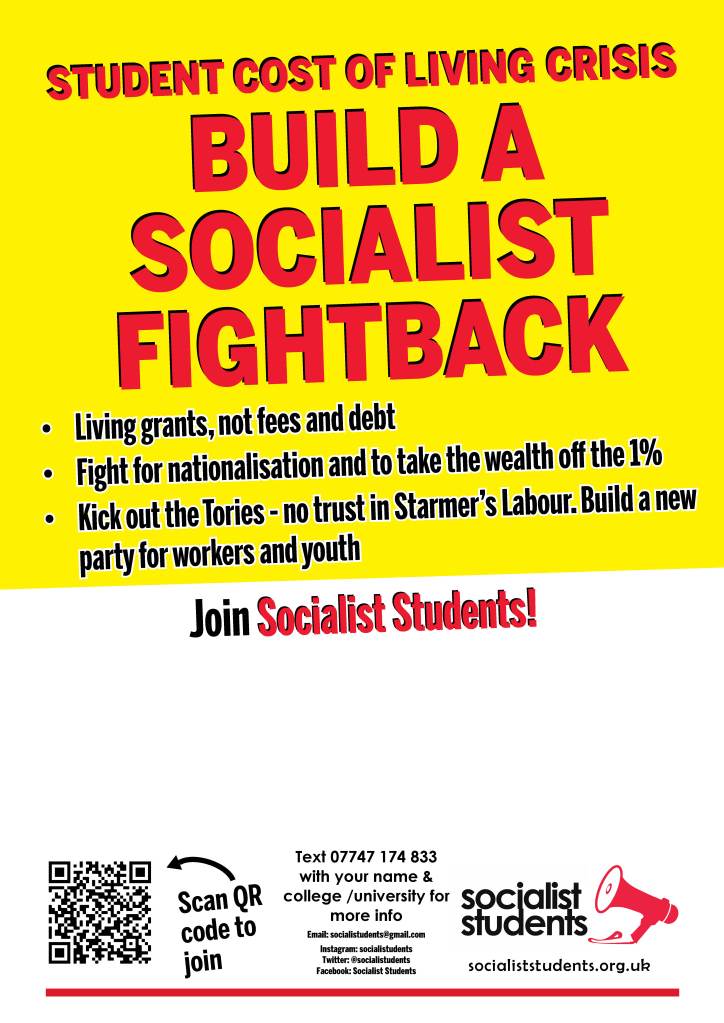
Socialist Students campaigns for students to get organised in a movement of our own – for the scrapping of tuition fees, the writing-off of student debt, the introduction of living maintenance grants, and for universities to be 100% publicly funded by taking the wealth off the super-rich.

Keir Starmer’s Labour Party has abandoned workers and young people, going as far as banning its front-benchers from attending trade union picket lines. Labour wants to be the ‘second eleven’ for the British capitalist class, as reliable representatives of big business, just as they were under Tony Blair.

That’s why Socialist Students supports the building of a new party for workers and young people. We know that important victories can be won through mass campaigns and movements – especially strike action. But we also think that fighting without a political voice is like fighting with one arm tied behind your back. 

Because when trade union leaders call for nationalisation, for example, or the NUS calls for 100% publicly funded education, who can they expect to implement these demands?

A new mass workers’ party could be a voice for workers and young people in parliament and council chambers against the pro-big business politics of all the establishment parties. It could also help coordinate and lead struggles on the streets, in the workplaces, or in schools and universities. It would provide a mass forum for socialists to discuss and debate the way forward for everyone looking to change society.

As socialists, we say that the way forward is socialism, which would mean replacing the anarchic, crisis-ridden system of capitalism with public ownership and democratic workers’ planning of wealth and resources to meet the needs of everyone, instead of the private profits of a tiny minority. 

Capitalism will not be ‘reformed’ into socialism. We need fundamental change – revolution – which means the complete, democratic transfer of economic and social power to the working class and poor in Britain and on a global scale.

For students, the socialist fightback can start on campus. By linking up with university staff and organising now for a decent education, we can prepare ourselves for the struggle for socialism. That’s why you should join Socialist Students this year.

Socialist Students says:

  • Fight for free education – scrap tuition fees, cancel all student debt and introduce living grants for students. Make the 1% pay.
  • No to all job cuts and course closures on campuses. Students should link up with campus trade unions to fight all cuts.
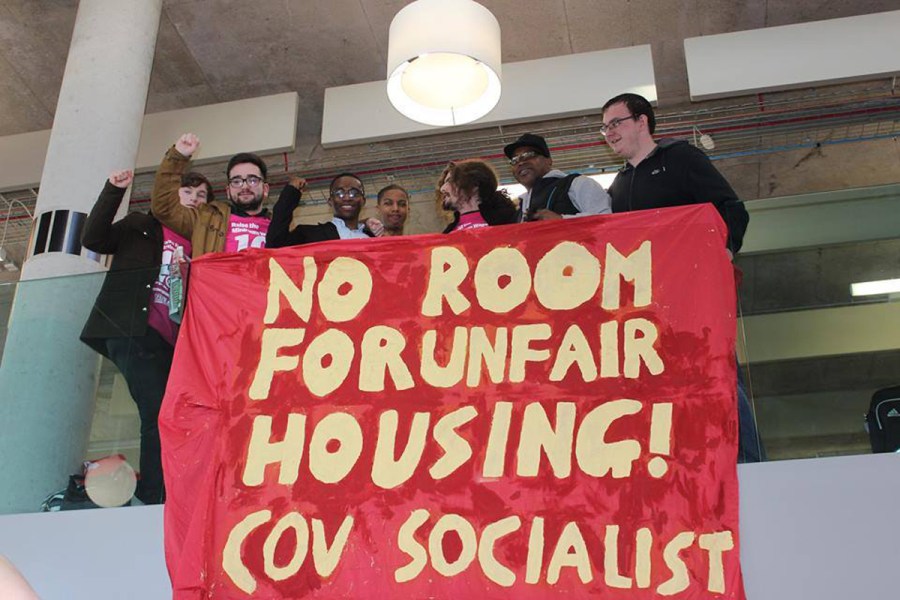
  • For rent controls! Bring all third party halls into ownership and control of the universities, as a step towards democratically set rents, decided on by elected committees including students.
  • Build a national student movement – democratic and active.
  • Make the 1% pay for the cost of living crisis. Nationalise the energy companies under democratic workers’ control and management to cut our energy bills.
  • Build solidarity with workers and young people in struggle across the world.
  • Fight for socialism. For democratic public ownership of major industry and the banks to provide us with a future.

UCU wins landmark victory against casualisation

Duncan Moore, Plymouth Socialist Party and UCU member (personal capacity)

UCU activists in the Open University branch have secured permanent contracts for 4800 teaching staff, the biggest decasualisation victory ever to take place in higher education. 

These staff will now benefit from enhanced job security, a pay uplift of between 10-15%, additional annual leave, and staff development allowances.

Casualisation is now rife across the tertiary education sector, with 46% of universities and 60% of colleges using zero hours contracts to deliver teaching, and 68% of research staff on short term contracts, with many more reliant on short-term funding for their projects. 

University bosses use fixed term contracts to stretch their staff to breaking point, exploiting the competition for the preciously small number of permanent positions by piling on extra teaching and marking responsibilities. The result is a toxic environment for staff, with one in five working up to 16 hours a week over their contracted hours, and most early-career academics having to reapply for their jobs and relocate to other institutions year after year. Little wonder that over half report signs of depression, a report by Education Support found last year. 

This win for OU tutors comes after years of hard negotiations and struggle with the university bosses, with the branch membership growing in size and militancy since the strikes against regional centre closures in 2016. 

Branches across the country can take confidence from this victory to push for the highest possible turnout in the national ballot over pay and conditions, launched today (10/08/2022).

——————————————————————————————————————–

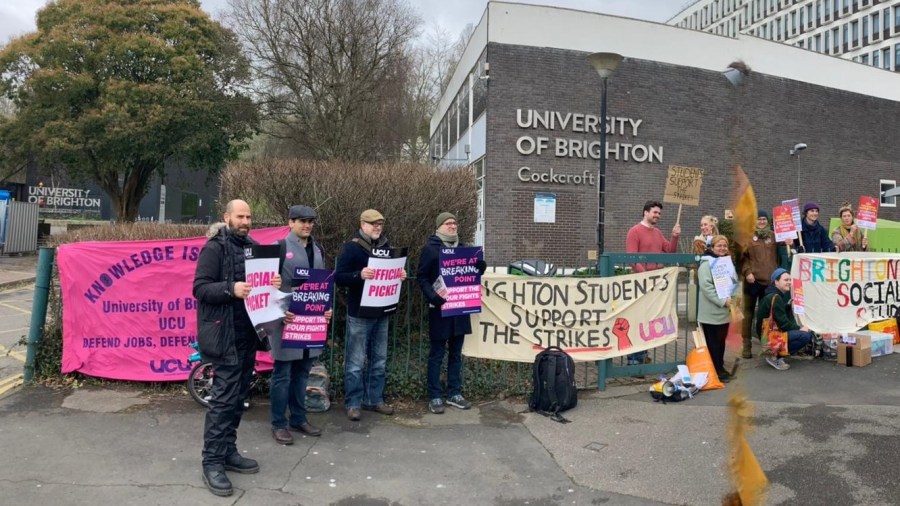
Socialist Students groups will be organising campus meetings next term in solidarity with the UCU, as the union prepares to ballot 80,000 workers at 149 universities next month ahead of potential national strike action in November.

Get in touch to find out how you can organise with Socialist Students to support your local UCU branch in their fight against low wages, overwork, casualisation and discriminatory pay. Join us in the united student-worker fightback against the cost of living crisis and capitalism!

  • No to all job cuts and course closures on campuses. Students should link up with campus trade unions to fight all cuts.
  • Fight for free education – scrap tuition fees, cancel all student debt and introduce living grants for students. Make the 1% pay.
  • Build a national student movement – democratic and active – linked up with the campus trade unions and wider trade union movement.
  • Fight for a socialist alternative to capitalist chaos.
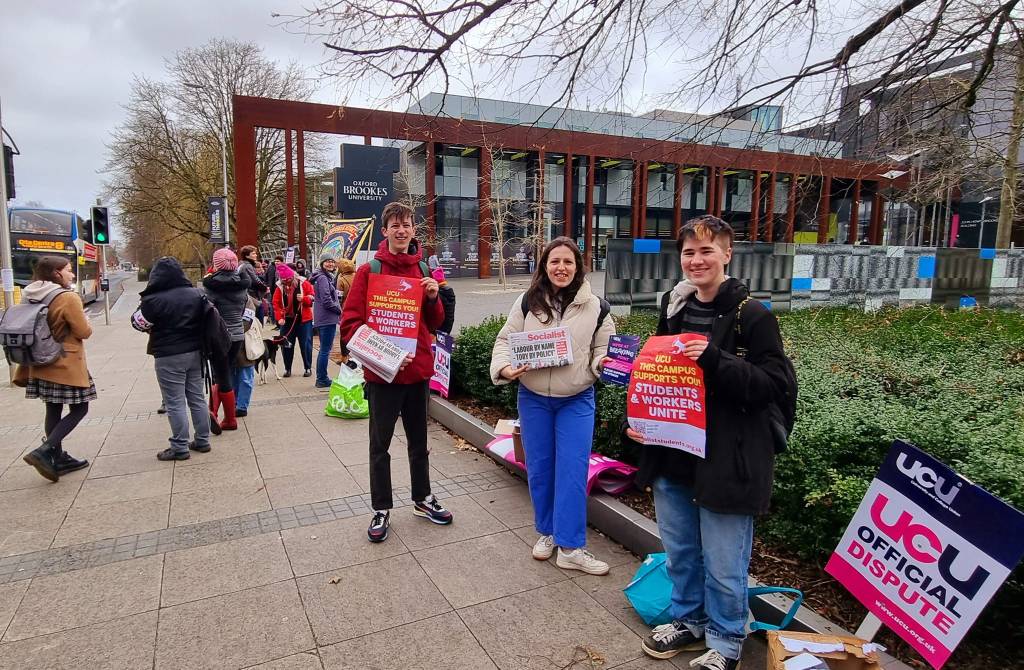
Socialist Students supporting striking UCU staff at Oxford Brookes University in March. Photo: Kris O’Sullivan.

Save English literature at Sheffield Hallam

Jo Hall, English Literature student, Sheffield Hallam

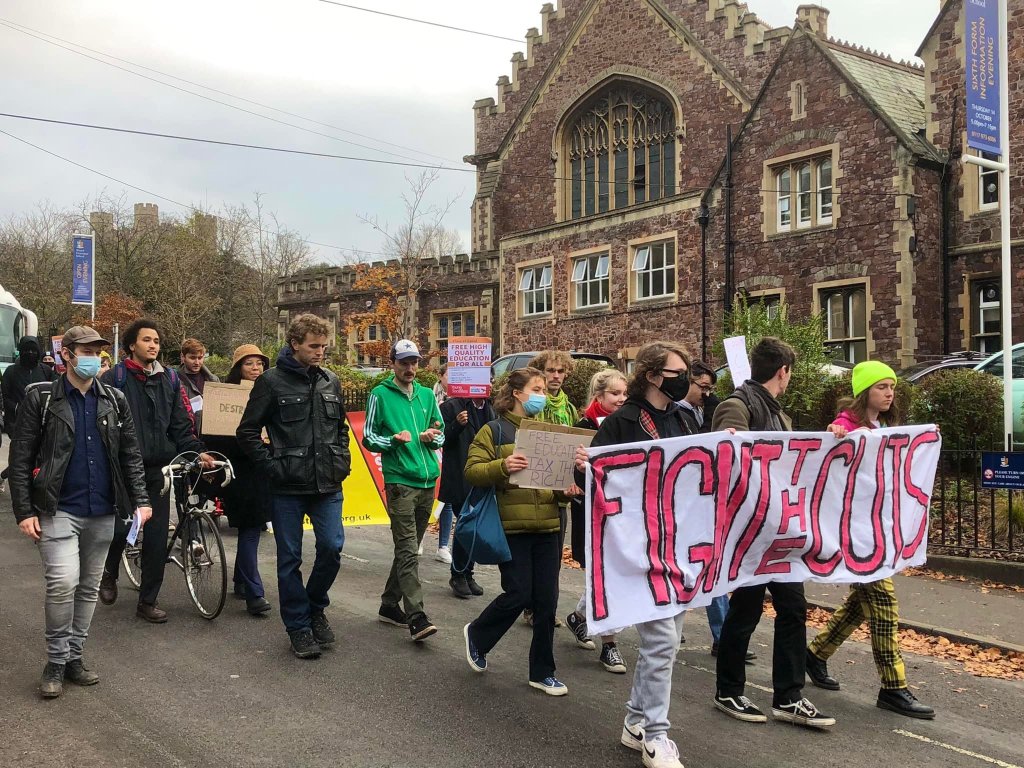
Bristol University students marching against cuts last year

Don’t let Tories scrap my degree and others like it.

Sheffield Hallam University plans to scrap the stand alone English literature course for new entrants in 2023. From then on, it will only be buried in another degree course as a secondary module.

Sheffield Hallam has given no explanation beyond a ‘shake-up’ of how English is taught. This is part of a wider attack on the humanities.

The Tory government is planning new attacks. Universities could face penalties for courses where less than 60% of graduates are in study or professional jobs 15 months after completion.

Dr Mary Peace, an English literature lecturer at Sheffield Hallam, described these cuts as “cultural vandalism… what kind of society will we have if there is no place for people from all social classes and backgrounds to have the chance to read and think?”

The Tories’ Office for Students has threatened to cut funding for ‘low-value’ courses. By ‘value’, they mean what matters to the capitalists.

We face real dangers to education. Limited academic freedom is under attack, with the government’s focus on ‘financial return’. They want to keep the next generation right where they can.

Assault on poor students

This is an assault on working-class arts. Just over 40% of Hallam students are from poor economic backgrounds.

Michelle Donelan has now resigned as Tory education secretary. But when she was in the Tory government, she said: “Courses that do not lead students on to work or further study fail both the students, who pour their time and effort in, and the taxpayer, who picks up a substantial portion of the cost.”

It is true that graduate work for humanities and arts students is low-paid, with many courses under the Tories’ self-imposed thresholds for beginning to pay back student loans. But that is the fault of private companies as well as the government failing to create decent jobs.

Donelan claims certain courses will inevitably result in underemployment. However, it is only inevitable under one context: capitalism, which Donelan and peers want to protect.

The Tory government isn’t interested in education but, rather, what education can do for them – streamlining people into profit-making industries. The Tories don’t want the arts to be for us, despite it often being made by us. They want to keep it an elite pastime, not a legitimate working-class livelihood.

Students – unite with workers to fight the cost of living crisis!

Noah Eden, Sheffield Socialist Students

One in ten students are having to use food banks, according to a recent survey by the National Union of Students (NUS). One in five students can’t afford toiletries, and a further one in ten can’t afford sanitary products when they need them. In June it was also reported that there has been a 3,000% increase in the number of graduates who owe more than £100,000 in student loan debts.

The fact of the matter is simple: student loans aren’t enough to provide students with the money that we need to survive. The average maintenance loan is £5,640 a year – nowhere near enough to cover typical extortionate rents, let alone buy food, energy, travel and the rest.

The NUS survey found that a third of students are being forced to live on less than £50 a month because of rent and bills, leaving many students unable to carry out proper weekly food shops and not being able to afford to travel into university.

Many of us take minimum wage jobs with dodgy contracts at the same time as being expected to carry out a ‘full-time’ degree.

The NUS has called on the government to provide a cost-of-living support package for students, and for maintenance loans and the apprentice minimum wage to be brought into line with the ‘National Living Wage’ – just £6.83 an hour for 18 to 20-year-olds, and £4.81 for under-18s.

But we need to go further than that. Demanding a decent living grant for all students is necessary, and could be linked to low-paid workers also struggling for a £15-an-hour minimum wage. But an increase in maintenance payments for students cannot be funded by simply plunging us further into debt. We must fight for maintenance grants, not loans! We also need to outline how it can be fought for and won. With the ongoing summer of workers’ strikes, and further strikes looking likely in the autumn, why doesn’t the NUS build on the March student demo, and organise students to take to the streets alongside striking workers? To bring together the fight for a £15-an-hour minimum wage, an end to zero-hour contracts and right for everyone to be able to attend university without the fear of a lifetime of financial burden.