Socialist Students statement: Tory hypocrites clamp down on students’ right to discuss Palestinian liberation

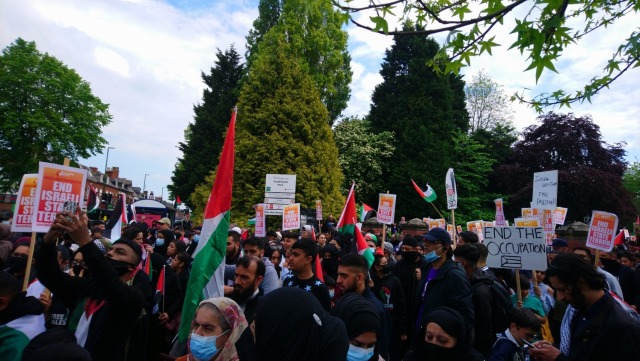
Tory education secretary Gillian Keegan has called on universities to clamp down on students and student societies seen to express support for Hamas, the party that has positioned itself as leading the resistance to the blockade and occupation in Gaza.

This follows Tory Home Secretary Suella Braverman’s statement to police chiefs that public flying of the Palestinian flag “may not be legitimate”, calling on police officers to use “the full force of the law” against shows of support for Hamas. 

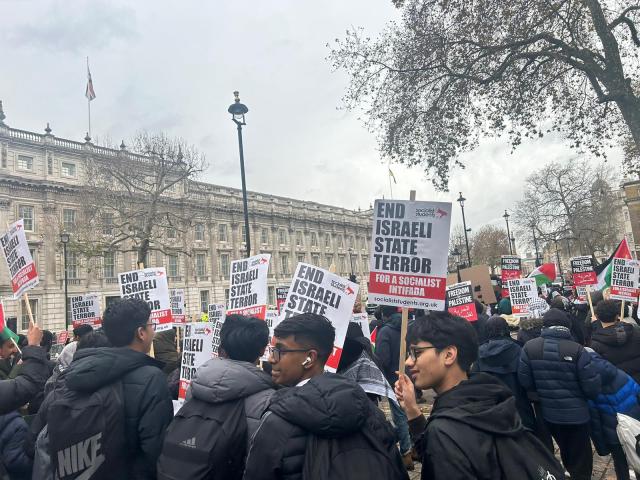
Socialist Students defends the right of students to discuss and debate the way forward for Palestinian liberation, without fear of punishment or surveillance. We do not think that a Hamas-led military offensive can be a substitute for the mass struggle of the Palestinians, under their own democratic control, which is necessary to end their oppression. But we think that students should have the right to discuss this question and others. 

Why is it acceptable, meanwhile, for pro-capitalist politicians to express support for the Israeli government, which has also killed over a thousand people in Gaza, using methods of mass military terror, and has cut off the supply of water, fuel, power, food and medicine to millions of people? The hypocrisy is nauseating. 

These are hypocritical and divisive moves by the Tories, designed to suppress criticism of the Israeli state, including its vicious oppression of Palestinians. 

Already there have been thousands killed in horrific circumstances on both sides of the border in the last week. Socialist Students gives no support to the killing of Israeli civilians. But we must also be clear on the root cause of this bloodshed: the brutal occupation and oppression of Palestinians over generations. 

Over two million Palestinians are trapped in the poverty-stricken Gaza strip, suffering regular raids and killings by Israeli forces. They live at the mercy of an Israeli state with one of the strongest military apparatuses in the world, with the most reactionary government in its history. We support the right of the Palestinian masses to defend themselves against the brutal onslaught they face and to struggle for Palestinian liberation. We say that this struggle must be linked to the struggle for socialist change within Palestine, Israel and across the Middle East. 

Socialist Students will continue to hold meetings in universities around the UK, putting forward what organisation, programme and tactics are really needed to end the exploitation and oppression of the Palestinians, and to fight for socialism in Palestine, Israel and internationally. If you are interested, message the page to get in touch with your local Socialist Students group. 

Socialist Students says:

  • Stop the war on Gaza! For the immediate withdrawal of the Israeli military from the occupied territories
  • For democratically-organised defence committees in local communities
  • For a mass struggle of the Palestinians, under their own democratic control, to fight for liberation
  • For the building of independent workers’ parties in Palestine and Israel, and links between them
  • For an independent, socialist Palestinian state, alongside a socialist Israel, with two capitals in Jerusalem and guaranteed democratic rights for all minorities, as part of the struggle for a socialist Middle East

Revolution! What happened in Russia and China?

Mila Hughes
Coventry Socialist Students

As the capitalist system continues to lumber from crisis to crisis, with many countries plagued by inflation, poverty, and war, there has been a renewed interest in the two most significant events from human history that saw the complete overthrow of capitalism and landlordism by huge mass movements – the Russian and Chinese Revolutions of 1917 and 1949. From studying the huge achievements of these two revolutions – and the reasons for the bureaucratic dictatorships that ultimately arose from them – we can draw many lessons which are vital to guiding today’s movements for socialist change.

Russia 1905-1917: A workers’ uprising

The seeds of the 1917 revolution started in the revolutionary events of 1905. After Russia’s defeat in the Russo-Japanese war of 1904-05, mass political unrest and a strike wave led by the working class spread across the Russian Empire. This was against the Tsar and the ruling class which maintained an oppressive feudal regime with no room for workers’ or peasants’ representation.

During the course of the revolution, workers in struggle created ‘soviets’ – democratic councils of workers and soldiers – to democratically discuss the key issues and tactics of the struggle. Although the 1905 revolution failed to overthrow Tsarism, the experiences of the 1905 revolution were important in demonstrating the power and centrality of the working class in the fight against capitalism. Lenin and Trotsky would later refer to 1905 as the ‘dress rehearsal’ for the 1917 revolution.

12 years later in February 1917, women workers walked out of their factories on International Women’s Day protesting against Russia’s involvement in the slaughter of the First World War and against food shortages. They were soon joined by thousands of other workers, who extended their appeals to soldiers and sailors to join them.

The February revolution forced the Tsar to abdicate. A Provisional Government was established which governed Russia in the interests of the small capitalist class, promising full elections at a later date. Unlike the soviets which had reemerged over the course of the February revolution, the Provisional Government was unelected and quickly shown to be unable to solve the basic questions facing the Russian working class and masses.

The capitalist class in Russia delivered nothing for the working class, who had been the key force in achieving the February overturn. Russia’s involvement in the war dragged on. Food prices continued to increase while wages collapsed. Meanwhile, the weak and small capitalist class – in Vladimir Lenin’s words “tied to Tsarism by a thousand threads” – was unable to play a politically independent role and deliver land reform for the peasantry.

By October 1917 the soviets, democratically representing the Russian working class, were firmly won over to the Bolsheviks through the slogan of ‘bread, peace and land’, alongside the Bolsheviks’ tireless campaigning to put the working class at the head of the struggle to transform society. After leading the defence against an attempted reactionary military coup in August, the soviets, now led by the Bolshevik party, organised a mass revolutionary capture of power known as the October Revolution.

October 1917 marked the first time in human history that the working class took political power into its own hands and laid the basis of a new socialist society. The banks, monopolies, major industry and land were all taken into democratic workers’ control and management and, for the first time ever, the majority democratically planned society’s resources to meet the needs of all.


Under the new workers’ government all decision-making was done through democratically elected regional and national soviets (councils of workers, peasants and soldiers). Representatives were paid an average worker’s wage and subject to instant recall at any time by those who elected them.
Russia was quickly taken out of the First World War to the jubilation of millions. The example of the revolution was internationally contagious. London dock workers refused to load armaments meant to be deployed against Russia and revolution swept Europe.

Vladimir Lenin and Leon Trotsky – the leaders of the October 1917 revolution – understood that the fate of the Russian revolution was inexorably tied up with the success of socialist revolutions internationally, particularly in the advanced capitalist economies of the West. That’s why, despite invasion, civil war and food and resource shortages, the Bolsheviks organised the first conference of the new Communist International to bring together the different socialist groups around the world to spread the revolution.
But Russia at this stage was still an extremely poor, undeveloped country. Economic isolation, the destruction of the First World War and the violent intervention by foreign capitalist armies to crush the Russian working class added to the bitter conditions.

The defeats of revolution in Europe, particularly in Germany, primarily because of the lack of a revolutionary party of the calibre of the Bolsheviks, added further to the economic and political isolation of the Russian Revolution. As shortages continued, and hundreds of thousands of workers and Bolshevik leaders perished as a result of the civil war, a bureaucracy developed within Russia with Stalin at its head which, although it ultimately rested on the nationalised planned economy, increasingly undermined and eventually destroyed workers’ democracy.

But none of this happened without a struggle. In 1923, Trotsky’s Left Opposition was established to fight this growing bureaucratisation and to continue the fight for international revolution and workers’ democracy.

China 1949: Tainted from the start

Stalin’s direction and policies at the time resulted in disasters for the working class internationally. This included in the revolutionary events which developed in China.

Like in Russia, the vast majority of the population in 1920s China were peasants, with huge urban and industrialised centres in the East. In 1925, revolutionary events erupted as the working class in the urban centres of Shanghai, Guangdong, and Wuhan rose up against landlordism and capitalism. Trotsky put forward that only the working class acting politically independently from the capitalists could lead the masses, including the numerically massive peasantry, in a successful socialist revolution.

Instead, under the direction of the now Stalinist-led Comintern, the Chinese Communist Party (CCP), entered an alliance with the nationalist Kuomintang (KMT) party to fight against the remaining forces of the old feudal regime in China.

This mistake proved fatal for the Chinese working class. In 1926, the KMT massacred striking workers in Canton, including 30,000 CCP members, and established a military dictatorship. After this setback, the CCP made a conscious turn away from the working class and instead based itself increasingly on the peasantry. By 1930, the percentage of party membership that were workers had dropped massively.

Chinese revolutionary and Trotskyist, Chen Duxiu

The Comintern meanwhile didn’t recognise this defeat until 1928. When it did, it pointed the finger at the CCP leaders, mainly Chen Duxiu – who had opposed the merger with the KMT and later became a co-thinker and supporter of Trotsky and the Left Opposition.

The Russian Revolution had been successful because of the existence of a revolutionary party – the Bolsheviks – with a programme and methods to fight for socialist transformation, which recognised the centrality of the working class in fighting for socialist change.

No such clear-sighted party or leadership existed in China. The leaders of the CCP politically took their line from Stalin and the bureaucracy in Russia. They were petrified of a genuine socialist regime of workers’ democracy being established on their doorstep, lest it gave confidence to the Russian working class to overthrow the bureaucracy in Russia. Stalin and his acolytes sought to use the Comintern not to spread socialist revolution internationally, as Lenin and Trotsky fought to, but to temper the revolutionary processes which were unfolding within China to protect their power and privileges at home.

In 1949 the CCP defeated the KMT in the civil war, thus marking the beginning of the overthrow of capitalism and landlordism across China. The lack of trust that the CCP leaders had in the working class and their focus on the peasantry inevitably led to the bureaucratic character of the regime produced by the revolution in China. Mao Zedong, leader of the Red Army and CCP president at the time, was a self-proclaimed ‘Stalinist’, modelling the revolution on the bureaucratic planned economies of Stalinism.

While the Russian Revolution degenerated in isolation after the failure of revolutions internationally, the Chinese revolution of 1949 was bureaucratically tainted from the start.

Despite the absence of democratic workers’ control of the economy, the new planned economy gave a small glimpse of what could have been possible under genuine democratic workers’ control. Land was redistributed to the peasants. Social security in employment and housing were introduced for Chinese workers. Arranged marriages were banned and literacy skyrocketed. Industrial production expanded at a rate greater than that of any other Asian country at the time.


Socialism needs democracy like the human body needs oxygen, Trotsky once wrote. In the 70s, after Mao’s death, as the zig-zag policies of the bureaucracy continued to hamper the further development of the planned economy in China, the CCP turned increasingly towards the market to try and further stimulate the Chinese economy, and gradually reintroduced more and more elements of capitalism into society. In modern China the planned economy has for the most part been dismantled, although the authoritarian CCP still attempts to maintain a firm grip over the direction of the economy and the activity of private companies.

In Russia, following Lenin’s death in 1923, the growing bureaucracy organised around Stalin used brutal methods to maintain power, annihilating the Left Opposition and the original leaders of the October revolution, including the murder of Trotsky in Mexico in 1940. Stalin created a ‘river of blood’ between his regime and the October 1917 revolution.

Nonetheless, despite the crushing of workers’ democracy by the Stalinist counter-revolution within Russia, the fundamental gains of the October revolution – the nationalised planned economy – continued to exist, right up until Stalinism collapsed under the weight of the parasitic bureaucracy in the 1990s.

Both the Russian and the Chinese revolutions provide invaluable lessons for socialists in 2023 fighting to consign the barbarity of capitalism to history and to build genuine socialism in Britain and across the world.


Get the latest issue of Socialist Student, the magazine of Socialist Students, to read this article and more. Written and edited by members of Socialist Students.

Available from our resources page, or to purchase from your local Socialist Students group

Chile: revolution and counter-revolution

Lluís Bertolin
Birmingham Socialist Students

The events of Chile 1970-73 are the memory of a faded hope, a what-could-have-been, a series of events littered with lessons and inspiration. The tale of Salvador Allende´s presidency is a cautionary one; it reminds us that one cannot pluck the nails from the tiger of capitalism one at a time, and that the capitalists will take every concession and opportunity to defeat any alternative to the regimes they back. Allende´s Chile shows how much can be accomplished through struggle, workers’ self-consciousness and coordination, and how much can be lost by wavering leaderships, stageist approaches, and an unwillingness to stand your ground and fight back without accommodations to the bourgeoisie. As I heard a Chilean once say: “September is always Allende´s month”, the month of his election and the month of his downfall.

Chile and the world in the 1960s

Internationally the 1960s were a period of upheaval among the working class and youth globally, including the civil rights movement in America and the events of France in 1968, but also the 1968 movement in Pakistan against the dictatorship.

In Chile this mood for revolt found fertile soil. Since the 1920s workers’ parties had sprung up in Chile, and the country had a long tradition of workers’ organisations. Two of them were the very Stalinised Communist Party (which at that time advocated for the need for capitalist development before a socialist one was possible) and the Socialist Party (which had a programme for workers’ revolution). By 1958 already a coalition which included these left-wing parties and which would eventually become Unidad Popular (Popular Unity, UP), led by Salvador Allende, almost won the presidential elections, much to the horror of the capitalists.

By 1969 the conjunction of an economic crisis, the failed attempts of the Christian Democracy government to enact land reforms, and episodes of harsh police repression, such as the massacre of Puerto Montt, galvanised the masses and threw all parties, left and right, into a crisis. It got to the point where a section of Christian Democracy split to join Allende´s coalition! But UP was also in turmoil. The Socialist Party underwent its own split, with its left-wing leaving. A symptom of this turmoil between moderates and proper revolutionaries can be seen in the committee meeting that appointed Allende (a part of the more moderate faction and a compromise candidate): there were 12 votes in favour and 13 abstentions.

Allende’s victory in the presidential election of September of 1970 came as a shock to everyone. The moment of truth had arrived. Would Allende be able to empower the working class and lead a truly unprecedented road to socialism in Latin America? Or would he fail and be swept away amongst broken promises and dashed hopes? Reality can be a complex thing sometimes, and it was the case in Allende´s Chile that both scenarios became true simultaneously.

The reforms of Popular Unity

We cannot underestimate the impact and importance of the reforms that Allende and the UP implemented: free milk in schools, pensions increased, price controls; a sweeping programme of nationalisation in which the government took control of private industries; ironworks, the textile industry, telecommunications, banking, and the very important copper-mining industry, all nationalised. If the US companies that had owned and monopolised these industries were scared before, now they were in full-on panic mode.

Around the world, many had their eyes on Chile. The working class saw Chile as a beacon of hope, and a glimpse of what could be won in their own countries. American corporations that had seen their investments suffer after the reforms of UP also watched. And these eyes were attached to hands that would not stay idle. Already in 1970 the CIA had unsuccessfully attempted to stop Allende assuming the presidency. Now it was just a matter, they reasoned, of turning the dial up.

US intervention to oust Allende and reassert itself on the Chilean working class and economy began subtly, before acquiring a more overt and threatening nature. Chilean students were invited to study in Chicago under free-market guru Milton Freedman in order to create an ‘economic vanguard’ inside the country. Then they tried to use the Chilean parliament to block reforms. When that did not work, they tried unsuccessfully to impeach Allende.

US President Richard Nixon’s next step was clear; it was time to get violent and “make the economy scream.” An embargo was declared and US funding was poured into destabilising the Chilean economy. Not content with that, in June 1973 the US helped organise a coup against Allende, the ‘Tancazo’, which failed.

But in front of all these attacks, the working class didn’t stay passive. Not only did support for Allende rise during his tenure, but workers realised they needed to do everything possible to defend their gains from the Chilean right-wing and US imperialism, including truly revolutionary measures.

Workers began organising into the Cordones Industriales (industrial belts), meetings of elected delegates from the factories, set up from below and linked to one another. The activity of the Cordones was truly revolutionary: they took control of factories and workplaces, organised food distribution to prevent speculation, and led defence squads against the fascist paramilitary of Patria y Libertad.

Soon the Cordones developed their own political programme independent of the parties: they supported Allende conditionally, insofar as he carried out the will of the mobilised masses, and called for the expropriation of all monopolies, the introduction of workers’ control to the whole of the economy, wage increases, land expropriation, and a popular assembly to replace the Chilean parliament. The political independence of the Cordones and their autonomy worried the parties constituting the UP.

Wavering leadership

Despite being the architects of these massive reforms, the constituent parties of UP made very serious mistakes that would prove fatal. The leaders of the UP feared the politically conscious and independent Cordones, and moved to suppress them, despite their being the main strength defending the government and reforms. The reason for this suppression was the policy of the UP to try to secure itself by reaching deals and agreements with the bourgeoisie, erroneously believing there to be a ‘left-wing’ current amongst the ruling class that could be appealed to.

But the more left-wing elements of UP also made very serious strategical mistakes. They failed to reach out and appeal to rank-and-file soldiers. There were bases of support already there, and many more could have been won over to the revolutionary movement, with the potential to act as a firewall against the events that actually came to pass.

The coup and its aftermath

Allende unwittingly signed his own execution very early on into his tenure, promising not to touch the top army officials, nor to move against the armed forces. This promise, loyally fulfilled, would allow this same army to move against Allende and the working class.

The build-up to the coup was anything but secretive. Everybody knew another coup, again with US support, was coming. Just a week before the coup there were huge demonstrations of workers demanding that Allende arm the working class to defend against a potential coup. But despite this, there was a complete lack of preparations on the part of the government and the UP parties to defend themselves from the coup.

Quite the contrary, Allende tried to appease the potential plotters, unwittingly making them more influential and powerful. The coup had to deal with a part of the army, which was in favour of Allende and tried to blow the whistle on the coup. Allende abandoned them to appease the top brass. These whistleblowers were court-martialled and executed. When the coup happened its leader, Augusto Pinochet, was a minister, appointed by Allende himself!

The 11th of September coup that brought down Allende´s government was a terrible sight to see. Pinochet applied a shock-and-awe policy in militarily seizing a country that had historically been politically stable. The workers, who were left isolated, unarmed, and deprived of leadership, were not able to stop the coup.

The repression of the Pinochet regime was clinical and targeted, and included tortures, mass imprisonments and summary executions. The beacon of light of Chile turned into a well of darkness, with a brutal application of neoliberal policies throughout the 1970s and 80s, including removal of price controls, privatisation, and spending cuts.

Chile, ‘Democracy’ Restored cartoon, Alan Hardman, 14 September 1973

Lessons for the future

The experience of Chile under Allende is forever etched into the collective memory of the Chilean working class and socialists around the world. The question is what lessons to draw from it.

It should be clear that UP, notwithstanding their important reforms, failed in walking the walk after talking the talk. No matter how revolutionary your pamphlets are, in certain historical moments what is needed are deeds and decisive action. When the Cordones provided such action and such deeds, they were opposed. Socialist parties must act as conduits for the aspirations and interests of the working class, and when the working class is self-conscious enough to launch itself into revolutionary struggle, it is a fatal mistake to try to contain them.

Another lesson is that one cannot wrestle control from the ruling class one measure at a time. The ruling class had to have all their power and control removed for the reforms of the UP to be defended and expanded.

Allende learned all too late that in the fight to transform society, compromise with the ruling class is impossible, and when conditions favour them, they will attack and in one fell swoop demolish all the work that has been done.

The ruthlesness of the ruling class in defending their rule and system has been demonstrated time and time again throughout history. Even the recent driving out of Jeremy Corbyn from the Labour Party in Britain is an example.

If we do not learn from the lessons of the past, we shall always be at the mercy of those who do. 50 years on, the events of Chile ought to be in the heads of anyone wishing to get rid of capitalism and move on into a socialist world. However, Chile also showed the enormous power and determination of the working class to change society once it moves into action, and the opportunities which will open up to fight for socialist change in the 21st century.


Get the latest issue of Socialist Student, the magazine of Socialist Students, to read this article and more. Written and edited by members of Socialist Students.

Available from our resources page, or to purchase from your local Socialist Students group

Fighting for socialist ideas on campus: Freshers reports 2023

Read the latest reports from Socialist Students at freshers fairs around the UK


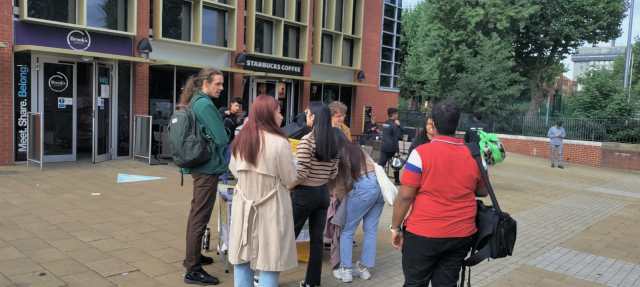
Students approached us to discuss the issues facing them, responding to our slogans of ‘join the socialists’, ‘Tories out’, and ‘fight the cost-of-living crisis’.

Hertfordshire University has a lot of working-class students. We met students struggling with the cost of living, especially soaring rents.

One student spoke to us about the unreliable bus service between campus and the nearest town, Hatfield. More and more students are forced to rely on this service to commute into university, as student accommodation on campus is increasingly scarce and expensive.

Another student said he had no choice but to travel into campus by car from his parents’ house in London. Adding salt to the wound, he also now has to pay a £12.50 Ulez charge to make the journey every day.

This student explained that he is in favour of tackling air pollution, but opposes measures that punish working-class drivers, who are less able to afford newer, regulations-compliant vehicles.

Many students connected the issues they face day to day to the system of capitalism, and the need for a socialist alternative. One student said that she had “found her people” when she saw that we were socialists. 20 students left their details to get involved.

At our first informal meeting later that day, we agreed to hold regular political discussions on campus, combined with weekly campaign stalls on issues like public transport and housing.

The new Hertfordshire Socialist Students group will attend a protest on the housing crisis on 28 October, joining other Socialist Students groups from across London. We also made plans to get a group along to Socialism 2023 in November.


Nick Davies

We handed out 300 leaflets, and filled out every Socialist Students sign-up sheet we had. Some of the best conversations I had were with international students, curious about what was happening in this country, and linking it to their own experience.

Students were responsive to calls for free education, and inflation-proof maintenance grants for all. Many brought up their distrust of Labour leader Keir Starmer, recognising the need for real opposition on the left.


Adam Gillman

There was a lot of concern with the rents and cost of living. Less than a week at the university, and they already were feeling like they couldn’t pay the bills. The main issue that all the students were concerned about was their university debt, and how they were going to have to pay it off.

Lots of students were demoralised with what Labour is offering, and talked about how there needs to be a new party. We linked this to the idea of the trade unions standing their own candidates at the next general election, as a step towards a new party.

We gained 30 people interested in Socialist Students.


The main concerns on campus are the housing crisis, and the repayment of student loan debt after graduation.

Many of the students that we spoke with have to work while studying full time, in order to survive. Student loans just aren’t enough anymore. On top of this, there’s the fear of paying back these loans with interest on a salary too low to live on in London.

We got 70 names and phone numbers of people interested in Socialist Students.

Socialist Students is planning to campaign against the housing crisis on campus, including supporting London Socialist Party’s public meeting and protest. 


Louie Fulton

The question “what is socialism?” was asked a lot. When we explained, most agreed that a mass workers’ movement is needed and that they would like to see a socialist society in the future.

One international student from the US explained to me how the costs work for international students. £22,000 was the cost of tuition, with an additional £3,000 for the visa.

They still have to pay for rent and living costs on top! All this is paid for with a personal loan back in the US, as they do not even have access to the British student finance system.

This student is now stuck working two jobs. One in the UK as a server, and one in the US, providing IT support to a healthcare company.

Many students strongly feel that Labour no longer represents them. They feel lost for political representation.

Some are considering voting Green as they see them as the only viable alternative to Labour. We made the case for a party based on the working class, where the trade unions could stand their own candidates, for example.

One student said about freshers week: “This is way too commercial”. Another student, who said that they felt “advertised to”, bought a Socialist paper and a Socialist Student magazine

Their idea of freshers week was socialising, meeting friends and getting drunk. But they had corporate sponsors trying to sell them stuff constantly.

We collected almost 100 names of people interested in Socialist Students.


123 have signed up for Socialist Students. 37 from Nigeria, and large numbers from south Asia too.

The big increase reflects the severity of the capitalist global economic crisis, particularly in the neocolonial world. Many from Nigeria have spent their life savings – and their families’ – to be here, and now are searching for scarce well-paid, part-time jobs.

Our first campaigning activity after freshers was attending a picket line in support of striking lecturers – who are fighting casualisation and increased unpaid workloads. They welcomed our support.

The new USW Trefforest Socialist Students group has already held four meet-ups, and taken a carload down to a Socialist Students meeting in Cardiff too.

Next we’re considering campaigns to nationalise public transport in Wales to win fairer fairs, and also in solidarity with Nigerian workers and youth fighting back against extreme poverty.


Ruby Kent

Freshers had an influx of students angry about the cost-of-living crisis that the Tory government has put us in, and the ridiculously low quality of life that this has left for students. This led to a successful Socialist Students meet and greet.

We’re supporting lecturers on strike, and campaigning against things like the extortionate price of student housing, owned by private landlords benefiting at our expense.

With our first meetings under way, students have an opportunity to have their voices heard. The Tories and Labour have no plans to scrap tuition fees, and plan to continue privatising education.


Seamus Smyth

Students are excited about new experiences at university, and angry knowing how hard students will suffer during this crisis. In the first two hours of our stall, 28 students were interested in campaigning against the student cost-of-living crisis.

It’s clear who they blame for this crisis. Students want the Tories out, but they don’t trust Starmer and the Labour Party.

Students we spoke to know that the Tories and Labour are two sides of the same coin. And today’s young people increasingly want to see socialist change in society.


Harriett McCormick

Many people shouted our slogans back at us in support, whilst walking to their lectures – particularly removing the Tories. Even though our stalls informing young people about Socialist Students were plagued with heavy rain, wind and security, we managed to get 32 new sign-ups.

We had in-depth conversations with passersby, who were either supportive or curious about our group. We even had conversations, and handed out material, to the workers on the Dominos and nightclub stalls.

Ten people attended our first meeting. And our discussion was very international.

The University of Birmingham has a high number of international students. And, unlike previous years, three-quarters of the new attendees at the meeting were international students.

Chinese students attending had first-hand experience of a repressive regime calling itself ‘communist’. They provided a unique insight, and shared their experience of political organisation in their country.

A Canadian student at the meeting pointed out that students from both Britain and around the world have a great opportunity to learn from each other this university year. Through Socialist Students, we will foster greater international solidarity.


Noah Eden

Young people are fed up with this current government, and the capitalist system as a whole. We have been campaigning in the streets and on the campuses, talking with the youth and students about socialist ideas.

One of the key shifts in the mood compared to last year is the feelings towards Keir Starmer’s Labour Party. Last year, the majority of students felt a complete sense of apathy towards him.

That sense of apathy has turned into disdain and anger. On countless occasions he has gone back on Jeremy Corbyn’s pledges to better the lives of young people.

This mood was reflected in our very successful first Socialist Students meeting, attended by 50 people. The discussion focused largely on the need for a new mass workers’ party, and how it can be achieved.

Many of the first-time attendees were keen to get involved with further action, indicating interest in helping out at campaign stalls, and coming to support striking workers on picket lines.

In Sheffield, Socialist Students is the only student organisation calling for a new workers’ party. So it’s important that we get out there and meet new people to build for this alternative, uniting students and workers to overthrow capitalism.


Ali Mansfield

Many young people, sick of the dead end offered by capitalism and its representatives in all major parties, are now turning to socialist ideas to offer hope for the future. 80 people signed up to Socialist Students.

Many more have already started to draw socialist conclusions, and are keen to translate this into action. The importance placed by Socialist Students on campaigning and linking up with the wider workers’ movement was extremely welcome to many of those looking to get involved.

Over the next few weeks, we will be holding discussions on Marxist theory, revolutionary history, current events in Britain and internationally, and the relevance of all these for the day-to-day issues faced by young people.

We hope to carry this enthusiasm forward, and reach out to even more people looking to join the socialist fightback.


Dean Young and Conor O’Neill

Labour leader Keir Starmer was recently asked in a Q&A by a sixth-form student, presumably preparing to go to university in the near future, whether he would consider abolishing tuition fees or student loans. After all, this was one of Starmer’s ten pledges, when he ran for Labour leader, therefore it is a rational question.

Starmer’s response won’t surprise you. “It is impossible”, and “we cannot afford it”. By ‘we’, Starmer is taking about the capitalist class, who quite enjoy the benefits of the marketisation of higher education.

The Conservative Party and the capitalist system offer nothing for young people. And Starmer is showing that Labour doesn’t either.

It is worth remembering that it was the Labour government, under Tony Blair, who Starmer models his philosophy on, that first introduced tuition fees in 1997.

Students that get lower-paid jobs after attending university, can expect to be in debt until at least their mid-50s.

Socialist Students is building on our growth and success from last year. At the University of Liverpool, student walkouts and ‘solidarity pickets’ were important in supporting ongoing strike action by the University and College Union (UCU).

Our ‘night bus’ campaign has now been official adopted by the University of Liverpool guild (student union).

Socialist Students fights for free education and the rights of working-class students. And at our meetings, we’ll also be discussing the revolutionary ideas of Marx, Engels, Lenin and Trotsky.


Salford – loans barely scratch surface

Sam Hey

After the historic strike wave, this year’s freshers seemed more political than previous. A popular topic of conversation was maintenance loans, barely meeting the cost of rents, if at all.

Most students I spoke with were having to work alongside their studies. When I asked one if they think it will affect their university work, they responded: “I don’t really have much choice”.

I was impressed by the number of students who came up to our campaign stall that had an understanding of socialism already in their mind. This provided us with a great opportunity to speak about our programme and what we stand for.

Our next student meeting is on capitalism and the climate emergency, a subject highlighted by the students as something they care about.


Dundee – defying undemocratic order, with support from workers

Wando Frank

A big thank you to Unite the Union members at Dundee University for refusing to comply with requests to remove Socialist Students from campus during the freshers fair.

We were out campaigning in support of striking staff. But student union management tried to get us removed, and called security, after we refused on democratic grounds.

I know the security guard a bit from previous picket lines. I explained that we were leafleting students, trying to get them to support the strike, and join their staff on the picket lines, as well as encouraging young people to join Unite.

He told the student union management that he wasn’t prepared to remove us from campus, telling other security guards to stand down. In the end, all we had to do was move our table slightly.


Coventry and Birmingham City – students want Tories out

Max McGee

At Coventry and Birmingham City universities, Socialist Students collected almost 100 names on lively stalls, meeting those who seek a socialist way forward. Students are worried about the loan repayment threshold being lowered, and that rent and living costs outstrip loans.

Students in insecure work, others living precariously one research grant to the next, and lecturers in the University and College Union (UCU) all signed the petitions on our stall. They all commented on the ‘race to the bottom’ that had chased them since starting work as young teenagers.

One student agreed that working while studying impacts on results in the short term, and long-term life quality. Another student said that he was concerned about the devaluing of degrees through student debt, that he and many others had considered dropping out, or taking apprenticeships instead.

Socialist Students campaign stalls and meetings are just some of the things we do. We’re building Socialist Students groups on campuses. And going down to support striking workers on picket lines too.

Students want the Tories out. But many have no faith in the pro-austerity Labour Party, having already reneged on its commitments on free education and climate action.

Many students feel drained from poor-quality privatised education, and are seething from the audacity of board members raking in salaries of over £200,000, while students suffer black-mould accommodation. And their teachers are not much better off.

In Birmingham, the Labour council has been declared bankrupt after spending years trying to break workers’ strikes and cut local services. We say students and workers should link up to coordinate action against the bosses.


Birmingham City – weight of uni fees and lack of housing

U’Semu Makaya

We worked hard to put the word out about Socialist Students. 71 students expressed their interest in Socialist Students across the week, with 14 people coming to our first meetings.

Common grievances discussed at our campaign stalls included the exponential weight of university fees, the availability of student housing, or rather lack of it, and worries about lack of security and agency in future workplaces.

With issues like the student loan repayment plan continuing to plague universities, Socialist Students will continue to reach out to students. And we will work towards strengthening the fight against exploitation by the vicious market that education has been allowed to become.


Leeds Beckett – how can we drive Tories out?

Iain Dalton

A dozen students left their contact details to find out more about Socialist Students, before it started raining. While more students took our leaflets, asked us to explain what we mean by socialism, or how we can drive all the Tories from power – blue and red.

TORIES OUT! But how can students and young people continue the struggle under a Labour government?

Theo Sharieff
Socialist Students national organiser

World capitalism in 2023 finds itself trapped in a new era of economic, social and political instability. The cost-of-living crisis has seen the living standards of millions fall as the owners of the energy companies have lined their pockets with record profits. The ongoing war in Ukraine underscores the bloody new era of increased tensions and competition between the world capitalist powers.

The havoc and destruction that the blind and chaotic system of capitalism causes to the lives of billions isn’t being felt by everyone however. The rich globally and in Britain continue to hoard grotesque levels of wealth while the basics for billions of people across the globe go unprovided. In 2022, the ten richest men on the planet increased their wealth by $15,000 every second, totalling $1.3 billion a day.

So wealthy are the super-rich now that in several countries they are constructing their own private cities! Meanwhile it is estimated that tens of thousands of people die across the planet every day owing to lack of access to food or adequate healthcare.

Capitalism’s failure is also writ large in its failure to deal with the developing climate catastrophe. The capitalists, however, while they are increasingly forced to be seen to take some measures to counter climate change, are totally incapable of taking the necessary decisive action on the scale required. Capitalism is based on the private ownership of the means of production by a handful, and on the continued existence of competing nation states, leaving it unable to take the necessary decisive action.

As a result, more and more young people are turning towards socialist ideas in the search for a way out from the nightmare of dystopian capitalism. Young people have been to the fore in mass and revolutionary uprisings against the system across the world. From Chile to Nigeria, Lebanon to Sri Lanka, workers, youth and the poor have taken on governments who brutally defend the inequality and injustices inherent to the capitalist system.


British capitalism faces a particularly stark and deep crisis. Real household income is a third less than the pre-2007 trend. The debt to GDP ratio has skyrocketed. Productivity in the economy (the measure of economic output per hour worked) is growing at the slowest rate in 250 years! But what does all this actually mean for the futures of young people in Britain today?

All that capitalism and its political representatives have to offer young people is more of the same – attacks on our futures as they attempt to make us shoulder the crisis of their system and protect their profits.

It’s the common experience of millions to leave university saddled with debt, only to be unable to find quality work which gives us a path to any decent future whatsoever. Students and young people today have only ever known economic stagnation and crisis – a 21-year-old graduating today was six years old when the Great Recession of 2007/2008 took place!

Housing has become so unaffordable that millions of young people have given up on the idea of ever owning their own home after finishing university. This isn’t only among lower paid graduates. A recent study found that 38% of people earning over £60,000 a year have now turned their back on the idea of home ownership! This is at the same time that over half a million homes in England alone lie empty, owned by super-rich property speculators.

Alongside the crisis capitalism poses to the futures of young people, the working class has suffered the biggest collapse in living standards since the 1950s. The accumulated anger at the cost-of-living crisis, on top of 13 years of vicious austerity, crumbling public services, and continuously falling household income, has exploded out into the open with the biggest strike wave Britain has seen in decades.

The Tory government is falling apart. Projected to be kicked out of office at the next general election, they contain multiple different warring factions, split fundamentally over the question of how to take terminally ill British capitalism forwards. In ‘better’ times – the heyday of the British Empire – the Tory party was able to rule stably and without major political crisis. But those days are well and truly gone.

The strike wave has shone a light on how weak the Tories really are. Organised in the trade union movement, workers have been able to take collective action to shut down large parts of the economy and hit the profits of the bosses. Public service workers, including teachers, health workers, and civil servants, have wrested pay offers from the Tories which 12 months ago the Tories said were impossible to grant.

Meanwhile workers in the private sector have also been getting organised and fighting back. The first ever official Amazon warehouse strikes in Britain opened 2023, with workers taking on one of the richest men on the planet.

The working class is potentially the most powerful force in society, and the only one capable of overturning the rule of the capitalists. Marx and Engels described how capitalism brought into existence its own ‘gravediggers’ when it created the working class.

The decisive role of the working class in the socialist transformation of society arises because of the collective consciousness which it develops in the workplace, and because it faces common attacks from big business, which it can only defeat through collective action. This allows it to prepare for the collective, democratic control and management of society, preparing the basis for establishing workers’ democracy and beginning the task of building a new socialist order.

Socialist Students says that the most pressure can be brought to bear on the Tories by fighting for the maximum possible coordinated action, not only between the trade unions and workers in different workplaces, but also by building a united student and workers movement.


Students haven’t just been passive observers to this fightback. Graduation last year saw students protesting in solidarity with university staff in UCU taking strike action over falling pay and endless cuts to jobs and courses on the campuses.

The Tories, acting on behalf of an increasingly dysfunctional British capitalism, are moving to make further attacks to our futures. That’s what lies behind the government’s student debt reforms, lowering the income threshold at which graduates start repaying their debt, and extending the repayment window from 30 years to 40 years. The government estimates that the number of graduates who will pay back their loans in full will increase from 27% to 62%. The Tories and the capitalist class are fighting to make us pay for their crisis.

Meanwhile the student cost-of-living crisis rumbles on. With maintenance loans increasing by 2.8%, thousands more students will be driven to skipping meals and skipping university classes just to save money. Average annual student rent has now overtaken the maximum available student loan!

None of this is inevitable however. As the strike wave has demonstrated, mass action can force concessions out of the Tories.Those strikes have been made possible because striking workers are organised in their trade unions, allowing workers to discuss out a strategy and act to fight back against the attacks they face from big business bosses and the government.

That’s why Socialist Students says that students have to get organised too on our campuses. Students could fight for action from university management on the cost-of-living crisis – including to make available access to student hardship funds, ensure no price increases on campus canteens and restaurants, keep university spaces such as 24-hour libraries open, not limit campus lighting or heating, and make no more cuts to jobs or courses.

Such student organisations could start to link up nationally, alongside campus trade unions like the UCU and Unison, to fight for the funding our universities need. We say that no cuts to education are necessary in the fifth-richest nation on the planet. Socialist Students fights for the funding our universities need to provide a free, high-quality education for all, the cancellation of student debt and the replacement of loans with living grants which rise with inflation.

We say a future can be provided for young people, but not under the failing capitalist system. Socialist Students stands for the building of a united student and workers’ movement to stop the attacks of the rich, kick out the Tories and fight for socialist change.

We want to get organised to fight for a socialist transformation of society, to harness the resources and technology which exist today to meet the needs of the majority and to take society and humanity forwards in Britain and internationally.

But all the main establishment parties defend the capitalist system, including Keir Starmer’s Labour Party. From scrapping Jeremy Corbyn’s pledges to abolish tuition fees to opposing inflation-proof pay rises for workers, Starmer has firmly put the Labour Party on the side of big business. That’s why Socialist Students voted at its most recent conference to campaign for the establishment of a new mass workers’ party to fight for our interests and to give voice to the struggles and campaigns of workers, students and young people in Parliament and the council chamber.

Such a new party on its own however would not be enough. Socialist Students says it is vital any such party is armed with and fights for a socialist programme. The struggle for free education, above-inflation pay rises, proper funding for our NHS, mass council house building, and decent and well-paid jobs will be resisted bitterly by big business both in Britain and internationally.

That’s why we need to build a mass movement which fights to replace capitalism with a socialist society! We want to take the industries and companies which dominate the economy – including the banks, monopolies, transport industry, the energy companies – into democratic public ownership under workers’ control and management.

On that basis – a socialist basis – it would be possible to introduce a democratic plan of production to meet the needs and wants of all in society, and to build a world free of all oppression, division, climate destruction and war. Join Socialist Students to get organised on your campus and fight for a socialist transformation of society in Britain and across the world, and fight for our futures!


Student rent outstrips maintenance loans – make banks, corporations and super-rich pay for free education

Dean Young, Liverpool Socialist Students

Following A-level results day on 17 August, many young people will be going to university this year unaware that they will be faced with tough decisions because of the student funding system.

Reported in the Financial Times, outside London the average annual rent is £10,227, whereas this year’s maximum maintenance loan, given to students with the lowest family income, is just £9,978! Within London, the average student rent is estimated by the National Union of Students (NUS) to be an additional £1,200 per year.

For postgraduates studying a Masters degree the situation is even bleaker: the maximum loan available is £12,167 and the average Masters course fees, estimated by the NUS, are £11,000. This leaves just £1,167 to survive on for a whole year!

Because of this, students are forced to work jobs alongside their full-time studies to make ends meet, potentially even full time. This of course detracts from their ability to learn and succeed in their courses. And those who can’t find a job or afford to keep studying often have no other option than to drop out of their studies, with only debt to show for it.

How is it that higher education has came to this? How have we gone from having no tuition fees and debt-free access to maintenance grants in England, to annual fees of £9,250 and no grants or national bursaries? Pro-capitalist New Labour, Lib Dem and Tory governments introduced fees and marketisation at the expense of a publicly funded education system. They all ruthlessly gutted higher education funding to cut costs and saddle young people with a lifetime of debt.

Free education

What we need is a properly funded education system democratically run by workers themselves alongside democratic student organisations for the good of us all. An independent review, commissioned by the Boris Johnson government and published this year, called for a re-introduction of at least a £3,000 bursary for low-income students. While this would be a step in the right direction it would not be enough.

Grants shouldn’t be means-tested; they should be universal. The maintenance loan system should be replaced by a fully funded system of grants that students can live on, increasing in line with costs. Student debt should be cancelled. The access to free education for all must be fought for and paid with the wealth and resources of the banks, corporations and the super-rich.


  • Scrap fees, cancel student debt, and replace maintenance loans with living grants tied to the rate of inflation
  • Bring third-party halls into ownership and control of the university with compensation paid only on the basis of proven need
  • Introduce rent controls in all student accommodation, to be decided by democratically elected committees including campus trade unions, staff and students
  • For councils to use their powers to compulsorily register all private landlords as a means to improve housing standards and implement rent controls
  • No evictions for students who can’t afford rent. Ensure access to emergency cost-of-living grants for all
  • Ban agency and contract fees
  • Launch a mass building programme of good quality, affordable student housing under the democratic oversight of students and local communities, alongside building the council housing people need
  • For a fully funded higher education system to end the student housing crisis – take the wealth off the 1%

Resist tuition fee attacks in Nigeria

The Students Loan Act, signed into law by Nigerian president Bola Ahmed Tinubu in June, is a stepping-stone to introducing university tuition fees in many Nigerian universities. The introduction of fees will disproportionately hit the poorest students, who are also less able to access the loans. Socialist Students stands in solidarity with students and activists in Nigeria fighting against the marketisation of higher education. We condemn the Tinubu government’s continued attacks on Nigerian youth, workers and poor population, and call for a mass workers’ political alternative that can transform Nigeria along socialist lines.

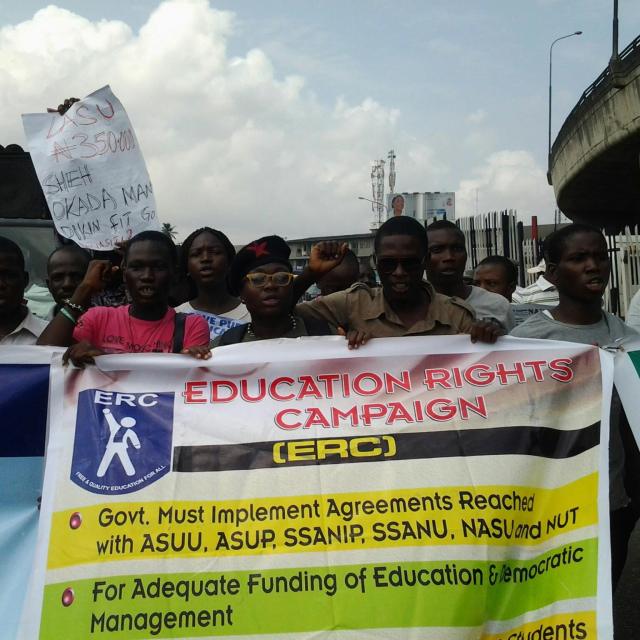
We publish here a report of a recent meeting hosted by the Education Rights Campaign (ERC), which is a campaign set up by socialists in Nigeria fighting for high-quality, free education. Socialist Students members attended the meeting, bringing solidarity from Britain, where university students have also been at the sharp-end of fees, loans and marketisation.


Education Rights Campaign activist

The Education Rights Campaign (ERC) organised a hybrid meeting on 22 July to address the recent Students Loan Act in Nigeria, introduced by President Bola Ahmed Tinubu’s administration, and the wave of fee hikes in public universities. ERC is an educational group formed by the Democratic Socialist Movement (DSM) – CWI Nigeria – campaigning for free and quality education in Nigeria.

The meeting’s attendance included socialists, students’ union officers and activists, and Nigerian students in Britain. The speakers also included officials of the Academic Staff Union of Universities (ASUU) – the most radical trade union in Nigeria, members of DSM and ERC, representatives from Socialist Students and the Socialist Party in England and Wales.

Some of the speakers explained how the Students Loan Act is clearly an attempt to introduce tuition fees in public universities. Until now tuition fees have been officially non-existent, but the authors of the Act have stated that the loans are meant to cater for tuition fees, which by direct implication suggests more burden for the already impoverished students and parents in Nigeria.

In addition, the numerous conditions attached to the loans suggest a vast majority of students from poor backgrounds would not be able to access them, and it exposes the insincerity of the new Tinubu-led government. The ERC calls for a vehement opposition of the loan act and argues for student grants instead to support the studying and living expenses of students.

The wave of fee hikes across campuses in Nigeria formed another part of the discussion with the most recent being the hike in fees by University of Lagos by over 400%. Plans to increase fees in Unity Secondary Schools across the country have also been announced, and parents who have voiced their opposition to it have had their children expelled from school. Attendees of the meeting concluded rightly that these policies and the planned introduction of tuition fees are in line with the government’s agenda to shirk its responsibility of funding education as a social service, but rather, it wants to commercialise it.

The effect of these policies, if not fought against, would be a massive drop out of students and job losses for education workers. Already, the enrolment of students into departments in the Lagos State University has dwindled significantly after a 300% fee hike was implemented ten years ago. Usmanu Danfodiyo University in Sokoto State also recently had to postpone its examinations because a huge number of students were unable to pay fees.

Evidently, the commercialisation of education has failed all over the world, and Pippa Evans from Socialist Students in London spoke on how the cost-of-living crisis has impacted students in Britain, and how the student loan policy in place has not ameliorated the situation. About 11% of students in Britain now have to use food banks and 18% cannot afford necessary learning materials. University lecturers in Britain have also been forced to take various strike actions as members of the University and College Union (UCU) demand better working conditions.

The plight of Nigerian students in the UK was also highlighted. Tinubu’s policy on exchange rate unification has meant that the students suddenly have to grapple with the nightmare of sourcing more funds to be able to convert their money into pound sterling to offset their school fees.

It was agreed that all of the aforementioned policies of the capitalist Tinubu-led administration are attacks on public education in Nigeria. It requires an urgent coordinated action of students, parents and education workers, with solidarity from activists, civil society coalitions, and the Nigeria Labour Congress and Trade Union Congress, to organise mass resistance against government attacks.

Financial donations and pledges were made at the meeting, with a plan to commence mobilisation across campuses and begin a nationwide campaign against the student loan and fee hikes. An appeal for solidarity from all unions and sections of the working masses was made, including the Nigerian diaspora, in Britain specifically.

The wave of fee hikes and commercialisation of education are just a few out of the anti-working class and poor policies launched by the Tinubu-led administration (see opposite). This is why the ERC also believes in the need for the working and poor people to organise for a mass workers’ political alternative that can transform Nigeria along socialist lines, by utilising the enormous resources of the country to provide free and quality education and jobs for the teeming youth who make up the largest chunk of the country’s vast population.

Cardiff University: Students and staff protest against uni bosses

George protesting at his graduation ceremony

George Phillips, Cardiff Socialist Students

Staff were protesting throughout Cardiff University’s graduation week – 17 to 21 July. It’s part of the University and College Union’s (UCU) long-running dispute over pay, pensions, working conditions and workload.

Throughout the week, UCU members handed out sashes and badges for graduating students to wear. Students were running towards the UCU stall to collect anything they could, and chat with lecturers.

I was one of those students and, wearing a pink UCU sash, I protested against the university whilst walking the graduation stage. And I joined the UCU on their stall every day for the rest of the week.

UCU members are currently taking part in a ‘marking and assessment boycott’ – part of their larger strike action. This involves refusing to mark students’ coursework and exams. Many students now have missing marks and unconfirmed degrees.

Staff want to be celebrating their students’ success, and not taking this action. But workers have been forced into this action due to malicious actions by Cardiff University and university bosses nationwide.

Staff have been hit with pay deductions of between 50-100% – a huge impact during the cost-of-living crisis – despite all other work being completed.

University leaders have the power to end this strike. But they are refusing to negotiate.

Many students support striking staff in their battle with the bosses. We are on the same side.

University bosses do not care about us, or our degrees. They only care about squeezing as much money as possible from staff and students, and their position on the league table.

Staff working conditions are students’ learning conditions. We will not receive the quality of teaching we deserve if staff are overworked and underpaid. Anger must be directed at the university bosses who are undertaking this vile campaign against staff and students.

Any university that claims it can’t afford the UCU’s reasonable demands should open its finance books to inspection by campus trade unions, as well as democratically elected worker and student representatives. If a university genuinely can’t afford to give its staff at least what the UCU wants, then the government should step in to make up the difference, with money given to universities under trade union oversight.

We must stand together – now and always – and fight for the future of higher education. Fighting for fair pay, conditions, workload and pensions, for the total abolishment of tuition fees, and a higher education system democratically run by workers, students and local communities.

Socialist Students says:

  • Support the UCU marking and assessment boycott
  • No punitive pay deductions for staff taking part in the boycott
  • Decisions over whether students can graduate should not be left in the hands of uni bosses. Fight for trade union control of exam mitigations, in discussion with elected student representatives
  • Fight for the funding our universities need to end disruption to students’ and workers’ lives. Fight for high-quality, free education – scrap fees, cancel student debt, and replace loans with living grants rising with inflation
  • Build a new mass workers’ party to coordinate the struggles of students and workers in one fight against the bosses and their politicians
  • Fight for socialist change – for democratic public ownership of the banks, monopolies and major industry to provide us with a future

Tory uni caps target working-class students

Noah Eden, Sheffield Socialist Students

As somebody who has just graduated, it has been frustrating watching the government attack so-called ‘low-value’ degrees.

According to the Tories’ Office for Students, ‘low-value’ degrees are where a certain proportion of students either do not graduate, or do not have a ‘graduate-level’ job or a further course of study 18 months after finishing.

The latest plan by Tory prime minister Rishi Sunak is to cap student numbers on these courses. This will only make it harder for working-class people to get into university.

Due to financial pressures, working-class students are more likely to drop out of their degrees. Working-class students are less likely to get ‘graduate’ jobs too.

That means that courses with a high proportion of working-class students would end up being dubbed ‘low-value’ and subject to caps. This would be yet another deterrent on working-class young people studying and developing their interests at university.

It’s the Tories that have made it increasingly difficult for students to complete their degrees, especially those from working-class backgrounds. Years of below-inflation student maintenance loan increases force many students to skip meals and use food banks, all while racking up tens of thousands of pounds in debt.

Struggling

The fact that people are struggling to get jobs after higher education is not the fault of certain degrees. It is the fault of this Tory government, and the capitalist system they defend – a blind, unplanned system, dictated by the short-term profit interests of a tiny minority.

Tory MP Robin Walker, chair of Parliament’s ‘Education Select Committee’, has defended the plans, saying: “Substantial amounts of public money… go into supporting students to go to universities”.

But real-terms spending per university student has fallen massively under the Tories. As a result, students have seen a collapse in our living standards, while staff have been forced to take unprecedented strike action due to rock-bottom pay, overwork, and cuts.

Nonetheless, Walker’s comments hint at the main financial motivations behind student number caps. As a large portion of student debt continues to go unpaid, the current number of young people taking out student loans to go to university is increasingly intolerable for the Tories and British capitalism. Also, if fewer young people go to university, then there is a bigger pool of cheap labour for the bosses to exploit.

The wealth exists in society for a fully public-funded, and free, higher education system. But pro-capitalist politicians, like Walker, Sunak, and Labour leader Keir Starmer want to preserve that wealth in the hands of a super-rich minority at the top.

In order to win democratically run universities, free at the point of use for all, students and staff must link up with the wider working class to fight to take the wealth and control of society into our hands.

Socialism

All of this means fighting for a socialist society, where resources are publicly owned and democratically planned to ensure that the needs of everyone are met. On this socialist basis, it would be possible to plan the education sector – alongside the wider needs of society – to ensure that education offers young and working-class people a decent future.

This could mean either a decent, socially useful, and well-paid job, or the chance to pursue our interests – academia or otherwise – free from the rigid economic constraints that burden us under capitalism.

Socialist Students stands with marking and assessment boycott

Students: get organised, unite with staff and be part of campus battles!

Adam Powell-Davies, Socialist Students national organiser

In April, the University and College Union (UCU) launched a marking and assessment boycott at 145 universities across the UK. University staff are striking for pay amidst the cost-of-living crisis, and to defend terms and conditions as university bosses try to squeeze as much as possible from them. And the quality of our education has suffered as a result. Socialist Students supports the strike and has shown solidarity at picket lines up and down the country.

Two months on from the start of the marking and assessment boycott, university students now have a clearer picture of how the boycott impacts us. At Durham University, hundreds of students have been told that they won’t progress to their next year of study. Queen’s University Belfast has announced that 1,200 students may not be awarded degrees this summer. And at the University of Cambridge, hundreds of politics and sociology students won’t receive their exam results until October.

Many students affected by the boycott have been left frustrated and demoralised. As things stand, thousands of students could be prevented from moving on to the next stage in their life, such as the next year of their course, a job or internship, or graduate study.

While university managements have been eager to blame striking staff for the disruption to students’ lives, some students speaking on social media and in the national press have challenged this narrative. They have correctly pointed out that the onus is on the employers’ association, UCEA, to meet UCU’s demands on pay and conditions, and end the current dispute.

Any university that claims it can’t afford these demands should open its books to inspection by the campus trade unions and democratically elected worker and student representatives. If a university genuinely can’t afford to give its staff at least what the UCU demands, then the government should step in to make up the difference, with money given to universities under trade union oversight.

At a few universities, vice-chancellors have joined students and staff in calling on UCEA to re-enter negotiations with the UCU nationally. This shows that the marking and assessment boycott is having an effect.

Although many vice-chancellors have finally been forced to admit the ‘broken’ nature of university funding, none have come out and called for what is necessary: fully funded, free, higher education.

Meanwhile, at most other universities, managements have dug in and cobbled together a whole range of ‘mitigations’ aimed at allowing students to progress without the usual assessment-based checks and balances.

No doubt, some students will be grateful for these measures. But we say it’s the university unions who should hold the decision-making powers over mitigations, in discussion with elected student representatives. Mitigations shouldn’t be left in the hands of the bosses, who are attempting to drive a wedge between students and staff.
As the marking and assessment boycott continues, many students will feel caught in the middle between the UCU and the university bosses. That’s why Socialist Students says that students have to get organised ourselves, to unite with staff in a mass campaign to fully fund our universities and win free education.

As long as university funding is decided by capitalist governments looking for spending to cut and avenues of profit to open up, our universities will always be at risk of attack. That’s why Socialist Students fights for a socialist society where we, the working-class majority, democratically plan where resources should go in order to meet people’s needs – including the need for a high-quality, fulfilling and free lifelong education.

Read more of our demands at the bottom of this page

PhD students: back the boycott!

Bristol Socialist Students

University of Bristol Socialist Students Society has been made aware of attempts by university management to undermine the University and College Union (UCU)’s marking and assessment boycott. PhD students have been offered £18.85 per hour to mark first and second-year undergraduate assessments, almost double the rate of pay usually offered to PhD students who undertake teaching and marking duties alongside their studies.

Bristol Socialist Students wholeheartedly condemns this latest move by university management to both undercut the ongoing industrial action being taken by staff in UCU and to drive a wedge between staff and students. We call on PhD students at the University of Bristol to refuse to take part in any marking whilst the boycott is ongoing. Instead, they should join UCU, which PhD students can do for free, and stand in solidarity with striking staff on the next day of strike action on Friday 16 June.

We also recognise that this is an attempt to persuade striking PhD students, who are among some of the lowest-paid staff at the University and are employed often on short-term, unstable contracts, to break the boycott.

As students ourselves, we understand the impact a marking and assessment boycott has on undergraduate students. However, we recognise that this disruption is due, not to those members of staff exercising their democratic right, but to the failure of Bristol university management and the Universities and Colleges Employers Association to properly and sincerely negotiate with the UCU over pay and working conditions.

However, we also recognise that even if the current UCU dispute is settled soon, it won’t mark the end of the disruption to our higher education. Students at every level are feeling the sharp end of the cost-of-living crisis. The Office for National Statistics found last year that 40% of students are studying at home more to save money. A fifth are attending lectures remotely. An additional survey by the Sutton Trust found that 18% of students have avoided buying educational resources needed for their courses. But it isn’t only in the realm of study that students are feeling the cost-of-living squeeze. 11% of students now use food banks. 28% reported skipping meals to save on food costs, 47% are going out less with friends, and 14% are travelling to campus for free energy use.

So for students, while building support for the current UCU and Unison strikes on the university campuses is vital, this must be linked to a mass campaign against the student cost-of-living crisis and the fight for free education for all – for publicly funded universities and an end to marketisation.

Socialist Students says:

  • Support the UCU marking and assessment boycott – PhD students should not undertake any marking whilst the boycott is ongoing
  • No punitive pay deductions for staff taking part in the boycott
  • Exam mitigations shouldn’t be left in the hands of the bosses. Fight for trade union control of mitigations, in discussion with elected student representatives
  • Organise joint student-staff meetings on campus to discuss how we fight the attacks on our universities – and where next for our common struggle against the cost-of-living crisis?
  • Fight for the funding our universities need to end disruption to students’ and workers’ lives. Fight for high-quality, free education – scrap fees, cancel student debt, and replace loans with living grants rising with inflation
  • Build a new mass workers’ party to coordinate the struggles of students and workers in one fight against the bosses and their politicians
  • Fight for socialist change – for democratic public ownership of the banks, monopolies and major industry to provide us with a future