

Organising, fighting and striking back against the cost of living crisis
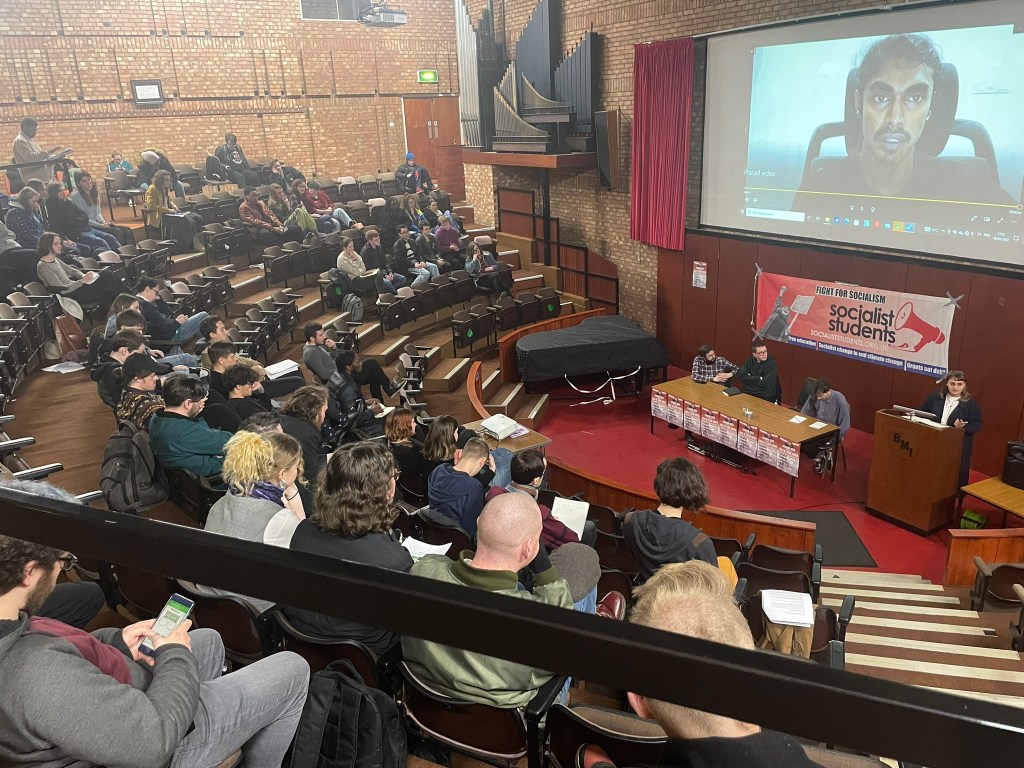

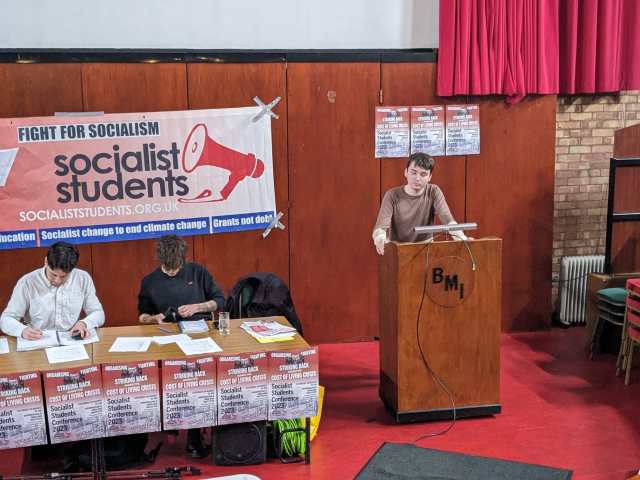

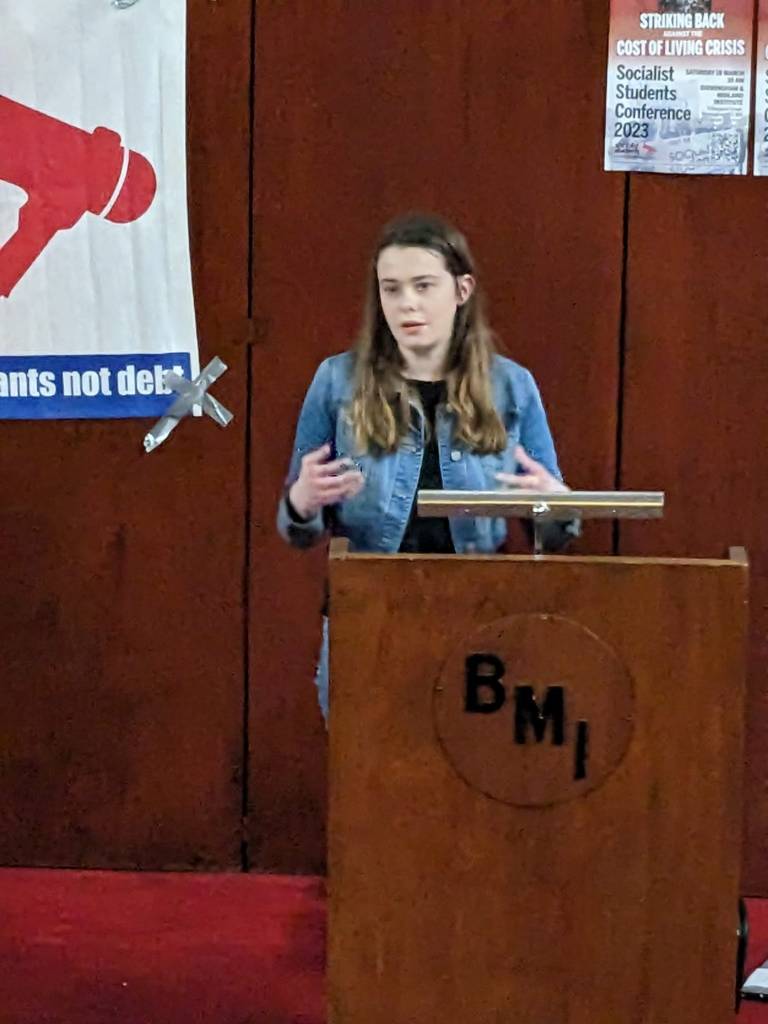
Building a new mass workers’ party
Sheffield Socialist Students
Conference recognises that:
- Since becoming the Leader of the Opposition, Sir Keir Starmer has dragged the Labour Party rightwards and in his words ‘wiped the slate clean’ of Jeremy Corbyn’s anti-austerity manifesto pledges at the 2017 and 2019 elections.
- Starmer has refused to pledge the abolition of tuition fees and call for free education for all, one of many pledges Corbyn stood for, demonstrating that he is obviously not on the side of the students and has turned his back on ‘Corbynism’.
- His welcoming of ex-Conservative MP Christian Wakefield, but refusal to restore the whip to Jeremy Corbyn evidently shows he does not want people with socialist policies standing to be an MP for the Labour Party.
- His proscribing of various groups on the left shows that his priority as Labour leader is to rid the party of socialists and anybody who wishes to fight for socialist ideas and a better future for workers, students and young people.
- Furthermore, he has openly declared that Labour is the ‘party of business’ which shows us that he is not on the side of the working class, but that Labour is now an openly neoliberal party which is a safe pair of hands for the capitalist class.
- This is summed up by Starmer’s refusal to support the striking workers, sacking any front bench MP who have visited picket lines. Meanwhile, he himself has appeared at many meetings and conferences with leading big business figures.
- We therefore think it is time to recognise that workers and students are currently left without a political voice at a time we collectively face a cost of living crisis and massive attacks on our living standards by big business and the Tories.
Conference resolves:
- That Socialist Students supports the call for a new mass political party which represents the interests of the working class, students and young people.
- That Socialist Students supports any candidate in the upcoming local elections and general election standing on an anti-austerity and socialist platform.
- To organise discussions on how support for steps towards a new workers’ party can be built, including raising the task of students standing in local and general elections.
- To call on student unions to organise and host campus debates on the question of political representation for students and young people, and where they fail to do so to appeal to other left and campaigning groups to take such an initiative.
- To support the call for a trade union organised workers’ list of candidates at the next general election.
Fighting the student mental health crisis
Liverpool Socialist Students
This conference notes:
- Since the pandemic universities have seen a surge in demand for mental health services. 63% of young people reported a worsening of their mental health over the course of 2021 due to the isolation and lack of support students received during the Coronavirus lockdown, as well as the uncertainty surrounding GCSE and A level results the prior academic year.
- Even before then however, record numbers of students were reporting mental health problems. One survey conducted in 2018 found that more than one fifth of students had a then current mental health diagnosis.
- Now in 2023, the cost of living crisis continues to compound the already existing mental health issues among young people as students strain to financially cope with the pressures of rising prices and falling living standards,with student maintenance loans only rising by 2.8% next year despite RPI inflation last year of 14%.
- Despite the rising demand among students for mental health services, universities have seen the funding they receive for mental health support services cut.
- Research from BACP in June 2022 shows that universities spend on average just £39 per student for mental health services, with the government allocating only £3 million of extra funding for student mental health in the summer of 2022 – an extra pound per student nationally.
- Comparatively, the average spend per student for marketing is £2690 according to the same BACP research. This stark contrast is representative of the marketisation of education, with marketing being a means to increase the flow of students and therefore university income via our tuition fees.
- In 2018 managements at multiple universities made the decision to outsource their mental health support services, in effect cutting the number of fully trained professional counsellors on campuses and replacing them with less qualified staff providing ‘wellbeing’ services, less defined and less specialised support services.
- These cuts and outsourcing have been the policy of university management and the Tories in an attempt to offload demand for mental health support services among students on to an already underfunded and overstretched NHS.
- From the academic year 2010/11 to 21/22 there has been a reduction of over £11 billion in annual spending on HE (£15.78 billion reducing to £4.71 billion in 2021/22, according to Statista/ONS), threatening mental health provisions funding on campuses even further.
This conference resolves:
- We demand the reversal of all outsourcing of mental health support services on campuses, and for all mental health support services on campuses to be brought under the democratic oversight and control of campus trade unions, staff and students. For fully funded professional counselling services available on all campuses, run alongside properly funded and broader ‘wellbeing’ services.
- For a united mass struggle of students and workers to save and kick out the profiteers from the NHS!
- For democratic student and trade union control and oversight of our courses and Higher Education system, to be run for the needs of students, staff and wider society.
- Fight for the funding our universities need, for high quality and professional mental health services available to all who need them on campus and for action now on the student cost of living crisis – linked to a struggle for free education.
Ending violence against women on campus
QMUL Socialist Students
This conference recognises that:
- At least 75% of female students have had an unwanted sexual experience while at university
- 1 in 3 women experience sexual violence between the ages of 16 and 25, around the age of college and university students.
- 62% of students and graduates have experienced sexual violence at UK universities, and yet there are limited resources available at university to help the victims of this violence.
- Many students reporting sexual assault (SA) on campus are not always entitled to information on their case or what the outcome is. The committee investigating this report can simply dismiss the case without telling the reporting student why, or even that it’s been dismissed at all.
- There have been very tone-deaf responses to sexual assault which attempt to blame victims instead of holding assaulters accountable. However, we recognise that they went about it in a way that blamed the victim, instead of holding the assaulter accountable.
- Only 25% of students that are raped report it. We know that this isn’t because they didn’t want justice, but rather because they likely didn’t have faith that justice would actually be served. Women that report their assault often have to relive the traumatic experience over and over only for their assailant to walk free, or for them to experience further accusations/harm.
- Trans people also experience sexual harassment and assault on campuses and in wider society, and any mass movement against women’s oppression must address sexual violence faced by all women.
- It’s not enough to address the sexual violence against students on campus; we also have to acknowledge that it is ingrained inequality and sexism under capitalism, this allows for behaviour to be normalised and swept under the rug. It is for this very reason that many victims of sexual assault choose not to report their abuse, and the reason those that do, often don’t get justice.
This conference moves to:
Campaign to build a student movement that fights against all forms of sexism, sexual harassment and sexual violence, and for the democratic control and oversight of our universities by staff and students. Such a movement could campaign for the following:
- Campaign for a new code of conduct for reporting sexual assault, separate from the general code of conduct in order to establish very certain language choices. Judgment should be made by a democratically run board, with students and trade union representation that evaluate all reported cases. Anyone investigating should have sexual assault/domestic violence training beforehand.
- Campaign to demand regular updates on reported cases of assault to the reporter, including the outcome of the case with an explanation.
- Campaign for security guards, teachers and student support staff to undergo compulsory sexual assault and safeguarding training overseen by student and trade unions.
- Campaign for accessible and affordable self-defence classes on campus.
- Campaign for free and accessible counselling services, including group counselling, specifically for survivors of sexual assault, with properly trained support staff leading it.
- Campaign for societies on campus, including sports societies, to have required sexual assault training. This will aim to particularly addresses ‘lad culture’ and ‘locker-room talk’.
- Campaign to introduce an avenue for students to talk about their experiences anonymously, for survivors that do not want to talk about it openly. A QMUL Socialist Student started a magazine called FemMag that allows for students to talk about their personal experiences and trauma, and can do so anonymously if they choose to. This would be to tackle the idea of a ‘taboo’ subject and increase empathy.
- Campaign for all non-campus universities to have affordable public transportation that runs at night, to ensure students get home safely.
- Campaign for better security protocols and training specifically in student union spaces, with a zero-tolerance policy for any students who are harassing or assaulting anyone. This should be overseen by trade unions and student unions.
- Campaign to ask that teachers discussing sensitive content during lectures or seminars make a trigger/content warning beforehand.
The fight for trans rights
Swansea Socialist Students
View and share this motion as an instagram slideshow here
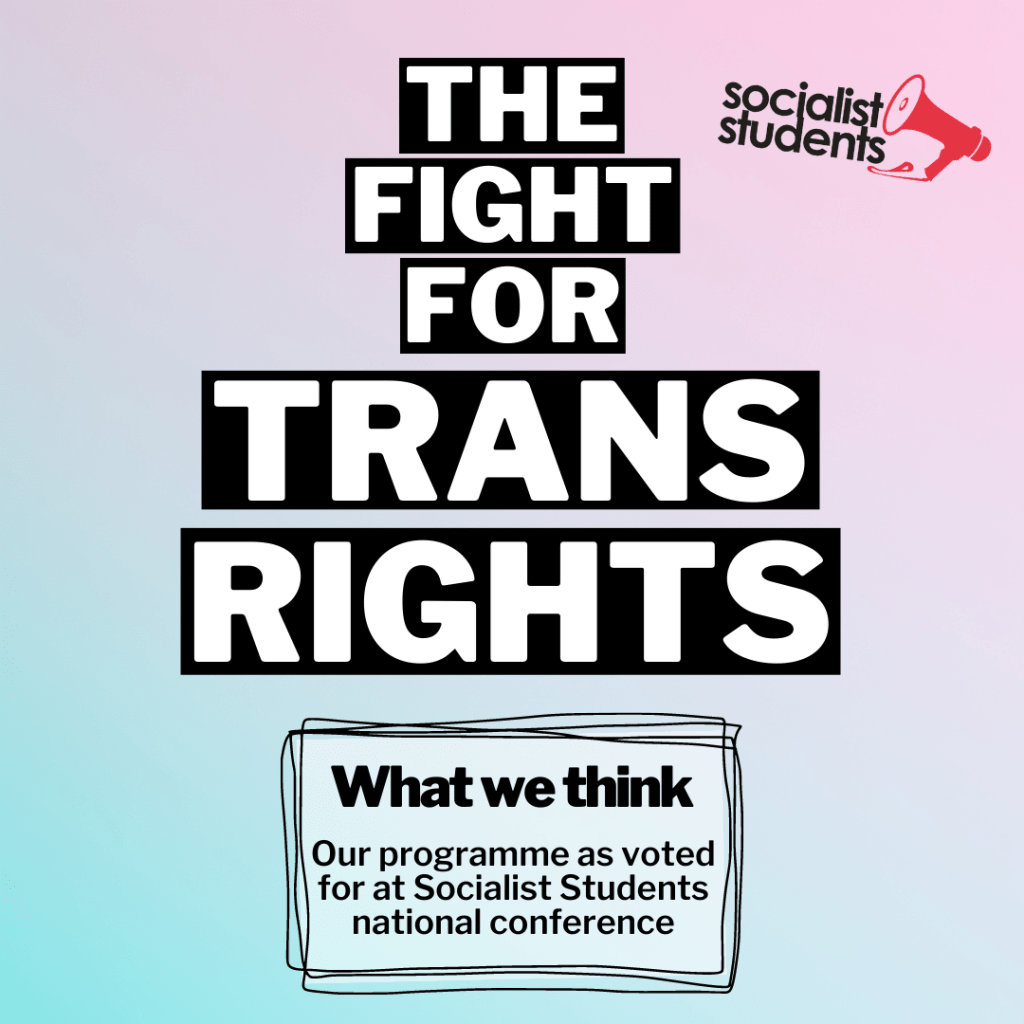
Trans rights have increasingly been a target of right-wing politicians over the last 5 years. In Britain, the Tories are increasingly hated and have nothing positive to offer workers and young people. In an attempt to whip up division and therefore weaken the working class’s ability to fight back, they have pledged to run their next general election campaign on “a mix of culture war issues”. Starmer’s pro-capitalist Labour have no alternative – be that on the question of HE funding or on trans rights.
We as Socialist Students therefore resolve to fight for the building of a student movement that campaigns for the following:
- For the gender recognition act to reformed to adopt a model of self-ID so that trans people can have their lived experience accurately – including non-binary identities – recorded on their documents and receive the dignity that provides without undue scrutiny from the state.
- For NHS trans healthcare to be reformed to operate a GP-led informed consent model so that trans people can access gender affirming care in a timely and dignified manner, as part of a campaign to fight for the NHS to be funded and staffed to provide services for all.A complete ban on so-called conversion therapy to cover all LGBTQ+ people regardless of age and with no exemptions for consent or religious groups.
- With a view to eventually moving away from a carceral justice system, for trans prisoners to house according to their gender identity when it is safe to do with considerations made to the safety of all prisoners and no assumption of risk solely owing to a trans prisoner’s gender identity.
- For public services to be run under democratic control by elected and accountable committees including service users, service workers, and the trade unions.
- For LGBTQ hate crimes to be accorded the same legal status as race and religious hate crimes.Expand the definition of the family and marriage to include diverse family relationships with no discrimination in law, finance and health including surrogacy and other forms of non-typical birth.
- For the TUC’s proposed ‘Trans Rights Alliance’ to use the funding and platform of the TUC to fight for the rights and public services needed by trans people and to challenge the relentless anti-trans rhetoric of the British press that grassroots trans organisations and activists lack the resources to.
- To build a new mass workers’ party that represents the entire working class. That means fighting for such a party to develop a programme that includes defending trans rights and the rights of all those who suffer oppression under capitalism
- For a socialist world free from oppression and exploitation.
Ending the student housing crisis
Bristol Socialist Students
View and share our instagram slideshow on the student housing crisis here
This conference recognises that:
- Student housing has reached crisis point and there is a structural undersupply of student accommodation across the UK. Universities must have the funding in order to provide good-quality, affordable housing for all their students.
- The number of UK students facing homelessness is on the rise with approximately one third of students facing housing insecurity. Students are struggling to secure themselves a place to stay for their studies. Instead, they are being forced to live in Airbnbs or hotels, couch surf, or even live in their cars. This is only set to get worse.
- Universities, faced with a funding ‘black hole’, have been over-recruiting to courses knowing full well that they are unable to provide these students with residential accommodation. This has resulted in a student housing crisis across all UK universities, with an estimated shortfall of 207,000 student beds.
- Between 2011/12 and 2018/19, the average cost of student accommodation increased by 31%. With inflation eroding the value of already insufficient student maintenance loans, students are spending, on average between 68% and 74% of their loan on accommodation. As a result, one in ten students are being forced to use food banks.
- The quality of student housing is also a big problem with many students finding themselves living in poor quality, unsafe accommodation. Problems with damp or mould, lack of water or heating, and rat and insect infestations are just some of the problems students face. Others are being forced to live far away from their university and the stress and isolation this situation causes will only exacerbate the existing mental health crisis among students.
- The expansion of purpose-built student accommodation should not be done at the expense of local communities. To stop working-class people being priced out of their cities, and to reduce strain on austerity-hit local services such as bin collections, healthcare etc, we need a democratic plan.
This conference moves to:
- Reaffirm the organisation’s commitment to fighting for a socialist society based on democratic public ownership of big business and the banks that would be able to plan and provide good-quality homes, jobs, and services for all, students and local residents alike.
- Reaffirm the organisation’s commitment to fight for a fully-funded education system to end the student housing crisis – take the wealth off the 1%
- Campaign to bring third-party halls into the ownership and control of the university, with compensation paid only on the basis of proven need.
- Campaign for the launch of a mass building programme of good quality, affordable student housing under the democratic oversight of students and local communities, alongside building the council housing people need.
- Campaign for rent controls in all student accommodation, to be decided by democratically elected committees including campus trade unions, staff and students, the banning of agency and contract fees and for bans on student evictions.
- Campaign for councils to use their powers to compulsorily register all private landlords as a means to improve housing standards and implement rent controls.
- Campaign for the scrapping of tuition fees, the cancelling of student debt and to replace maintenance loans with living grants tied to the rate of inflation.
- To be part of building a political voice for students and working class people that is prepared to fight for our interests and for a socialist alternative.
Solidarity with the struggle in Sri Lanka
Socialist Students steering committee
This conference recognises that:
- Despite the heroic mass movement that swept aside the corrupt presidency of Gotabaya Rajapaksa in Sri Lanka last year, the new government led by Ranil Wickremesinghe offers no alternative to workers and youth seeking a life free from exploitation, poverty and oppression.
- At the end of February 2023, inflation in Sri Lanka was over 50%. As a result, millions of people in Sri Lanka are still struggling to afford basic necessities, such as food, fuel and medicine, while one-third of children live below the poverty line.
- Meanwhile, the government remains intent on pushing through new austerity measures, which will see living conditions drop even further. The government wants to make workers and young people pay for its debt crisis, not the super-rich.
- The economic situation in Sri Lanka has driven continued protests, which have repeatedly faced vicious repression from state forces. This includes protests by students, organised through the main students’ union, the Inter University Students’ Federation (IUSF).
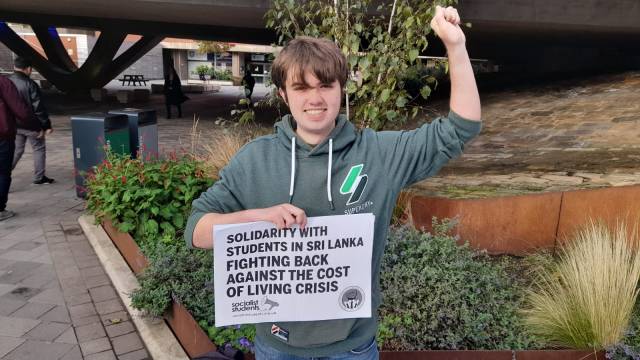
- In response to the repression facing the Sri Lankan student movement, and in recognition of the common crisis facing workers and youth in Sri Lanka and Britain, Socialist Students launched our ‘Solidarity with the struggle in Sri Lanka campaign’.
- This campaign was a fantastic initiative by Socialist Students. We held public meetings in a dozen universities, reaching out to a new layer on campus including Sri Lankan and Tamil societies, as well as local trade unionists. Our campaign was welcomed and circulated online by the leadership of the IUSF. And one of our main campaign demands – for the release of Sri Lankan student leaders – was ultimately met earlier this year, when IUSF convenor Wasantha Mudalige was finally released and cleared of bogus charges under the Prevention of Terrorism Act (PTA).
- However, the repression is not over. On March 7, police used tear gas and water cannons on an IUSF protest, and Wasantha Mudalige was again detained on trumped up charges last month, only later being released on bail. There was also a new surge in police violence against the counter-protests organised on Sri Lanka’s Independence Day this year. The Sri Lankan state is terrified of a new mass movement emerging, which could potentially learn from the ‘limits of spontaneity’ encountered by the last uprising and go further to fundamentally challenge capitalist rule in Sri Lanka and the region.
- Socialist Students supports all struggles for the defence or expansion of democracy under capitalism, as a means of involving the maximum number of workers and youth in the question of political power as part of the struggle for an infinitely more democratic socialist society.
This conference moves to:
- Continue the ‘Solidarity with the struggle in Sri Lanka’ campaign. This could include:
- Sending messages of solidarity (via email or video) from Socialist Students groups to socialistudents@gmail.com, to be forwarded to the the IUSF in Sri Lanka
- Passing solidarity motions at SU and trade union branch meetings
- Organising public meetings on the struggle in Sri Lanka in areas where we have not yet held a meeting. This should involve inviting members of local Sri Lankan/Tamil/South Asian societies.
- Consider, where possible, making a member of our Socialist Students group responsible for international solidarity work, as a way of building connections to other organisations on campus and overseas, while highlighting the international struggle for socialism.
Find out more about the ‘Solidarity with the struggle in Sri Lanka’ campaign here
 Socialist Students