
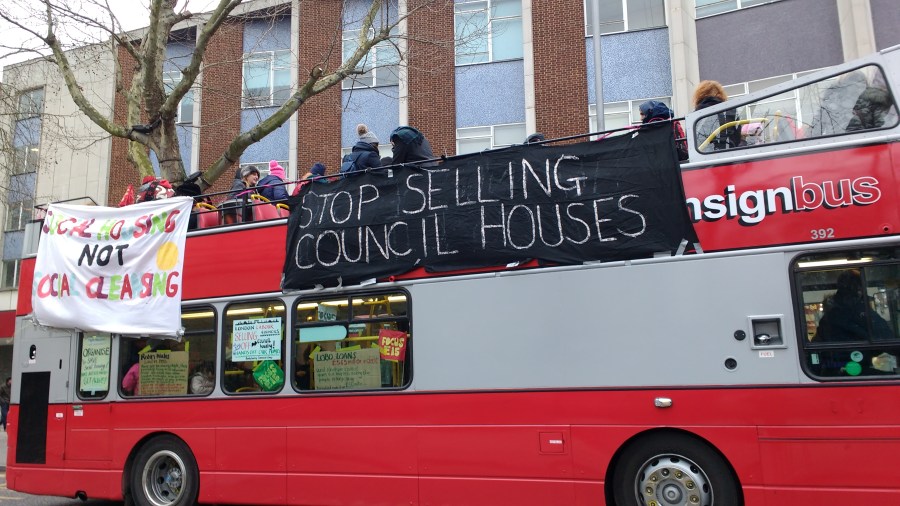
CAMPAIGN: Don’t rent from slum landlord City Rooms!

● Release Declan Miller from the abusive contract!

● Fight back against capitalist housing crisis!


Text from a Queen Mary Socialist Students campaign leaflet

City Rooms have demanded that Declan pay until the end of his contract despite the unlivable conditions at the property. Queen Mary student Declan has had no choice but to work part time to cover extortionate rents and is now being forced to pay for a room he cannot safely live in.

Yet, with a last reported turnover of £16 million and over £1 million in reserves, a rate of profit of around 50% higher than the average London landlord, annual payments to its two owners of £1m in dividends and the director’s salary, City Rooms are more than able to release Declan from this deplorable situation. But choose not to. Instead, they have decided to profit from a young tenant who they have knowingly put and kept in a violent and discriminatory letting, lining their pockets with no regard for the consequences.

A Queen Mary university student has been battling for months with a verbally and physically abusive flatmate, with no safe refuge! We demand that City Rooms, the property management, release Declan Miller from his contract immediately. City rooms, aware of the abusive thug’s behaviour, did not disclose this information upon signing the student into an exploitative contract leaving him unable to access alternative safe accommodation.

These kinds of situations are becoming more frequent than ever. In a borough like Tower Hamlets, with over 20,000 people on the waiting list for council housing, many are forced to resort to dishonest renting contracts with landlords and renting companies taking advantage of people in desperate housing situations. This is why we need fully implemented licensing and inspection of landlords to enforce decent housing standards. There is clearly more that can be done by Tower Hamlets Council to strengthen their licensing scheme which could start by making licensing compulsory for all landlords and bringing in rent controls.

Unaffordable rents, sky-high house prices and a rising cost of living – it’s no wonder that young people experience the worst of the housing crisis, on top of enormous tuition fees that are being increased as of September 2025. The Higher Education Policy Institute (HEPI) reported in December 2024 that the maximum student loan is now less than the average student rent. The maintenance loans that saddle us with lifelong debt, have left students to fend for themselves in London’s private housing market or are forced to choose cramped and often poor quality halls. This is why we call for the end of the marketisation of our education, and for universities to be free and fully funded to provide safe, accessible housing for all students.

Many councils have declared bankruptcy with 63 more set to do so in the next year due to, now Labour-led, austerity where public services have been cut to the bone, like the recent £5 bn cut from the welfare bill. Starmer’s Labour party has made it clear they do not represent the interests of the working class and young people, cutting the winter fuel payment for pensioners, lifting the cap on tuition fees, and the continued support of the Israeli state’s onslaught on Gaza, many are looking for an alternative to the broken system.

The mass building of council homes, democratic control over housing management and regulations will not happen under Labour, it is clear and necessary that workers and young people must fight for a new mass workers party for an anti-war, anti-austerity programme to provide the services we desperately need. This includes democratic rent caps, a mass housing programme; over 7000,000 homes in the UK are standing empty! If workers and students took this resource into democratic control, it could be one step in the right direction towards fixing the housing crisis and the exploitative tactics of landlords and renting companies who act with impunity.

Fighting back can get results as proven by the case of Lawanya in 2021, a penniless asylum seeker and refugee campaign organiser. City Rooms, with their history of exploiting vulnerable renters, had bullied and forced Lawanya out of their property with no consideration for her situation at the time, whilst still demanding that she pay the rent on the full contract all due to there not being a ‘break clause’ in her contract. Despite this, campaign action and protests led by the Socialist Party backed by the London Renters Union and trade unions like Unite, bought City Rooms to bitterly admit defeat, agreeing to a reduction in the total amount and an affordable repayment rate. This offer was only reached through the resilience and strength of fighting together against the super rich bosses who had even threatened Lawanya’s asylum status!

Now they are back again to threaten and bully another vulnerable person into staying in their property despite it being an unsafe living space. From eviction to unjust debts to unsafe living conditions, challenging the predatory behaviour of companies like City Rooms is vital. Rights for the working class and young people are not granted by the rich, but won through struggle.

Fight for mass council home building and democratic rent control!

  • Implement licensing and inspection of landlords to enforce decent housing standards
  • Full public funding for universities to provide safe housing and make education free
  • Make the rich landlords and bosses pay, fight for socialist policies
  • Workers and young people need our own, new, mass party to fight for our interests

Stop Manchester uni doubling rents

Manchester Socialist Students members protesting alongside trade union campaigners last term

Robbie Davidson
Manchester Socialist Students


The University of Manchester has announced that the rents will more than double at three student housing complexes in Fallowfield: Oak House, Owen’s Park, and Woolton Hall.

Following the success of last year’s student rent strike in Manchester, rents in Fallowfield were reduced by 30%, standing out against the cost-of-living crisis.

The complex also hosts the cheapest venue for students in the city by far, Squirrels Bar. Squirrels will also be demolished, chipping away at our ability to socialise affordably.

Labour disgrace

Combined with Labour’s disgraceful hike in tuition fees, the rent hike means students in Oak House will pay almost £5,000 more per year. This is amidst already brutal conditions for many young people, with average expenditure far exceeding student loans.

Food bank use amongst students stands at record highs, as do the rates of self-harm and suicide. But the bosses at the University of Manchester are using the people they are supposed to look after as a tool to close the funding gap left by a decade and a half of austerity.

Socialist Students is demanding that rents are not doubled, and that they remain at a fixed, stable rate. We believe that high-quality, affordable housing must be made available to all, overseen by a democratic body of students, staff, and the community, who decide how our homes are priced.

The rent rises will come after the student blocks are redeveloped. Regeneration of the complex is necessary, it is falling apart. Students face regular infestations, broken amenities, and share a few dozen washing machines between thousands of people.

Multimillion privatisation

Regeneration, while keeping rents stable, is not possible with a multimillion pound contract with a private construction company. But a nationalised building service, under the democratic control of working people, would be able to do that.

We demand that Squirrels, and other affordable venues, are protected, allowing students to relax and socialise, without further straining our cost of living.

This attack can only be fought by a unified response, bringing together students, trade unions, and campus activist groups. To achieve this, Socialist Students is calling for a general meeting that everyone can attend to discuss the fight back – not just to protect a few blocks, but to fight for the funding our universities need, out of the pockets of the super-rich.

Manchester Socialist Students meeting:
How can socialists fight the housing crisis?

Wednesday 29th January, 4pm
University of Manchester Students’ Union, Room 2.1


See also:

End the student housing crisis!

Charley Lincoln, Northampton Socialist Party and Socialist Students

Student rents have risen more than inflation. Student loans have not. There is a massive gap. The average monthly rent for a student in 2024 is £689.43, 16.5% higher than the year before. In London the average is a whopping £1,032 a month. A student getting the maximum maintenance loan and living away from parents outside of London can borrow £10,227 a year, £852 a month.

No wonder 69% of students now work alongside their studies, according to the National Union of Students. The negative impact is not limited to academic achievement but also health and social outcomes. 78% of students surveyed say they are suffering ‘significant stress’ over money.

Most students with more wealthy parents willing and able to pay don’t face the same stress. Increasingly, access to higher education is becoming the privilege of a wealthy few, deepening economic inequality as working-class and poorer young people are forced to forego education and take low-paid jobs with little chance of long-term progression.

Socialist Students fights for free, fully funded education for all. Rather than being saddled with a lifetime of debt, student loans should be replaced by living grants that rise with the cost of living.

Students are a ‘captive market’ for landlords – be it the university itself, private halls or private renting. All know the level of student maintenance loans, and all hike rents to maximise income. Student housing has become even more competitive than the housing market in general.

University halls

Around one in five students live in university-owned halls of residence. Increasingly, access to this is limited to first-years, postgraduates and international students. These three groups typically bring in the most cash and unis are motivated to get students enrolled (and paying fees) with as few hurdles as possible.

Halls typically have very limited provisions for students who have families, or for disabled students. Often when attempts are made to accommodate disabled students, it is not as thought-through. There are problems such as push-door buttons on one side only, or even behind non-accessible internal doors in the way of the accessible one, or needing an able-bodied person to place a ramp down.

Licensing for halls is viewed in the same way as for residential homes. Each room is treated as an individual dwelling, instead of looking at the whole building. Therefore halls do not have to meet the same fire safety standards as other high-rise residential buildings. In England, more than one residential hall has been found to use the same flammable cladding as Grenfell.

  • End rip-off rents – give students and university workers democratic control over rent levels, maintenance and repairs
  • Invest to provide high-quality, safe, and accessible accommodation, including to meet the specific needs of disabled students, and those with families

Private halls

Building private student halls is big business. The largest provider, Unite Housing, is listed on the FTSE 100 biggest companies on the London Stock Exchange. Unlike traditional housing, when halls of residence are sold, they are sold as a whole building, not as individual flats. Since 2013, the ‘block’ selling of student halls has increased.

That marked the start of a student accommodation investment boom, and led national and international investors to build new property portfolios. As investors sought to consolidate scale and drive down operational costs, England has seen levels of investment steadily at around £3.2 billion a year. The selling of IQ student accommodation company to Blackstone in 2020 was for £4.7 billion, which is the highest seen in England so far.

Investment isn’t planned to meet the needs of students. Instead, private hall owners invest in what they think will be profitable.

It’s also worth mentioning that this building type is difficult to repurpose when it needs to be sold (normally due to oversupply). The standardised nature of typical purpose-built halls, along with small room size, makes changes to residential use difficult.

Some cities have attempted to use the rise of co-living integration in the workplace, living environment, and social space as a product for students and young professionals. Still, reports of negative experiences living in this set-up are rampant. People have felt unsafe and forgotten.

Socialist Party member Marcelin shared her experience of a co-living accommodation: “The entrance to the building did not lock even when pushed closed; it was on the street with heavy footfall. Random non-residents would let themselves in, and there have been issues that led to police turning up. The property was meant to be pet-free, but one neighbour had six dogs that would be allowed to roam unsupervised in the hallways.” When both issues were raised, she was told nothing could be done. Previously, she had lived in halls and a shared house, but was priced out.

Student accommodation does not have to comply with affordable housing requirements. At the same time, any housed student can count towards meeting a local authority’s housing targets. In other words, each rented bedroom can be counted as a single home, misrepresenting reality. This means councils can claim they are tackling homelessness while not actually taking action, and instead exploiting students.

  • Stringent council licensing of student housing providers, with the direct democratic involvement of students
  • For democratic rent controls, quality and safety standards in-line with university-owned halls

Private-rented accommodation

Second-years and beyond are largely left to fend for themselves securing housing on the private market in competition with groups of other students. Landlords and agents exploit the shortage of housing (and using fearmongering about scarcity too) to charge maximum rents and get contracts signed months in advance. To maximise income, bedrooms are crammed into homes designed for a single family.

Similar to the boom of landlords looking to profit through Airbnb in tourist hotspots, in student areas landlords buy up family homes to convert into student accommodation, further reducing the supply of available housing for families, this drives up the cost of rent for everyone.

Housing contracts for students are not fit for purpose. They often do not provide year-round accommodation, assuming you have a family that can support you during the holidays. They are also not flexible enough to account for the realities of student life. If a student has to drop out, they will no longer have the student loan to pay rent, putting themselves and often their housemates at risk due to them being locked into their contract.

Invasive landlords often take advantage of the inexperience of student tenants, often turning up un-announced for inspections, maintenance and property viewings for the next tenants. This creates a lack of privacy as well as emphasising how replaceable tenants are.

The requirement for guarantors and security deposits, often on a yearly basis, assumes again that the student has a family that is able to provide this support, excluding poorer students from a working-class background from this kind of housing, as well as excluding those with complicated home lives. Students often lose hundreds of pounds every year to landlords manufacturing reasons to take security deposits.

  • Compulsory licensing for all landlords, including subject to quality and safety inspection from local council authorities and student representatives, and to end security deposit theft
  • Democratic rent controls for all rental properties, student or otherwise
  • Access to secure tenancies, including flexibility that accounts for student term dates and other issues. Include Student Finance England as guarantor for students excluded or forced to leave courses early
  • A programme of mass council house building to meet the needs of all

Damp, mould and rip-off rents

Frankie Sell, Southampton Socialist Students

From the extortionate rates charged by both university and private student halls to omnipresent mould and botched renovations, it feels as if the crisis of student housing is inescapable.

Student halls in particular can cause tremendous headaches as many students’ first experience of living away from home. For instance, in my first year I lived in the cheapest ensuite room stocked with just a single bed and desk. This now costs £6,646.92 for a 41-week contract (an increase of about £500 since 2022). When you consider that the maximum student loan is just £9,672.00 per year, this leaves students with just £250 per month after rent.

This is clearly unsustainable. Like many students, I opted for cheaper student housing with a private landlord going into my second year; however this came with its own problems. The only bathroom and shower I had access to was a converted storage closet under the stairs, it was barely large enough to stand in and had constant issues with damp and mould that were never dealt with. The ceiling in the living room would occasionally start pouring water. The landlords attempted (unsuccessfully) to fix this problem but eventually gave up trying towards the end of the tenancy.

Then, the following year, there were large cracks in the walls (an external consultant informed me these were likely caused by structural damage) which took over three months to repair. There is also heavy staining in the carpets and walls, which have still been largely ignored four months into the tenancy.

Unsurprisingly to any students reading this, these examples are common in the industry of student housing, and are by no means the worst that I have heard in my time as a student.

Why should students be paying more than 50% of their income on rents? Rents should be capped, and maintenance standards regulated, including with maximum time frames for repairs.

Funding not fees

The Funding Not Fees campaign demands that big business foots the bill for education, not students and workers. We call for fully publicly funded higher education, paid for by taking the wealth off the super-rich, as the means to:

· Scrap tuition fees

· Introduce living grants, not loans

· Stop all cuts and closures on campus