Hannah Ponting, Socialist Students candidate in Liverpool student election
Student union elections provide a great platform to voice socialist ideas on campuses. At Liverpool university, we collaboratively created a manifesto focusing on socialist policies, and subsequently selected a candidate who could put forward these policies, and represent socialist ideas in this election. I am very proud to have been that candidate.
The first of our main policies was fighting against Labour’s recent tuition fee hike, and for free education. The increasing cost of university should not be a barrier to young working-class people pursuing higher education. We based this policy around the Funding Not Fees campaign, launched by Socialist Students nationally.
The increasing cost of living is a significant concern to students. Funding life at university is becoming increasingly difficult. We focused on fighting to expand bursaries and reinstate the university’s food pantry, which was previously scrapped.
The university’s night bus is another service which was previously scrapped, although was reinstated due to campaigns led by Socialist Students. We said, expand the night bus to more areas in and around Liverpool, and to increase its frequency to every half an hour.
There has been a recent crisis of violence towards women and girls on campus. We believe that it is necessary to fight for all students to have a genuinely safe, reliable, and affordable way home.
Fight job cuts
Cuts are occurring at universities around the country. Liverpool uni refused to be transparent with the University and College Union (UCU), when pressured about its own job cuts.
We said the university must open its books and have financial transparency. This also extends to fighting for divestment from arms companies.
We held campaign stalls, and other leafleting and postering. We got a brilliant response from both students and workers on campus, with discussions about the cost of living and cuts to disability benefits.
We also held a public meeting. It provided a brilliant chance to explain our policies, and allow for any questions to be asked.
I spoke at endorsement meetings of other societies, such as Labour Students, to advocate socialist ideas to more students.
We achieved 151 first preference votes, rising to 192 when transferable votes were added. 9th place out of 24 candidates. The top four were elected.
There is an appetite for socialist ideas on campus. It’s our job to direct the frustration that young people are increasingly feeling – with the capitalist system and Labour government –into an organised movement.
Adam Powell-Davies, Socialist Students national organiser
The University and College Union (UCU) held a parliamentary lobby and rally to launch its ‘Stop the cuts: fund higher education now’ campaign on 18 March.
Shocking redundancies
This was the first national campaign initiative in the ‘stop the cuts’ campaign, less than a week after the shocking announcement of 632 planned redundancies at Dundee University. UCU estimates that up to 10,000 jobs could be cut this year alone – 5% of staff.
The event was attended by UCU branches from across the country, with rally speakers from as far afield as Lancaster and Bangor, reflecting the enthusiasm for a trade union response to the cuts devastating higher education.
The rally showed that there’s a discussion taking place within the union over the best way forward in this fight, with a range of different opinions expressed. Several speakers called for coordinated, nationwide strike action, linked to the battle over staff pay and conditions.
I spoke to bring solidarity from Socialist Students to the rally, highlighting the need for students to link up with campus trade unions in the fight for full public funding for education, paid for by taking the wealth off the rich – not more fees, cuts and cost-of-living crisis.
Joining UCU activists was suspended Labour MP John McDonnell. He spoke of the need for “a parliamentary voice” to the struggles of university staff, saying the lobby was an opportunity to “recruit MPs as allies of the UCU”.
Funding Not Fees
Socialist Students groups are organising lobbies of local MPs, under the banner ‘Funding Not Fees’. This brings together students and staff, as well as trade unionists, anti-war activists, community campaigners, and more in the fight for political representatives who will give a voice to all the struggles of working-class and young people, under this pro-big business Keir Starmer government.
While Socialist Students continues to build Funding Not Fees on campuses, we hope to link up with the UCU ‘stop the cuts’ campaign – including mobilising the maximum student turnout to the UCU’s national demonstration in London on Saturday 10 May.
Coventry’s fight for free education
Frank Hammond, Coventry Socialist Students
United against attempts to break down our educational infrastructure, workers at Coventry University protested on 15 March. Perfectly planned to clash with the uni’s open day, they were supported by students, other trade unionists, and attendees of the Socialist Party’s national congress taking place in the same city.
And what a turnout for the protest. Over a hundred slowly passing by, holding signs; trade unionists, workers and students pumping their fists, clutching their wooden sticks from placards we all built to tell the bosses we aren’t accepting these attacks lying down.
Our placards held our campaign slogan: “Funding not fees! No redundancies!” The Funding Not Fees campaign aims to build a resistance to the many attacks on uni students and workers – the university bosses’ motives being a symptom of the failing system.
Speaking at the protest, former Labour MP Dave Nellist said the ‘fire-and-rehire’ scheme was being used as psychological blackmail against the staff. 66% of UK universities face deficit budgets this year. If Coventry University succeeded, many other universities would use the same tactics, he said. Clause 22 of the Employment Rights Bill declares ‘fire and rehire’ to be grounds for automatic unfair dismissal. But, with a 174-seat majority in the Commons, Labour, if they wanted to, could have immediately declared the practice illegal last July to protect workers from these attacks. But they didn’t.
Students and workers
My much-loved lecturer and vice chair of Coventry’s University and College Union (UCU) branch Monika Koehler-Ridley was interviewed by BBC news. I was delighted that she has attended a Socialist Party branch meeting to talk about the campaign. Students and workers have a common enemy. We’ll fight for free education, fight to end privatisation, fight for a society where we feel secure in our futures and do our part in pursuing the liberation of the working class.
Breaking news at Cardiff uni
A massive 83% of University and College Union (UCU) members have voted to strike. This is in response to 400 planned job losses.
86% voted for action short of strike, up to and including an assessment boycott. 64% voted in the ballot.
● Release Declan Miller from the abusive contract!
● Fight back against capitalist housing crisis!
Text from a Queen Mary Socialist Students campaign leaflet
City Rooms have demanded that Declan pay until the end of his contract despite the unlivable conditions at the property. Queen Mary student Declan has had no choice but to work part time to cover extortionate rents and is now being forced to pay for a room he cannot safely live in.
Yet, with a last reported turnover of £16 million and over £1 million in reserves, a rate of profit of around 50% higher than the average London landlord, annual payments to its two owners of £1m in dividends and the director’s salary, City Rooms are more than able to release Declan from this deplorable situation. But choose not to. Instead, they have decided to profit from a young tenant who they have knowingly put and kept in a violent and discriminatory letting, lining their pockets with no regard for the consequences.
A Queen Mary university student has been battling for months with a verbally and physically abusive flatmate, with no safe refuge! We demand that City Rooms, the property management, release Declan Miller from his contract immediately. City rooms, aware of the abusive thug’s behaviour, did not disclose this information upon signing the student into an exploitative contract leaving him unable to access alternative safe accommodation.
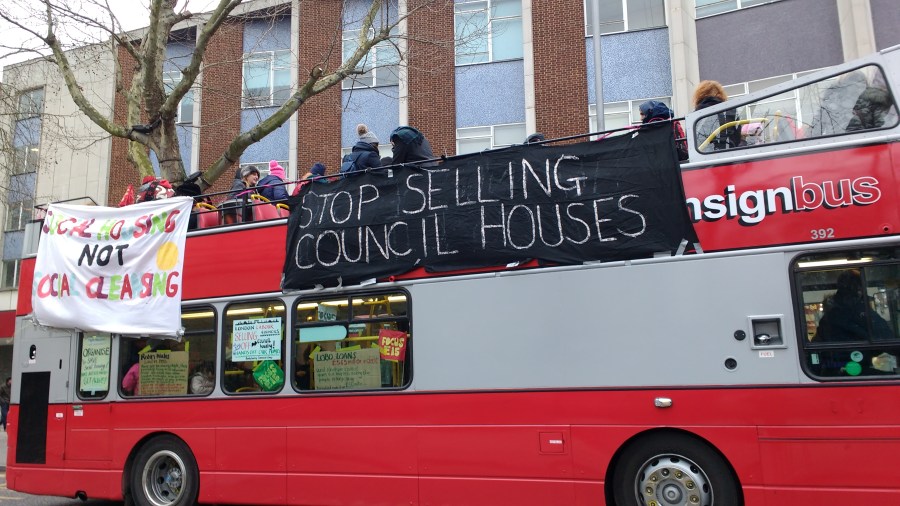
These kinds of situations are becoming more frequent than ever. In a borough like Tower Hamlets, with over 20,000 people on the waiting list for council housing, many are forced to resort to dishonest renting contracts with landlords and renting companies taking advantage of people in desperate housing situations. This is why we need fully implemented licensing and inspection of landlords to enforce decent housing standards. There is clearly more that can be done by Tower Hamlets Council to strengthen their licensing scheme which could start by making licensing compulsory for all landlords and bringing in rent controls.
Unaffordable rents, sky-high house prices and a rising cost of living – it’s no wonder that young people experience the worst of the housing crisis, on top of enormous tuition fees that are being increased as of September 2025. The Higher Education Policy Institute (HEPI) reported in December 2024 that the maximum student loan is now less than the average student rent. The maintenance loans that saddle us with lifelong debt, have left students to fend for themselves in London’s private housing market or are forced to choose cramped and often poor quality halls. This is why we call for the end of the marketisation of our education, and for universities to be free and fully funded to provide safe, accessible housing for all students.
Many councils have declared bankruptcy with 63 more set to do so in the next year due to, now Labour-led, austerity where public services have been cut to the bone, like the recent £5 bn cut from the welfare bill. Starmer’s Labour party has made it clear they do not represent the interests of the working class and young people, cutting the winter fuel payment for pensioners, lifting the cap on tuition fees, and the continued support of the Israeli state’s onslaught on Gaza, many are looking for an alternative to the broken system.
The mass building of council homes, democratic control over housing management and regulations will not happen under Labour, it is clear and necessary that workers and young people must fight for a new mass workers party for an anti-war, anti-austerity programme to provide the services we desperately need. This includes democratic rent caps, a mass housing programme; over 7000,000 homes in the UK are standing empty! If workers and students took this resource into democratic control, it could be one step in the right direction towards fixing the housing crisis and the exploitative tactics of landlords and renting companies who act with impunity.
Fighting back can get results as proven by the case of Lawanya in 2021, a penniless asylum seeker and refugee campaign organiser. City Rooms, with their history of exploiting vulnerable renters, had bullied and forced Lawanya out of their property with no consideration for her situation at the time, whilst still demanding that she pay the rent on the full contract all due to there not being a ‘break clause’ in her contract. Despite this, campaign action and protests led by the Socialist Party backed by the London Renters Union and trade unions like Unite, bought City Rooms to bitterly admit defeat, agreeing to a reduction in the total amount and an affordable repayment rate. This offer was only reached through the resilience and strength of fighting together against the super rich bosses who had even threatened Lawanya’s asylum status!
Now they are back again to threaten and bully another vulnerable person into staying in their property despite it being an unsafe living space. From eviction to unjust debts to unsafe living conditions, challenging the predatory behaviour of companies like City Rooms is vital. Rights for the working class and young people are not granted by the rich, but won through struggle.
Fight for mass council home building and democratic rent control!
Implement licensing and inspection of landlords to enforce decent housing standards
Full public funding for universities to provide safe housing and make education free
Make the rich landlords and bosses pay, fight for socialist policies
Workers and young people need our own, new, mass party to fight for our interests
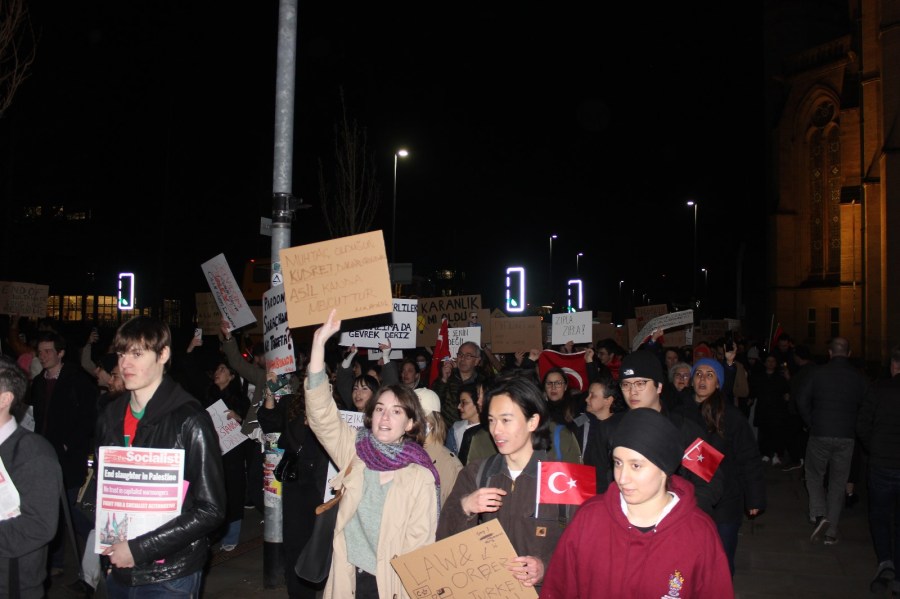
Socialist Students sends solidarity to the mass protests in Turkey fighting back against the regime of Recep Tayyip Erdogan.
Despite an official ban on demonstrations and other restrictions, university students and young people have been organising for many days on campuses and on the streets, heroically battling against police brutality. Students in a number of areas have launched boycotts of their universities.
The protests were set alight by the arrest of the mayor of Istanbul, Ekrem Imamoglu, on alleged corruption charges, just as he was set to be announced as the presidential candidate for the main capitalist CHP opposition party. This follows a series of arrests of hundreds of trade unionists, socialists, journalists and other activists, as Erdogan tries in desperation to clamp down on any opposition to his increasingly unpopular government. His government has implemented a new round of brutal cuts to public spending, and overseen relentless attacks on democratic rights.
As students in Britain, we stand in solidarity with the struggles of young people in Turkey for an end to state repression and worsening living standards. The university and school students at the heart of the mass protests in Turkey say that see no future for themselves the way things are today. The outlook in Britain is no different, where Keir Starmer’s Labour government is overseeing devastating cuts to education, while allowing an ever-growing gap between young workers’ wages and the cost of a decent life. Around the world, all young people see is a capitalist system in crisis – war, oppression, poverty, climate catastrophe and misery for the vast majority of people.
Socialist Students fights for a socialist alternative to capitalism, as the only way to give all young people a decent future free of poverty and oppression. This means students uniting with the working class in a mass movement that is armed with a socialist programme to transform society – fighting to take the banks and major companies that dominate the economy under the democratic control and management of working-class people, so that society can be planned to meet the needs of all people.
Let’s organise to kick out Erdogan, Starmer and all the capitalist politicians along with their sick system!
Solidarity with protestors fighting Erdogan’s regime in Turkey
End the attacks on democratic rights
Fight the cost-of-living crisis and kick out Erdogan
Fight for a socialist alternative to Erdogan, Starmer, Trump and all the capitalist politicians
I attended Global Justice Youth’s annual event We Rise 2025 at the University of Sussex in February. They had reached out to invite Socialist Students, so I attended from our group in Southampton. Over 100 attend the event, split into a number of panels and workshops, covering a range of global issues.
The opening plenary entitled “Capitalism in a World on Fire: Oil, climate change and neoliberal power”, with great contributions on the failures of neoliberalism for working-class people, the insidious effects of the political lobbying of fossil fuel capital and on the origins and aims of the horrific genocide in Gaza. I made a contribution praising the fact that the discussion drew direct links between the capitalist system and these crises.
However, the discussion was lacking a clear solution, so I posed the ideas of a socialist green transition based on public ownership of industry, with production planned to meet the needs of ordinary people and the environment.
After lunch there was a talk on ‘Trump, Reform and the global rise of the Far Right’. The panel discussed how capitalist politicians use rhetoric that blames immigration, rather than the policies of capitalist governments cutting public services, for ruining our lives.
One young attendee asked how to make this point to the wider masses, in opposition to the billionaire-owned media diverting blame away from the capitalist elite.
There was an organisation discussion, detailing Global Youth Justice’s campaigning including around issues such as fossil fuel legislation and protesting UK-Israel trade deals.
Whilst this was interesting and positive, the workshop lacked a clear push to link them together to form a coherent and concrete political programme that can begin to tackle the global crises of capitalism.
The final panel was titled “Another world is possible”, which provided a nice summary of the day as well as some revolutionary optimism. However, despite the use of the statistic that 47% of young people think “the entire way of our society is organised must be radically changed through revolution”; the final contributions were restricted by a lack of clear political directive to engage and win over the working class, which is the force that can bring about change internationally.
Overall I thought it was a very good event, with young people starting to draw socialist conclusions based on their experience of the crisis of global capitalism that is staring us right in the face.
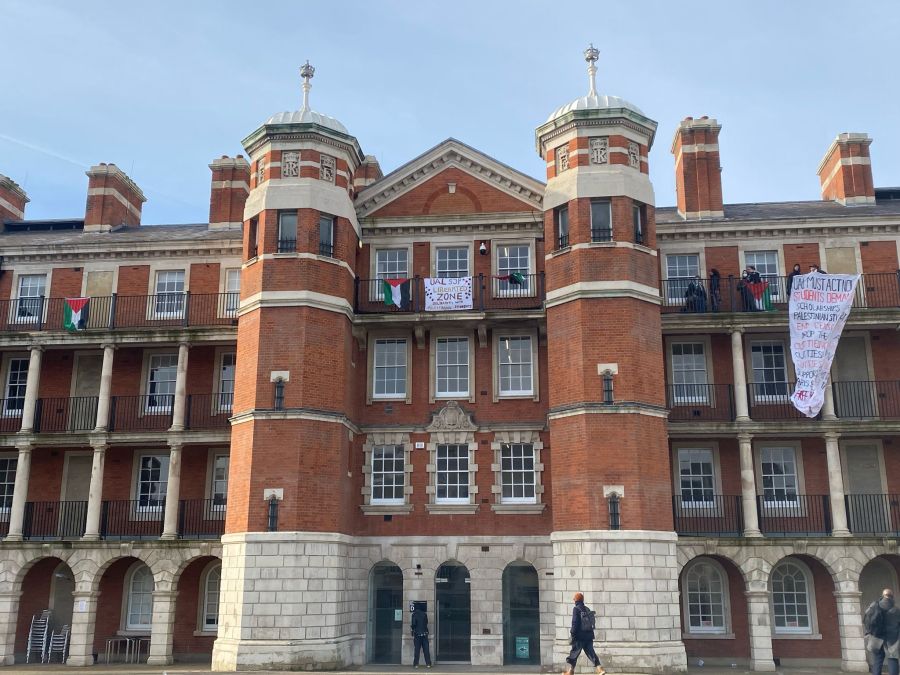
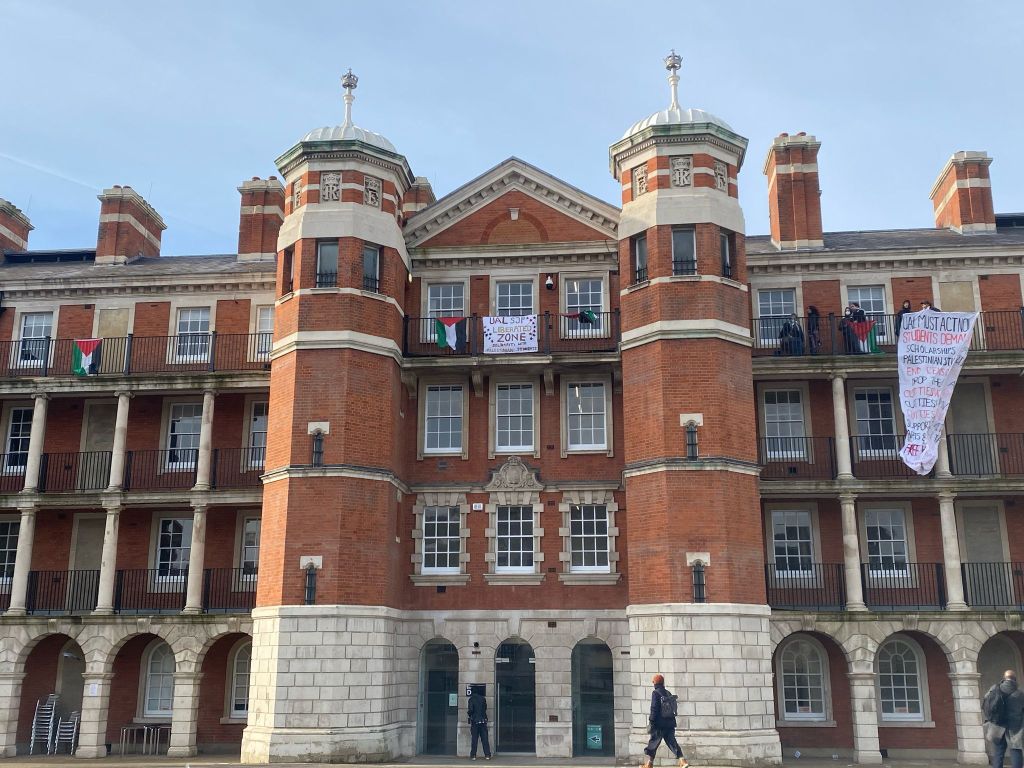
Student Justice for Palestine held a peaceful protest at the University of Arts London (UAL), protesting against our university’s compliance in the current genocide of Palestinians. The university has continually ignored and blocked student demands that our tuition fees should not be used to fund war and arms deals.
Protesters temporarily occupied a space on Chelsea campus on 17 February to declare that the university chancellor Clive Myrie cannot and will not get away with silencing students and staff. Just two hours after the occupation, students received verbal threats from the management to vacate the premises by 9pm, or face disciplinary action.
The purposeful use of vague terminology of the code of conduct, and heavy police and security presence is part and parcel of the university’s intimidation tactics. UAL has a history of abusing its code of conduct to silence its students and staff from expressing their freedom of speech and right to protest.
After an emergency rally to protest university’s intimidation tactics, it was decided that we would end the encampment, as this was in the best interest of international students, who are here on visas, and already facing disciplinary action for peacefully protesting.
Occupation
Student Justice for Palestine has stated that it will continue to hold space on the campus, hosting readings, discussion, and other pro-Palestine events over the next week until its meeting with the university chancellor and other board members.
This is where they will again negotiate student demands on divesting from Lvmh, Lloyds Bank, and L’Oréal, changing its current definition of antisemitism that protects Zionism, and to protect and support its Palestinian students.
UAL Socialist Students stands in solidarity with Student Justice for Palestine. We condemn the university management on their consistent refusal to cut any ties with big companies who are complicit in the slaughter of Palestinians.
We support the demands that students have put towards our university. And we support our fellow students and staff’s right to strike, protest, and occupy as means of getting these demands met.
We should decide
We call for elected committees of students and staff to have democratic control over how our money is being spent. We should all be asking ourselves why do our universities continue to invest and collaborate with arms dealing companies in the first place?
Keir Starmer’s Labour government must tax the super-rich, and create a fully funded education system that is of higher quality, and accessible to all students of all backgrounds.
Socialist Students believes that this is all comes to a much larger issue that needs a systemic change – socialist change. We need a new mass workers’ party that stands on an anti-war, socialist programme – fighting for free education, decent, affordable housing, and against war and austerity.
March 8th is International Women’s Day. It was founded by socialists over one hundred years ago as a day of campaigning for the rights of all women – for decent working conditions, for a political voice, and for a life free from sexism and exploitation.
In 2025, this fight is still going on. From the dismantling of Roe v Wade in the US, which saw the removal of abortion rights from millions of women, to the mass movement in Iran following the murder of Mahsa Amini by the ‘morality police’, there are many recent examples of attacks on women being met with protests and resistance.
Socialist Students is campaigning for socialist ideas to build a united mass movement that can fight back against all attacks on women’s rights, and put an end to sexism and violence against women for good.
End sexism and violence against women on campus
Reports consistently show that around three quarters of women students experience sexual violence while at university. The numbers are similar for colleges and sixth forms. Many victims are forced to take measures such as skipping lectures, changing course modules, or even dropping out of study to avoid their attacker.
The majority of sexual assaults take place on our campuses. On top of this, the rising cost of living and inadequate maintenance support force working-class students especially to take part-time jobs alongside their studies. Many have to work in the night-time economy, forced to make their way home after work in the dark, alone. Sexist harassment is rife in industries like hospitality, where a big proportion of women students work.
Yet universities are doing far too little to end the problem of sexism and violence against women. Only 2% of students experiencing sexual violence feel both able to report it to their university and are satisfied with the reporting process. Clearly we can have no faith in unaccountable university managements to protect students.
Students’ unions and trade unions must organise and campaign against sexual harassment in workplaces, including schools, colleges and universities. Introduce democratically elected committees comprising students and staff to investigate all reports of sexual assault and sexist abuse.
Fight back with funding and free education
As successive Labour and Tory governments have slashed direct government funding to universities, vice chancellors have obediently carried out cuts – including to things like counselling services, campus lighting, transport, and student bursaries, all of which has left students further exposed to the effects of sexism and sexual violence.
Socialist Students societies have launched numerous campaigns against cuts to campus jobs and services – such as in Liverpool, where we successfully campaigned for the reinstatement of the night bus. We think a key part of challenging sexism on campus is building a united movement for free, fully funded education instead of the current marketised tuition fee system.
Neither Labour nor the university managements have any alternative to the worsening conditions on campus, because they work within the framework of capitalism. Accepting this ‘profit-before-all-else’ system means accepting that a tiny elite in society gets richer and richer, while education and other public services crumble – with workers and students made to pay the price.
Organise on campus to fight to provide adequate resources for women who have experienced sexual violence. Fight to end the marketised basis of universities, by campaigning to abolish tuition fees. Fully fund education, cancel student debt and replace student loans with living maintenance grants for all – take the wealth off the super-rich.
The current unelected university managements can’t protect students’ right to a safe and rewarding education. Students and staff should democratically run our universities instead. Build democratic, fighting students’ unions that can link up with the campus trade unions and fight for the high-quality education we need.
Build a new mass workers’ party that gives students and workers from all backgrounds a political voice – a socialist alternative to Starmer, Farage and all the establishment parties and politicians.
A socialist alternative to sexism and capitalism
Socialist Students fights against all sexist ideas and behaviour, which exist not just on campus but all across society, perpetuated by capitalist institutions and corporations.
To seriously challenge sexist ideas means building a mass movement against capitalism, which is an inherently unequal system that benefits from sexism in countless ways.
Capitalism saves vast profits by consigning responsibility for childcare and housework to individual families, predominantly to the women within them. Women workers are paid less than men (in higher education the gender pay gap is about 20%) and this in turn reinforces ideas about women’s unequal status. The media, as well as the beauty, fashion and leisure industries, all benefit from the commodification of women’s bodies, promoting harmful stereotypes about how men and women should look and behave. The ruling class also relies on sexist ideas as one way to divide working-class people and weaken our ability to collectively fight their attacks.
A socialist revolution would remove this capitalist basis for sexism. All of society’s wealth, resources and technology would be used as part of a democratic plan to meet everyone’s needs. It would be a system based on cooperation and solidarity, and these values would come to be reflected in personal relations and culture. By removing the material basis for sexism, it would be possible to dislodge all sexist ideas and attitudes over time.
Build a movement that fights to take the wealth and power out of the hands of the super-rich and the elites. For a socialist world in which the working class democratically runs society to meet the needs of all people, to lay the basis for ending sexism and all forms of oppression
Do you want to kick sexism off campus?
Do you agree with our socialist ideas to end sexism and violence against women? Get in touch to get involved in campaigning alongside a local Socialist Students group. We want to hold protests and marches, organise outreach campaigns through leafleting and petitioning, and build pressure on students’ unions to publicly support and campaign for the socialist policies outlined in this leaflet.
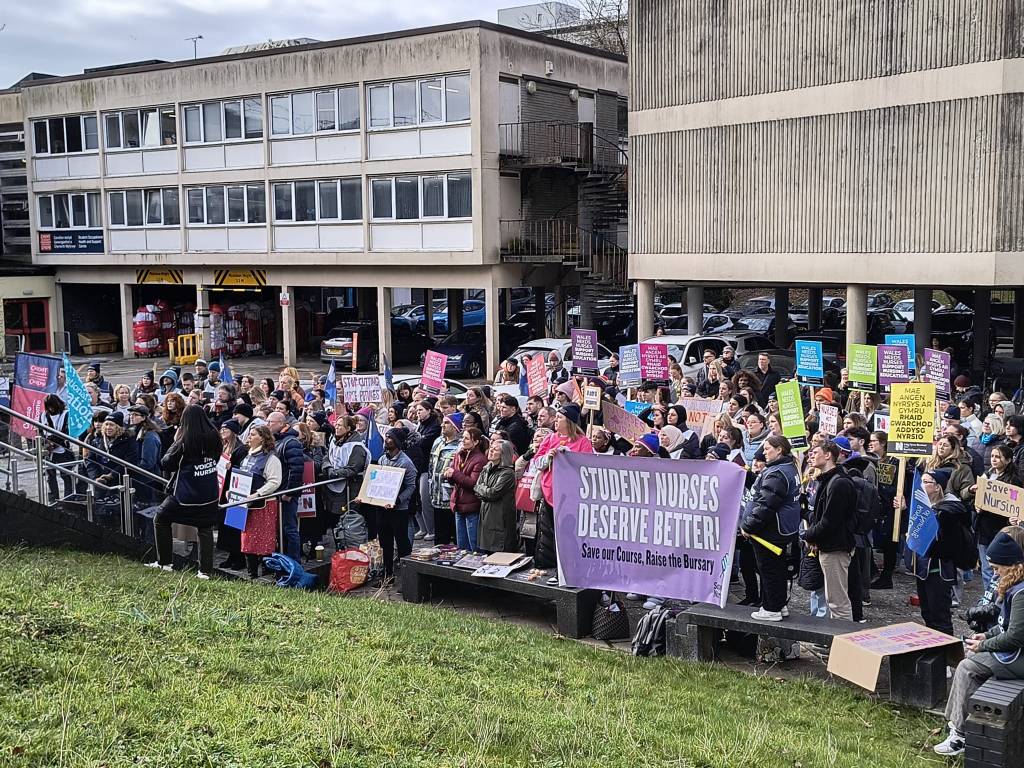
Students and workers protest against Cardiff uni job cuts. Photo: Cardiff Socialist Party
The vice chancellors have ramped up their offensive on university students and staff this year. More than 2,000 new redundancies have been planned since the start of 2025 alone. This figure will rise even higher in coming weeks, as a number of institutions are yet to confirm the scale of their announced cuts. At several universities the planned redundancies amount to 10% or more of the workforce.
For students, the threat of mass course closures comes on top of an ongoing cost-of-living crisis, as well as a tuition fee hike next year that will do nothing to resolve the crisis in higher education.
Socialist Students is serious about fighting to end the uni funding crisis, by mobilising students to demand no course cuts, no job losses, and for free, fully funded education.
Workers in the University and College Union (UCU) have responded to attacks by balloting for strike action in at least a dozen university branches so far. And Unison is currently balloting tens of thousands of its members in higher education. Socialist Students groups will organise for the biggest-possible student attendance at picket lines, and build for solidarity action.
But students should not limit ourselves to an exclusively supporting role in the struggle. We can propose our own initiatives, within which we invite the trade unions on campus to play a leading role. That way we can show that students are serious about fighting and pro-active in our determination to fight shoulder to shoulder with staff. That is the most inspiring kind of solidarity that students can give in this fight for the future of higher education.
For Socialist Students groups, this means putting forward a plan of action that can organise staff, students and working-class people locally in a campaign to fight back as soon as any cuts are announced. We can build for mass meetings, hold protests, organise lobbies of MPs, collect signatures for an open letter or petition – there is no shortage of options.
A plan of activity can bring people together. But what transforms a series of gatherings into an effective movement is a clear political programme of demands to fight for. Socialist Students has launched the Funding Not Fees campaign as a way of putting forward the ideas we think are needed to build such a movement.
Socialist Students says:
No to further fee increases – get organised on campus to fight for free education! Cancel student debt, replace student loans with living grants tied to the rate of inflation. Make the super-rich pay!
No cuts and no closures! Build democratic student organisations to link up with campus trade unions and the wider working class to fight for the funding our universities need
Kick big business off campus! End marketisation of our education. Open up university finances to democratic oversight and control, including by elected students’ representatives and campus trade unions, with the power to terminate all contracts and research tied to war, occupation, profiteering and exploitation, while guaranteeing jobs and funding
Students need a political voice. Build a new mass workers’ party that will stand up for students and workers and fights for socialist policies
Fight for socialist change. For democratic public ownership of the banks, monopolies and major industry to provide us with a future
Cardiff Uni – pressure wins £19 million from Welsh government
Aris Prevost, Cardiff Socialist Students
On top of 400 jobs cut at Cardiff Uni, 200 job cuts have been announced at Bangor Uni and 90 at University South Wales. Having previously said that there is no more money, and under popular pressure and protests, the Welsh government has announced £19 million investment into higher education in Wales.
However, this does not mean a final victory. A one-time £19 million cash injection will only partially stem the tide of cuts. Cardiff University alone faces a £30 million deficit. It’s £15 million at Bangor and £20 million at USW (see below). But this additional money will not solve the funding crisis. In fact, it remains unclear where this money will go, and what strings are attached.
We demand an immediate end to all cuts, and that pressure is put on governments in Cardiff and London for adequate funding.
The fightback at Cardiff Uni is clearly working. The uni bosses’ position is growing weaker by the day. A unified student and staff pushback can force the university to halt all cuts.
As part of the fightback, there was a demo organised by music alumni on 22 February, where they played a public concert outside city hall. The concert loudly highlighted the cultural impact that music in Cardiff has. Cardiff has many independent music venues and cultural roots which have been under attack, including the closure of the beloved venue The Moon.
Other events are being planned, especially targeting uni open days as well as organising further marches and rallies.
Moving forward, we need to push for an alternative funding model to fix higher education. It is only by running education as a public good rather than a commodity to be sold that we will be able to end this crisis and save jobs. We need a new workers’ party that fights for free education, fully publicly funded by making the super-rich pay!
Uni South Wales students build cuts resistance
Suzie Matthews
Following in Cardiff University’s controversial footsteps, the University of South Wales (USW) announced on 17 February its plans to axe around 90 jobs, including entire courses.
In response, Rhondda Cynon Taf Socialist Party held a campaign stall in opposition, and student support was immense. Under the hypocritical shadow of a crane building a shiny new block, more than half of the students who passed by stopped to sign the petition.
There was the distinct sense that something ought to be done. Three students left their details to find out more about joining the Socialist Party, one suggested organising a protest. The atmosphere isn’t yet one of anger – though that can change when cuts to specific courses are announced.
We have been campaigning at USW for a while now. Staff and students have told us about cuts to Maths courses and professional services, fearing that what is happening at Cardiff would arrive at their doorsteps. It is difficult to view USW as an institution struggling for money whilst a new building is being thrown up. Students and staff are concerned about where these cuts will fall – many assumed that they will be primarily directed at the arts and humanities.
40% of students at USW are international students, a group that is hideously overcharged. Uni managements have blamed a drop off in international applicants for their budget deficits. But we can’t stand for cuts and job losses, we must fight for higher education fully funded by government.
Brunel Uni – workers strike against cuts
Ryan Leonard, Brunel Socialist Students
Staff at Brunel University were informed in October last year of a planned “significant academic resizing programme”. The plan was to make 130 redundancies of full-time academic staff and 79 profession service staff, a 14% reduction in staffing levels. It goes without saying that students were left in the dark, we were only informed of the university management’s plans by our lecturers.
Lecturers in UCU have announced a calendar of 16 strike days, escalating over a period of six weeks, beginning on 28 February. Socialist Students will be building student support for the strikes.
The vice chancellor of Brunel is Andrew Jones, a Labour councillor. He lists on his LinkedIn page “business planning” and “strategic thinking” as skills he’s gained from his role at Brunel. Just last year the university hired 139 academic staff… incredibly strategic.
For the last five years, Brunel has exploited international students, who can be charged far higher fees, as a source of income and despite being warned consistently over the last two years that the law around student visas would change, senior leadership continued on this path.
Students are rightly frustrated. Some of the people I study with have lost their tutors during their dissertations, which is terrifying. Planned redundancies don’t include the 69 members of the executive team, all earning over £100k. Nor the vice chancellor, earning £267k a year.
Our uni is not the assorted renovations that Brunel has carried out, totalling five times the savings made by sacking staff. Our uni is the educators, the students and the relationships between us. All of which will suffer if Brunel’s redundancy plan goes ahead.
Liverpool Uni – standing in SU elections to fight cuts
Hannah Ponting, Liverpool Socialist Students
After the numerous job cuts announced at universities across the country, lots of us were worried about similar cuts occurring in Liverpool.
The University of Liverpool has followed other unis and enacted a plan of ‘voluntary redundancies’ of staff. However, uni bosses are being extremely vague about the number of job cuts, despite pressure from the UCU for transparency.
This news comes only 17 weeks after the Labour government’s tuition fees hike. Job losses will have a negative impact on students as well as staff, emphasising the importance of uniting Socialist Students work with the demands of the trade unions.
Students Union officer elections are coming up. We are taking this as an opportunity to stand a socialist candidate in order to give a platform to our ideas. I am very proud to be that candidate, and to stand on an anti-cuts platform, aiming to build the Funding Not Fees campaign, as well as amplifying the voices of the uni workers.
In these times of increasing cuts at universities throughout the UK, it is increasingly important to keep socialist ideas visible on our campuses and to build the Funding Not Fees campaign, as part of our work as Socialist Students.
Coventry Uni bosses threaten ‘fire and rehire’
Frank Hammond, Coventry Socialist Students
Over 90 full-time staff members are set to be cut at Coventry University, with a further 200 staff re-enrolled under a subsidiary called Peoples Future Limited (PFL). A familiar fire-and-rehire fiasco is underway with whole courses set to terminated along with lecturers’ jobs.
Uni bosses argue the recent tuition fees rise will still not cover the uplift of National Insurance contribution rates, and that their contributions to the Teachers’ Pension Scheme is ‘unaffordable’. The bosses’ solution? Fire and rehire to remove staff from the scheme.
It should be noted that Vice Chancellor and CEO of Coventry University, John Latham, was reported to have received an £80,768 bonus on top of his £312,617 salary during the financial year ending March 2023. Furthermore, only five days after this decision was announced from the university in December 2024, Latham was named as a non-executive director of the Labour government’s Department for Business and Trade.
A lecturer within the university has personally expressed fear for their living situation to me as a result of the unacceptable decision; not originally from the UK and coming from a country that’s fought a war throughout the last few years, redundancy is one of the scariest words to throw around. Workers are once again being exploited, threatened and neglected. And yet, we receive nothing but silence or excuses from the ones in charge. Another example of “desperate times calling for desperate measures”, as per the standard under Keir Starmer’s Labour government.
Opposing the decision, Coventry Socialist Students has called a public meeting, working to spread the word to students, lecturers and unionists alike, in the interest of exposing unjust cuts. It will hear from a UCU trade union rep. We want to open a discussion of what can be done and ultimately making a shout to the bosses that this decision is not being accepted.
Hard-working people are currently at risk of being punished with seemingly no remorse from the staff at the top. Students kicking up a fuss is a warning to the higher-ups to heed as we continue with the Funding nor Fees campaign.
Socialist Students conference
Over 100 students came together for the Socialist Students national conference on 8 February. We discussed motions proposed by the national steering committee and different groups, and voted on whether or not these match the common consensus of those attending for us to put in the action in the coming year. My first year attending, as a delegate, has allowed me and many more another opportunity to see light at the end of the dark tunnel of austerity.
Students travelled from north, south and all about to have their say in where we go as a movement next, to share concerns and opinions, and ultimately lend their hand in the fight for a fairer system.
To witness a strong crowd of young people who weren’t afraid to speak up, defend their morals and intelligently respond to ignorant criticism is rejuvenating and should strike worry in the hearts of the capitalists and ruling class. Support for the cause is indeed rising, people are seeing the petrifying portrait being painted by Starmer’s Labour government and want better. The experience has gifted me hope and strength to continue fighting for a socialist future.
Alongside many issues, a consistent offender echoed in the anecdotes of students were job cuts in universities across the country. I was able to use one of my contributions to give my own account of seeing cuts in higher education.
We remain determined to defend teachers and students, to fight for free education, and for socialist change.
Resist Bradford uni course and nursery closure
Tom Gibson, Bradford Socialist Party
Bradford university is laying off 300 staff, shutting down chemistry and media courses, and also shutting the university nursery. These are deep cuts that will take away the livelihoods of hundreds of hardworking people, who are either educating students or looking after children. These cuts will lock out many potential students who need the nursery to look after their children while they study, reducing access to education for those with young children.
Our campaign stall was warmly received by students and staff who were very concerned about these cuts. This is part of a wider effort by the Socialist Party in Bradford to combat cuts.
Unis being run as if they are profit-seeking companies has led to this funding crisis, downgrading of the quality of education. We will fight alongside staff and students for a publicly funded and free university system that is fair and accessible.
“Since capitalism benefits from perpetuating gender inequality, individuals are constantly being bombarded with ideas that reinforce sexism and misogyny. Sexism is a systemic issue, and requires systemic solutions.
Socialist Students recognises that the fight to end sexism and misogyny is not separate from the fight to bring an end to the capitalist system as a whole and for the socialist transformation of society.“
Liverpool Socialist Students members on a ‘Reclaim the Night’ march last term
Roza Kwiecinska, East London college student
Universities might champion themselves as places of liberal freedom and advocate for human rights and feminism. But the experience of staff and students is very different. When it comes to providing fair job opportunities for everyone, regardless of gender, and protecting women from sexual assault, universities still fail.
On campus, sexism is a problem that takes many forms. From unfair grading of assessments based on gender, to comments about women students’ appearance, clothing and makeup. There is no inherent biological advantage for male students, but there is a huge underestimation of women students.
Education has the third-highest gender pay gap out of all the UK sectors, worse than manufacturing, mining and retail. Although women make up around half of university lecturers, they are significantly outnumbered in higher academic positions. Only 24% of professors are women. Even fewer women hold top roles, with just 18% as vice-chancellors or principals.
Women students also experience shockingly high levels of sexual harassment and sexual violence, both on and off the university campus. From ‘casual’ teasing to online trolling, harassment and physical attacks.
Campus should be a safe space for all students, no matter their gender, sexual orientation or race. It should not only be a place of learning, but also a place of integration, friendships and discovering yourself.
One terrifying statistic is that 97% of young women (18-24) in the UK have been sexually harassed. Many of these incidents happen in education and learning environments. This shows that right now, for many people, university is not that safe a place.
Research by the Young Women’s Trust found that young women who endure sexism in the UK are “five times more likely to suffer from clinical depression” and that “younger women who had experienced sexism were more likely to report greater psychological distress even four years following a sexist experience.”
University is a place where students are not only stressed about grades, additional jobs they have to do, finding an apartment, but where women are exposed to sexism, leaving long-lasting impacts, including on mental health.
Universities are not doing enough to tackle sexism and sexual harassment. 72% of students don’t know or are unsure about where to report or seek support. When women are brave enough to speak out, many find that it backfires. Women face diminishment or silencing: it is disgraceful that universities in England have used non-disclosure agreements to silence those who have experienced sexual harassment and violence.
Procedures for reporting sexual harassment should be managed by committees led by trade unions and students. This would ensure that the processes are effectively implemented and accessible to those who need them, fostering a zero-tolerance policy for harassment and abuse on campus.
For too long, the universities have overlooked survivors, enabled a ‘rape culture’, and prioritised profits over the safety of students. There has to be increased funding and support for student services, and a commitment to taking action against violent behaviours.
Seemingly small things like improved lighting around campus and housing at night, and accessible transport links to campus are important too. The safety of women students is priceless and should not be compromised. We need a fully funded, free public transport network, so that people can get home safely. Socialist Students has led campaigns to fight for these measures, such as the campaign to save the Liverpool night bus.
It is mindblowing that students not only have to pay huge sums of money for education, but also are exposed to harassment and sexism. Building a movement for free education is essential – scrapping fees and debt and introducing living student grants. We fight for full government funding to provide a safe and free education for all.
These problems are not new. In 2010, the National Union of Students (NUS) published a report finding: “One in seven respondents had experienced a serious physical or sexual assault during their time as a student, 12% had been stalked while at university or college, and 68% had been a victim of one or more kinds of sexual harassment while they were at university.”
Following the report, NUS strategy focused on promoting ‘zero-tolerance’ policies in students union bars. But like the ‘Ask for Angela’ scheme, unions have been accredited without investing in the training for staff and bouncers, or staffing levels, to make it enforceable.
There has also been a focus on educating students about consent, often working alongside university management.
It is essential to focus on education and training; we must confront prejudices, gender stereotypes, and sexist behaviour whenever we encounter them. Though who delivers it and how is important.
However, education alone has clearly not been enough to solve the problem. One problem is that strategies based on ‘raising awareness’ can reduce the issue to just an individual problem or behaviour. Socialist Students understands that individual behaviour is influenced by the broader economic and social system we live in, which is capitalism.
Since capitalism benefits from perpetuating gender inequality, individuals are constantly being bombarded with ideas that reinforce sexism and misogyny. Sexism is a systemic issue, and requires systemic solutions.
Take social media, for example. We live in a world where the impact of social media is massive. Misogynistic messages are targeted at boys and young men. Social media has been monetised to make huge profits for social media companies as well as individual ‘influencers’. Individuals like Andrew Tate or Ben Shapiro have made millions from using sexist rhetoric to explain the economic crisis and ‘crisis of masculinity’. And they prefer to blame minorities, immigrants and women for the effects of a capitalist world – propping up capitalism through reactionary ideas.
Additionally, access to online pornography has left children and young people, especially young men, with a misguided representation of women, men, and what sexual relationships look like. Porn created under a capitalist system reinforces harmful stereotypes and objectifies women and doesn’t show the act of consent, which is crucial in any relationship. As much as 90% of it is violent – normalising sexual violence against women.
Education can cut through these ideas, but it won’t stop them being promoted in the first place. Socialist Students calls for the social media companies to be brought into public ownership to remove the profit incentive behind the spread of misogynistic and divisive ideas, and for them to be run and controlled democratically. For example, by subjecting algorithms to scrutiny by trade unions, young people, educators and others. The same goes for all of the major corporations and businesses that also profit from sexism.
This is why Socialist Students recognises that the fight to end sexism and misogyny is not separate from the fight to bring an end to the capitalist system as a whole and for the socialist transformation of society.
Manchester Socialist Students members protesting alongside trade union campaigners last term
Robbie Davidson Manchester Socialist Students
The University of Manchester has announced that the rents will more than double at three student housing complexes in Fallowfield: Oak House, Owen’s Park, and Woolton Hall.
Following the success of last year’s student rent strike in Manchester, rents in Fallowfield were reduced by 30%, standing out against the cost-of-living crisis.
The complex also hosts the cheapest venue for students in the city by far, Squirrels Bar. Squirrels will also be demolished, chipping away at our ability to socialise affordably.
Labour disgrace
Combined with Labour’s disgraceful hike in tuition fees, the rent hike means students in Oak House will pay almost £5,000 more per year. This is amidst already brutal conditions for many young people, with average expenditure far exceeding student loans.
Food bank use amongst students stands at record highs, as do the rates of self-harm and suicide. But the bosses at the University of Manchester are using the people they are supposed to look after as a tool to close the funding gap left by a decade and a half of austerity.
Socialist Students is demanding that rents are not doubled, and that they remain at a fixed, stable rate. We believe that high-quality, affordable housing must be made available to all, overseen by a democratic body of students, staff, and the community, who decide how our homes are priced.
The rent rises will come after the student blocks are redeveloped. Regeneration of the complex is necessary, it is falling apart. Students face regular infestations, broken amenities, and share a few dozen washing machines between thousands of people.
Multimillion privatisation
Regeneration, while keeping rents stable, is not possible with a multimillion pound contract with a private construction company. But a nationalised building service, under the democratic control of working people, would be able to do that.
We demand that Squirrels, and other affordable venues, are protected, allowing students to relax and socialise, without further straining our cost of living.
This attack can only be fought by a unified response, bringing together students, trade unions, and campus activist groups. To achieve this, Socialist Students is calling for a general meeting that everyone can attend to discuss the fight back – not just to protect a few blocks, but to fight for the funding our universities need, out of the pockets of the super-rich.
Manchester Socialist Students meeting: How can socialists fight the housing crisis?
Wednesday 29th January, 4pm University of ManchesterStudents’ Union, Room 2.1