
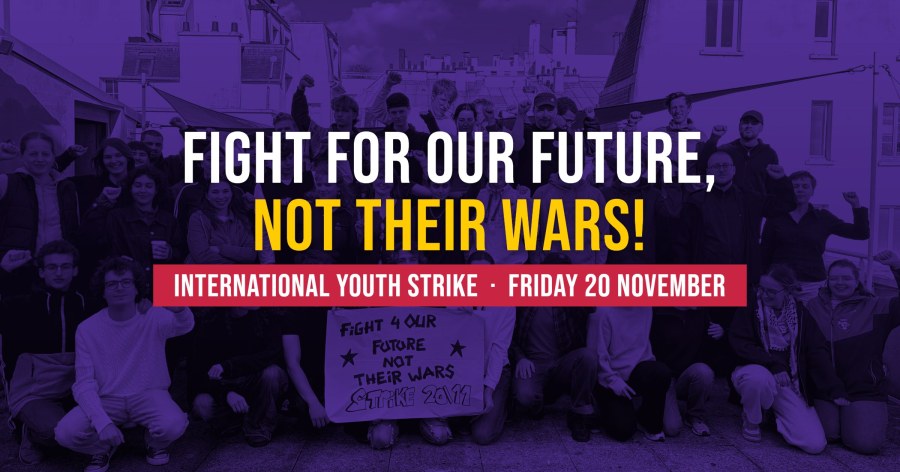
Students in 50+ towns and cities walk out on Friday 20 November, backed by the National Education Union, as Italy’s largest union calls a general strike for the same day
Press release from Socialist Students
Socialist Students, which is organising walkouts and protests in more than 50 towns and cities across Britain on Friday 20 November, congratulates Serbia’s students on their victory in Sunday’s parliamentary election. It shows what young people can win when they organise.
On preliminary results, the Student List, formed by the student movement that has led mass protests across Serbia for almost two years, has won 140 of the 250 seats in parliament, an outright majority. Aleksandar Vučić, who resigned as president in September to run for prime minister, conceded on Sunday, saying “it is clear that we have lost the election”. His misnamed Serbian Progressive Party, in reality a right-wing neoliberal party, in government since 2012, goes into opposition.
In January 2025, as teachers, lawyers, health workers and farmers joined the students’ protests, the prime minister resigned. Student plenums, open daily assemblies where every student has a vote, vetted every Student List candidate. The list’s programme promises free education, affordable flats for young couples, tax relief for young families, a drastic cut in medicine prices under state control, a doctor in every village.
Socialist Students national chair Adam Powell-Davies said: “Almost two years ago Serbian students blockaded their universities. On Sunday they defeated the party that has run Serbia since 2012. They won because they organised democratically, in mass meetings where every student had a vote, because workers came out alongside them, and because they fought for what young people everywhere need: jobs, homes and services. Keeping those plenums going and extending them to the economy, the media, and other aspects of society is the best way to make sure the new parliament delivers.
“Young people all over the world have no trust that their governments will give us a future, so we are fighting for one ourselves. Last year youth movements brought down the governments of Nepal and Madagascar. In Britain, Labour has cut university teaching grants two years running while planning to raise military spending to close to £80 billion a year by 2029. On 20 November students across Britain and Europe will protest for free, properly funded education and a future worth having: fight for our future, not their wars.”
The International Youth Strike was called by youth and student organisations from across Europe at a meeting in Cologne in June, under the slogan “fight for our future, not their wars”. Students in Britain, France, Germany, Spain, Italy and other countries will take action on 20 November. In Italy, the CGIL, the country’s largest trade union confederation, has called a 24-hour general strike across all public and private sectors on the same day, against the government’s budget and the arms race, and the Italian Unione degli Studenti has called a national school student strike. The next German school strike against conscription is planned for the same day.
In Britain, the national executive of the National Education Union, the largest education union in Europe, voted on 22 October to support the right of young people “to peacefully organise, protest and make their voices heard, including those taking part in the N20 day of action”, and to “oppose disciplinary action against students participating in peaceful protest activity”. The University and College Union has called a day of action in every university on the same day over the crisis in higher education. Socialist Students is writing to trade union branches and trades councils across the UK, asking them to back the strike and join the protests.
Walkouts are planned at more than 100 schools, colleges and universities, and the main London protest is at 12pm in Parliament Square. Friday 20 November is also World Children’s Day, the anniversary of the UN Convention on the Rights of the Child, which gives young people the right to express their views on matters that affect them and the right to peaceful assembly. Teachers, lecturers and parents are invited to join students on the day.

