Opposing the capitalist Israeli state is not antisemitism
Defend the right to debate the way forward in the Middle East
Socialist Students steering committee
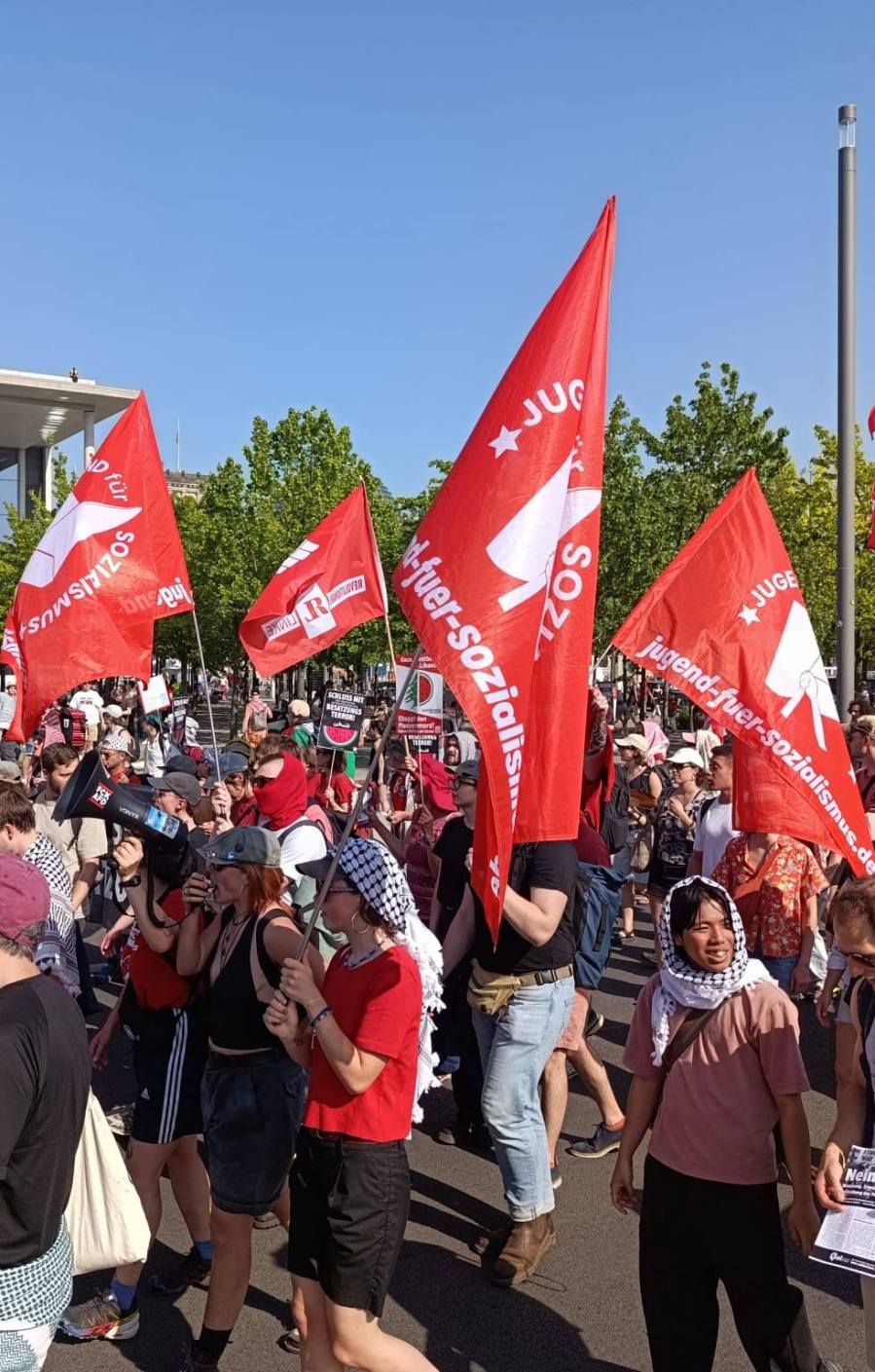
Socialist Students sends our solidarity to members of Linksjugend [‘solid] – the youth section of the German left party Die Linke – who have been subjected to vicious public attacks for their criticism of the Israeli state.
Shamefully, these attacks have come not just from the capitalist media in Germany, but also from the leadership of Die Linke itself.
At the federal conference of Linksjugend in early November, delegates voted in support of a motion on the Middle East that referenced the “colonial and racist character of the Israeli state project… from its beginnings to the present day”.
If anything, this characterisation is vague on the policies of mass expulsion, occupation, and state terror carried out by Israeli capitalist governments ever since the foundation of the Israeli state.
But the motion was still seized upon by the billionaire-owned press in Germany to spread accusations of antisemitism, in an attempt to defame Die Linke and its youth wing, and the global movement in solidarity with the Palestinians that has resurged in the past two years.
Unfortunately, the Die Linke co-leaders have responded by assisting in a witch hunt of its own young members in Linksjugend. They have asserted that “one cannot question the protection of Jewish life” – in other words, claiming that by opposing the Israeli capitalist state, Linksjugend members are undermining the safety of Jewish people.
But the opposite is true. It is the Israeli ruling class, and their staunch defence of an unequal capitalist system based on exploitation and oppression for private profit, which poses the biggest threat to the lives of Jewish people in Israel.
By ramping up war throughout the Middle East, the Netanyahu government has only increased fears and unease of most people living in Israel. Currently one-in-five Jewish Israeli children grow up below the poverty line. That’s before mentioning the genocidal policy of the Israeli government in Palestine, which in two years has claimed over 60,000 Palestinian lives and laid waste to Gaza – intensifying the national conflict and Palestinian suffering, and not bringing greater security to Israelis.
Socialist Students believes that the building of a movement for socialist change in Israel – which would include replacing the current capitalist Israeli state with a democratic workers’ government – will be a key part of the struggle for a socialist Middle East. That is the only way to finally end poverty, war, and oppression in the region. In opposing the current Israeli state in this way, socialists are the foremost defenders of the right of Jewish and all people to a genuinely safe and decent life.
As a socialist youth organisation, Socialist Students defends the right of all young people to discuss and debate a way out of the horror that capitalism means for billions around the globe. That includes the right to debate how the current nightmare in Palestine and the Middle East could be ended. We send solidarity to members of Linksjugend who, by adding to this debate, have faced vicious smears by agents of the capitalist class in Germany, both inside and outside Die Linke.
UCU members in Sheffield, including a list of student signatures gathered by Socialist Students in support of the strikes
Sheffield Socialist Students supports UCU strikes
Joseph McHale, Sheffield Socialist Students
17 November was the first day of joint strike action by the University and College Union (UCU) at both the University of Sheffield (UoS) and Sheffield Hallam University. Hallam had also gone on strike a week earlier.
After a busy first morning of picketing – at least ten buildings at UoS – UCU members and supporters converged outside the City Hall for a joint union rally. Socialist Students members were in the crowd supporting the speakers.
The UCU strike action is happening due to the shocking cuts both universities are aggressively pursuing. UoS has over £200 million in reserves but is pursuing £50.7 million in cuts for the 2025-26 year!
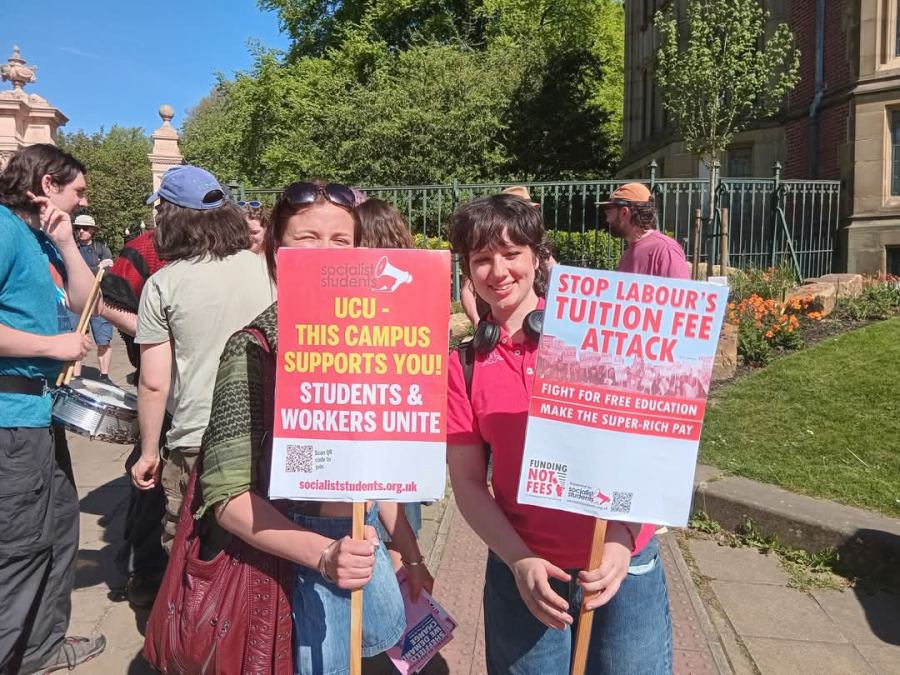
Socialist Students at UoS has worked with the university’s anti-cuts coalition to make students aware of strike action, petitioning over the last three weeks. We continued our support on the picket lines.
The rally included speeches from both UoS and Hallam staff and a student, all highlighting the dire conditions that have forced staff to take this action.
Many of those speeches mirrored Socialist Students demands for fully funded and free education that is democratically run. This is imperative to improving the experience for both staff and students, which was well received at the rally.
The failed experiment of marketisation of our universities is acknowledged in the UCU bulletin. These cuts treat students as customers and staff as service providers, rather than appreciating the true value that they bring to education.
We need a fully publicly funded and democratically run university system, putting both the staff and students at the heart of it rather than soulless management and business interests. This is what Socialist Students will continue to fight for.
Socialist Students campaigning in support
A Socialist Students meeting was addressed by UCU branch officers recently, and members have already been out campaigning in support of the UCU. Socialist Students is part of the anti-cuts coalition which pushed for a student referendum last academic year, in which students overwhelmingly voted in support of staff strike action (83%) and for ‘no confidence’ in the University Executive Board (89%).
Socialist Students is linking the fight to their Funding Not Fees campaign – exposing the broken market-based higher education funding model which allows Hallam to borrow huge to build a satellite campus in London, and UoS to pay its vice chancellor £330,000 a year, while both universities cut courses and staff.
There are nearly 5,000 fewer international students across Sheffield than two years ago, causing budget deficits. UoS’s dependence on arms manufacturers has been highlighted by Palestine campaigners, and now Hallam is accused of trading one of its professor’s academic freedom (research into forced labour in China) for access to the Chinese student market. The need for full funding and an end to marketisation couldn’t be clearer.
Fighting course closures and redundancies at Leicester uni
Alanah Carey Peacher, Leicester Socialist Students
At the beginning of the summer, University of Leicester (UoL) management announced that they would be slashing the staffing budget at the university by £11 million. Several courses, including Environmental Sciences and Chemistry, are under threat as well as many jobs.
Since then, the university bosses have revealed phase one of their cruel redundancy programme. Modern Languages is being shut down, and a whole series of departments are being merged, which will threaten further courses. A total of 160 redundances are planned.
On 12 November, the University and College Union (UCU) held a rally in the city in protest at the cuts. Over 300 staff, students and UCU members from around the country, as well as Unite members and other trade unionists and supporters, marched up to the university campus to hear speeches from staff and students affected by the cuts.
Staff members from Geography expressed their heartbreak upon hearing the news and their concern for the current and future students. The chair of UoL UCU explained that there is no transparency about the cuts. The university has the funds to create a campus in Dubai but not to fund the education of students in the city where the university was founded!
Members asked all in attendance to vote no confidence in the governance of the university. Socialist Students members will continue to build solidarity.
Sofia Pandolfi, college student and Socialist Students member, gave an inspiring speech at Socialism 2025. Read what she had to say here!
Young people today have grown up in a world of crisis. We’ve seen governments increase university tuition fees, cut our youth services, attempt to strip away disability benefits for young people, and propose a future which gives us no hope.
Internationally, we’ve watched our government support the brutal genocide in Palestine, claiming it has no money to invest in our education and services.
Living under a system devoid of opportunities, and dependent on international exploitation, has fuelled anger and frustration.
But if we young people are to have a real future to look forward to, we need to transform our anger into action – by getting organised for a socialist alternative to capitalism, and the war, exploitation and oppression that this system produces.
That is what Socialist Students did when Donald Trump, an embodiment of capitalism in crisis, came to visit the UK on the invitation of Keir Starmer in September.
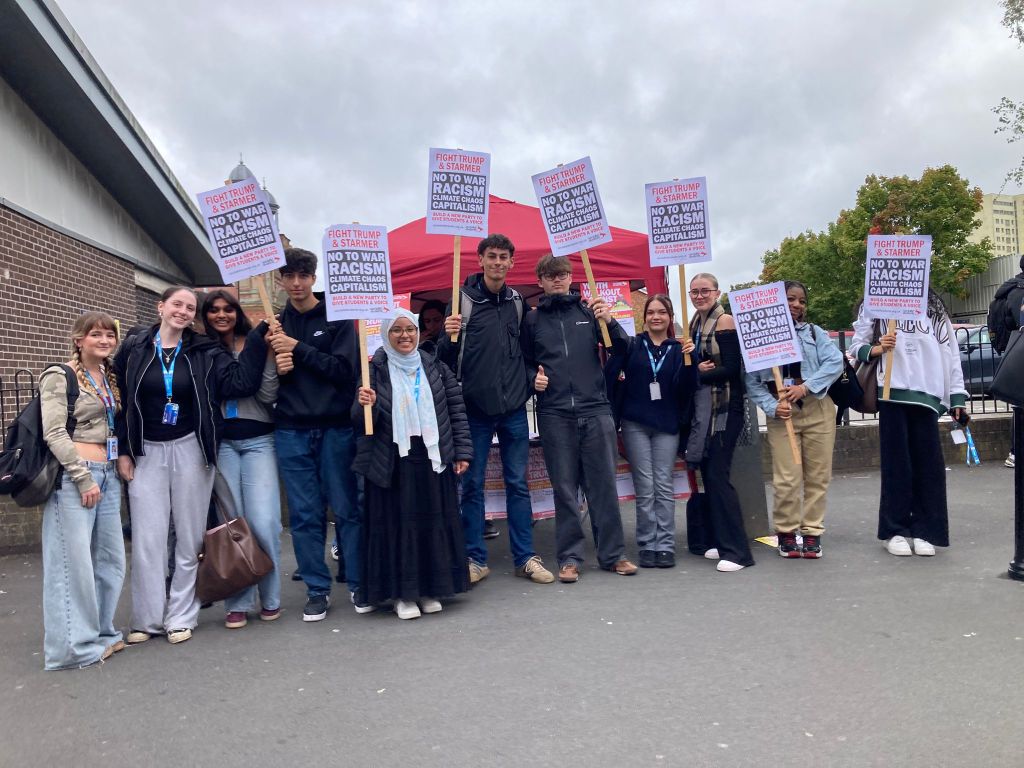
Socialists Students organised a campaign of youth walkouts against Trump to get young people organised against Trump and Starmer’s politics of war and division. To build for the walkouts in London, I helped to give out hundreds of leaflets, put up posters, and met with students to share ideas on how to protest against Trump’s visit.
Hundreds of students across the country, standing up to Trump and the brutal system he represents, walked out of their schools, colleges, and universities on the 17 September – the day Trump was in Windsor Castle feasting on a state banquet with Starmer, the King, and a guest list of billionaire tech CEOs.
It wasn’t easy. At one school in South London, we watched the headteacher rip leaflets out of students’ hands. At another school in East London, the management called the police to intimidate students into not protesting.
The youth walkouts against Trump were a chance to show that young people can fight back when we get organised. Socialist Students is now following up the walkouts with a campaign to get students in schools, sixth forms and colleges building our own students’ unions, as a way for young people to have an organised voice. Not just for one day, but always.
By getting organised as students, we can more effectively link up with the workers who keep our education and society running and build a united movement for the socialist change that we all need.
For that, young people also need a political voice through which we can fight alongside the organised working class. Your Party is an opportunity to do that.
Your Party could give a voice to young people’s anger by demanding fully funded free education, mass building of council houses and rent controls, as part of a socialist programme to transform the lives of working-class and young people.
Why not take that first step by having Zarah Sultana, Jeremy Corbyn, and other Your Party MPs in the Independent Alliance proposing an amendment to the upcoming budget – instead of Labour’s plans for more tuition fee rises, calling for the total abolition of fees, as well as the cancellation of student debt, and the immediate reintroduction of maintenance grants for all students?
Socialist Students members have joined Your Party and are fighting for socialism and working-class struggle to be at the heart of it.
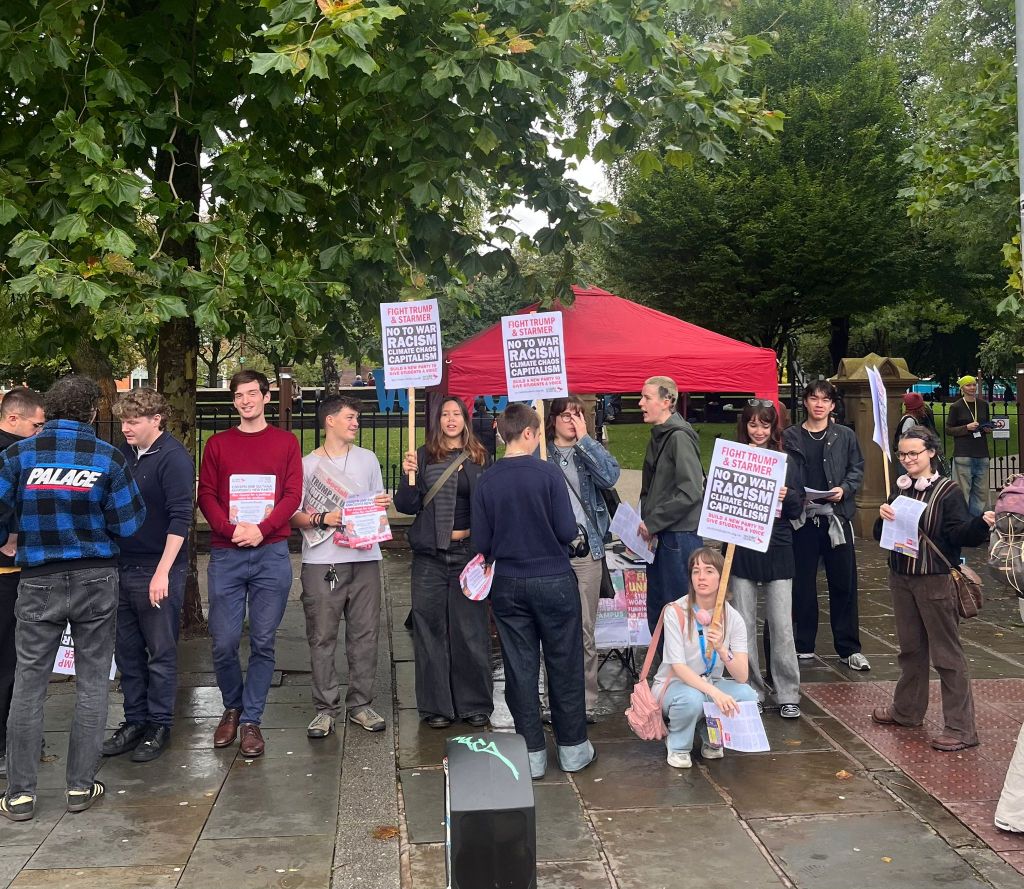
In universities across the country, we’ve organised dozens of meetings discussing how Your Party can be a democratic voice for students. As a next step to building the party we need on campus, we will be inviting Zarah Sultana, Jeremy Corbyn and the other Independent Alliance MPs to be part of a Your Party speaking tour of universities and colleges.
If you want to help build a political voice which can help unite students and young people with the powerful struggles of the working class, then join Socialist Students at your school, college or university to help build the fightback.
Climate change has got the world hurtling towards disaster. The disarray flowing from capitalist governments across the globe has left a trail of destruction, with wildfires raging, sea levels rising, and a potentially very bleak future for young people on the horizon.
The internationally agreed target of capping global warming at 1.5% above preindustrial levels, deemed essential by climate scientists to prevent the worst effects of climate change, is looking dangerously out of reach, with the effects of climate change being no longer predictions of the future, but current events. In early 2025, the LA wildfires burned over 40,000 acres of land, resulting in the loss of the homes of tens of thousands of people. Around 40% of glaciers are already beyond saving and doomed to melt, which will have a massive impact on the billions of people reliant on glaciers to regulate the water used to grow food.
We have also been feeling the effects of climate change in the UK. The summer of 2022 saw temperatures hitting 40 degrees in the UK for the first time in history, leading to rail lines buckling, 20% of hospital operations being cancelled during the peak of the heatwave, and over 3000 people dying prematurely due to the heat. Following this, at the start of July 2023, the planet endured the two hottest days ever recorded.
No Climate Justice Under Capitalism
There is no solution to the climate crisis under capitalism. Capitalism, driven by competition and big business profits before all else, cannot deliver the coordinated, long-term planning required to address the climate crisis. In fact, 71% of all global greenhouse gas emissions since 1988 can be traced to just 100 fossil fuel producers.
This Labour government defends the interests of capitalism, and has demonstrated its lack of willingness to fight the climate crisis head-on. Even before the election, Keir Starmer abandoned Labour’s policy of investing £28 billion into green investment funds, despite the ongoing climate crisis.
The same unwillingness to act can be seen in country after country, where capitalist governments prioritise the profits of ‘their’ capitalist class over the needs of ordinary people and the environment.
While many may hope that international climate agreements may offer a step in the right direction, this has been demonstrated to not be the case. Even if every commitment made at the 2016 Paris Agreement was met, global warming would still go beyond the 2-degree limit that the summit declared as an essential cap. Furthermore, not a single industrialised country is even on track to meet the commitment that it made in 2016.
Donald Trump’s withdrawal from the Paris Agreement is a clear indication that capitalist politicians are willing to abandon climate targets in favour of national interests and short-term profit motives. The US is a massive contributor to climate change, ranking second in the world after China, with the US still having a higher rate of emissions of planet-warming gases per capita.
Rather than attempting to tackle this problem, Trump is ignoring the scientific evidence and encouraging further acceleration of fossil fuel and oil extractions as part of his ‘Drill, Baby, Drill’ pledge! The Trump administration has also launched attacks on universities, pulling funding from diversity, equality and inclusion (DEI) programmes, many of which are based around climate change, which will limit further research into environmental studies.
At a time when global cooperation to end the climate crisis is needed more than ever, Trump’s divisive politics and use of trade tariffs globally make him a clear example of the unplanned chaos that capitalism means for the world today.
Clearly we can’t trust our planet in the hands of the capitalists and their politicians. By fighting to take big businesses into public ownership, including nationalising polluting oil and gas companies under democratic workers’ control and management, the working class could run these industries for social need not profit, and focus on taking co-ordinated steps to make the switch towards environmentally friendly energy sources.
If workers had a democratic say in how society is run, a planned ‘green transition’ away from fossil fuels and towards environmentally friendly alternatives could be achieved without mass job losses for workers in those industries.
Workers’ control
The ‘Lucas Plan’ in the 1970s gives a glimpse of how workers currently employed in environmentally harmful industries could redirect their skills and expertise to lead the charge for a green transition.
Over fifty years ago, workers at Lucas Aerospace – a company making electronic systems for missiles – were threatened with mass redundancies due to deindustrialisation. Instead of accepting these losses, the workers, organised in trade unions, proposed a shift in production from military manufacturing to socially useful goods.
Over 150 ideas with detailed technical designs were included in the plan, offering a glimpse into the opportunities that can arise when workers are given the chance to repurpose their technical expertise into socially useful goods.
Tragically, due to resistance from the management and the lack of workers’ control in the company, the plan was ultimately blocked. Nonetheless, the Lucas Plan is perhaps relevant now more than ever before. It highlights why we need democratic, fighting trade unions to play a central role in the fight against climate change and towards a sustainable future.
The impact of war
This era of capitalist crisis means horror on end – not just seen in the deepening climate crisis, but also in increasing wars, including the genocidal horrors suffered by the Palestinians in Gaza.
War not only displaces millions of people and causes devastating loss of life. It also wreaks havoc on the climate. Russia’s war in Ukraine, for example, has severely damaged biodiversity and inflicted lasting harm on Ukraine’s natural environment.
Examples of capitalist war’s devastating effects on the climate can also be seen throughout history. During the Vietnam War, over 5 million acres of forest and 500,000 acres of farmland were destroyed, with over 400,000 tons of the toxic chemical Napalm being sprayed over the Vietnamese countryside by the US. In Iraq, marshlands were reduced by 90% after President Saddam Hussein ordered major rivers be stopped in order to crush an uprising. Furthermore, Afghanistan has lost nearly 95% of its forest cover in recent decades.
Even during ‘peacetime’, militaries use vast amounts of dirty energy. For example, the US Department of Defense’s 566,000 buildings make up 40% of its fossil fuel consumption. These structures include training centres, dormitories, factories, and other facilities across the department’s nearly 800 bases worldwide. As nations continue to boost military spending in an increasingly multipolar and unstable world, the climate continues to bear the consequences.
Youth vs climate chaos
The message is clear: young people aren’t willing to pay the price for capitalism’s exploitation of the climate, and failure to give us a future. The climate crisis is pushing more and more students and young people into action. As well as countless grassroots youth-led campaigns taking shape in various communities, the ‘School Strike for Climate’ movement saw millions of students across the globe mobilise in protest against climate change, demonstrating that a new generation of young people have been pushed into action. After all, young people are now entering into a world of climate breakdown, increased militarisation, and vast economic inequality. Now, more than ever, young people are seeking an alternative system which can provide a genuine way forwards.
While many young people may have looked to the Green Party, hoping that they may provide an alternative, their actions have fallen short. For example, the party voted through £51 million in cuts to Bristol City Council, a move defended by Green council leader Tony Dyer as a necessity, as he explained in a BBC interview that they were simply having to “work within the constraints that are placed upon us.” This just exposes the Greens’ lack of a clear, transformative vision for a socialist society, which is vital for any party looking to stand up to the capitalist system and its demands that the working class pay for the bosses’ climate catastrophe.
As Labour leader, Jeremy Corbyn’s 2019 manifesto included a £250 billion green transformation fund, a commitment to a publicly owned national grid, and for the “supply arms of the big six energy companies to be brought into public ownership”. His manifesto, which also included other bold policies such as the scrapping of tuition fees, electrified millions of young people.
Now Corbyn has joined Zarah Sultana in pledging to build a new party to take on Starmer’s Labour. Socialist Students welcomes this as a potential major step forward in fighting climate change and capitalism. As a bare minimum, Corbyn’s green policies from 2019 would be a starting point, from which a mass movement for socialist change, not climate change, could be built.
Under a socialist system, the banks and major industries – including the major energy companies – would be placed in the hands of workers, not the capitalist bosses. By cooperating and discussing together, it would be possible to democratically draw up a plan of production based on human need, including the need for a healthy environment. The world’s massive wealth, resources and technology could be steered towards ensuring we live sustainably. Millions of high-quality, eco-friendly jobs would be created as societies shift rapidly towards green energy. Decisions about where to locate renewable energy production could be made democratically, with proper community consultation.
Socialist Students campaigns at schools, colleges, and universities across the country – to allow young people to make their voices heard in the fight for a viable socialist future, in which the needs of people and the planet which we live on are no longer secondary to profit. If you agree, then join us this term.
Build ‘Your Party’ to fight for free education and socialism
Starmer’s Labour government has confirmed its plans for university tuition fees to go up every year. Left up to Labour, our fees will rise to well over £10,000 by 2029. That’s after fees have already gone up this term – the first rise in almost a decade.
And what do students get? Not only are we set to graduate with even more student debt, our maintenance loans don’t even cover the cost of housing, let alone other essentials. Even those receiving the maximum maintenance loan this year would need to take 20 hours of paid work per week just to reach a basic standard of living.
Some vice chancellors are even looking at ‘mergers’ with other universities. But why should they get to decide this over the heads of thousands of students and staff? Their record is one of running our universities into the ground, in collaboration with successive Tory and Labour governments. We can’t trust any of them with our education, because they all accept a capitalist system that puts the profits of the super-rich before the needs of the vast majority – including the right to a decent education.
Workers have fought back – students can organise too!
By taking strike action last year, university workers were able to halt planned cuts in several universities. In Scotland and Wales, staff also won millions of pounds in extra government funding through their strikes.
Imagine how much more funding could be forced from the government if there was strike action on all campuses across the country! That’s why Socialist Students supports university workers taking strike action, including supporting a vote to strike in the current UK-wide strike ballots by four campus unions (UCU, Unison, Unite, EIS).
Socialist Students members will be on the picket line supporting staff in our shared struggle for funding, not fees and cuts. We campaign for student unions to be democratic, fighting organisations that give us a voice – including committing to building student solidarity whenever staff take strike action for better pay, conditions and funding.
As a step towards the national representation students really deserve, even a handful of SUs linking up nationwide to coordinate campaigns for proper funding – not more fees and cuts – could have a big impact.
We won’t accept their crisis
The university sector is in a deep funding crisis. But the only ‘solution’ offered by this pro-big business Labour government is to raise fees and encourage even more cuts, pushing the burden even further onto staff and students.
Why should we pay the price, at a time when the rich have never been richer? The FTSE 100 biggest corporations in Britain have been paying out around £85 billion annually to their shareholders. Students and staff need to unite in a movement that could put that wealth in our hands in order to fully fund education. That would include making education free for all, by abolishing tuition fees and providing maintenance grants that actually cover students’ living costs.
If education was fully funded, university managements would not be incentivised to invest our tuition fees in arms manufacturers and other shady companies in order to boost income. They would have no justifications for making cuts. Student housing could be massively expanded and improved, with rent controls introduced to ensure no student is paying the majority of their income on a place to live.
Your Party must seriously fight for free education
Socialist Students initiated the Funding Not Fees campaign last year, as a means to get students organised alongside staff in a movement for fully funded, free education. As well as holding protests on dozens of campuses, a key part of the campaign has been lobbying MPs – fighting for our movement to have a political voice.
When Corbyn was leader of the Labour Party, his anti-austerity, anti-war policies enthused hundreds of thousands of young people. A major reason for that was his offer of free education in the 2017 and 2019 general elections.
Now students have the chance for there to be a mass party that will fight fees and cuts, and fund education by making the super-rich pay.
Just the prospect of a new party fighting ‘for the many, not the few’ has Labour under pressure. At the same time as raising fees, the government has been forced to announce the reintroduction of maintenance grants for tens of thousands of students. While this is far from adequate, it is nonetheless a concession to the anger of millions of working-class and young people, who are desperately looking for a political alternative to Starmer’s war and austerity agenda.
Socialist Students members are joining Your Party and will do all we can for it to fight for free education, and a real socialist alternative to the misery that capitalism means for working-class and young people.
For a mass weekend demonstration against Labour austerity
Socialist Students is supporting trade union activists calling on the TUC (the organisation bringing together 5.5 million trade union members) to name the date for a mass weekend demonstration against Labour austerity – ideally Saturday 22 November, just before the Autumn Budget on Wednesday 26 November.
We think Corbyn, Sultana and Your Party members should amplify the call for such a weekend demonstration, which could act as a launchpad for sustained trade union action in defence of workers and young people – including against tuition fee rises and cuts to university jobs.
What better way to announce Your Party as force through which young people could fight for a real future, a week before the founding conference on November 29-30?
Build a movement for:
No fee rises! Scrap tuition fees and cancel student debt
Bring back maintenance grants for all students, rising with inflation
Stop all cuts and closures on campus
Rent controls in student accommodation
End low pay and precarious employment
Divestment from arms and big business – no place for profiteers from war and exploitation on our campus
A political voice for students that fights to take the wealth off the 1% and for socialism
Lottie Young Cambridge Socialist Students Article taken from Autumn 2025 edition of the Socialist Student magazine
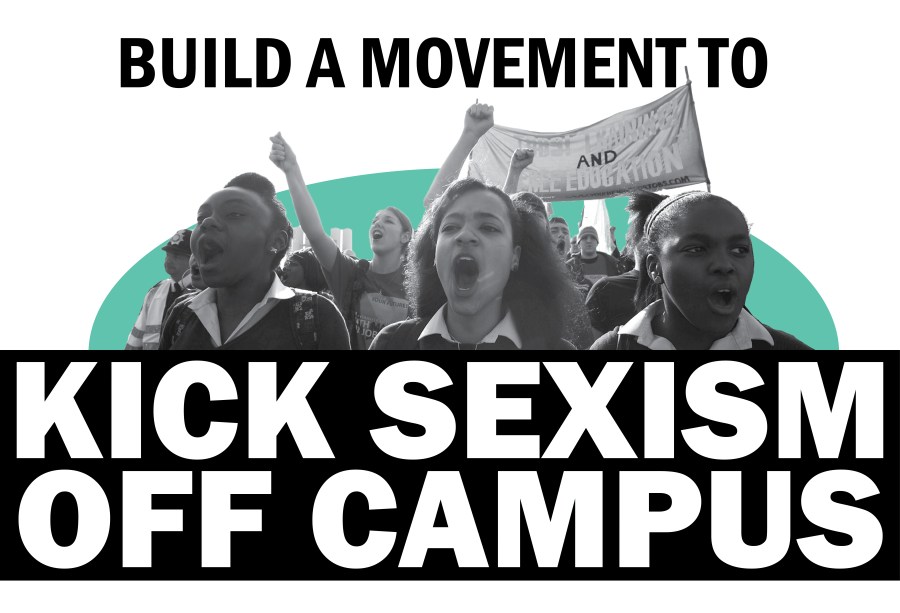
Sexism is an enduring problem in universities that has significant impacts on students. Sexual harassment, objectifying and misogynistic comments from classmates, drink spiking, and sexual assault are common. These attitudes are a product of and perpetuated by capitalism, which is a system based on exploitation and inequality. Today, women’s lives are vastly different from even a few decades ago. Struggles for personal autonomy, financial independence, and legal rights –such as equal pay and access to education – have made gains. At the same time, these gains are not conclusive, and the horrors of sexism can still be seen, such as the murder of Sarah Everard by an off-duty police officer.
A survey of 4,491 students by Revolt Sexual Assault found that 70% of female students had experienced sexual violence, with 25% of these students reporting that they skipped lectures, tutorials, or changed certain modules to avoid their attackers, and a shocking 16% ended their studies as a result of the violence and harassment they experienced.
It is clear that whilst attitudes towards women in universities have experienced some progress – with women now able to earn degrees, enter into careers in academia, and hold positions of leadership in universities – we are still incredibly far from the elimination of sexism and sexual violence within universities and wider society.
These shocking statistics come amidst the years of cuts to services and infrastructure for students, including campus lighting, night transport, counselling services, student bursaries, and the funding of programmes to tackle on-campus sexism. The fact that only 6% of respondents felt that they could report their assault to their university shows that current university services are not helping students to feel comfortable, safe, and supported on campus.
Fight for funding and control of our campuses
In 2023, the average salary for the vice chancellor across the UK’s twenty-four Russell Group universities exceeded £400,000 (with the vice chancellor of Oxford University earning a staggering £1,048,000), with more than two-thirds of them receiving pay rises. While students are left to deal with rising tuition fees, the cost-of-living crisis, and cuts to education – including the subsequent lack of prevention of sexual violence – the decision-makers are raking in the cash.
If we can’t trust the cutting university bosses to keep us safe, then students have to fight to guarantee this right ourselves. That should start with student unions linking up with trade unions to campaign against sexual harassment in schools, colleges and universities. Part of that should be campaigning for democratically elected committees of students and staff to be in charge of investigating reports of sexism and sexual violence on campus, ensuring that the processes are effectively implemented and accessible to those who need them.
The money is clearly there in society to create fundamental change for all students, but it is going into the pockets of a select few instead. Socialist Students has initiated the Funding not Fees campaign to build a movement for fully funded, free education – paid for by taking the wealth out the hands of the super-rich.
Imagine what we could do if we had all the resources we need for education. We could scrap tuition fees and introduce maintenance grants that actually cover the cost of living. There could be massive investment in things like campus lighting and secure student housing. We could make sure that every university campus had free-to-use, properly staffed creche facilities, so that parents with young children could attend classes.
How to take on ‘lad culture’
Many measures within universities to tackle sexism are aimed at quelling ‘lad culture’. This sees sexism and sexual violence as deriving from the behaviour of individual or groups of men, or a culture among young men which encourages sexism.
Misogynistc ideas exist across society, and can even become more prominent among sections. The Revolt Sexual Assault survey found 42% of respondents agreed that actions constituting sexual assault and harassment had become “normalised” at university. There are also stories of disgusting sexist messages shared on many student group chats. For example, a group chat of Durham University students included discussions of sleeping with ‘a different bird every night for a bed’ and ‘posh lads’ competing to sleep with the ‘poorest girl’.
Students absolutely have the right to ‘call out’ derogatory comments made by individual men, but what could most effectively stamp out sexism and misogyny on a campus- and society-wide basis is a mass movement against sexism and for the things we all need, uniting people of all genders in a common struggle. Today working-class and young people’s struggles against all forms of oppression have been pushed back. Previous generations were able to use their collective weight and joint interest in challenging reactionary ideas to make gains against sexism.
It is no coincidence that the propaganda of Andrew Tate and Co. has become more popular during the huge crisis of capitalism which exists today and the misery which comes with it. But limiting campaigning against sexism to opposing male ‘culture’ or individual sexist men, without acknowledging that the capitalism system embraces and promotes gender inequality and sexism, also doesn’t offer women a way forward. It can also subsequently repel men from participating in the fight against sexism (and thus capitalism) instead of uniting the working class in a mass struggle against oppression, both on campus and beyond.
A socialist alternative to sexism and capitalism
There are many examples of how capitalism benefits from promoting gender inequality and sexism. The notion that women should care for both the family and the home is promoted because it means that women will continue to do this unpaid work, subsequently saving the capitalist class billions, which would otherwise need to be spent on public services – like expanded childcare and social care – or on increased wages so that those services could be bought privately in the market. The objectification of women and unattainable beauty standards are promoted by the fashion industry to sell their products, continuously promising women that they can help them reach this ‘ideal’ form of attractiveness. And finally, sexism, which more often than not causes strain between men and women in society, is useful to the ruling class as it encourages the division of the working class.
To truly eliminate the sexist ideas and ‘culture’, the dismantling of capitalism and the socialist transformation of society is necessary, for it is capitalism that drives sexism and misogyny. A socialist society would be one in which public and state organisations and institutions (including universities) were under the democratic control of workers and service users; in which society was democratically planned for need not profit; and in which the idea of gender norms and inequality were no longer promoted.
Whilst this would not instantaneously eradicate gender norms that have been embedded in class society, the socialist transformation would dismantle the structures and means through which those ideas have been sustained, thus forming a society in which gender norms, sexist ideas, and gender-based power imbalances would no longer be relevant. Therefore, the ‘lad’ culture and the deeply ingrained sexist values within our society which significantly drive sexism on-campus would be eliminated.
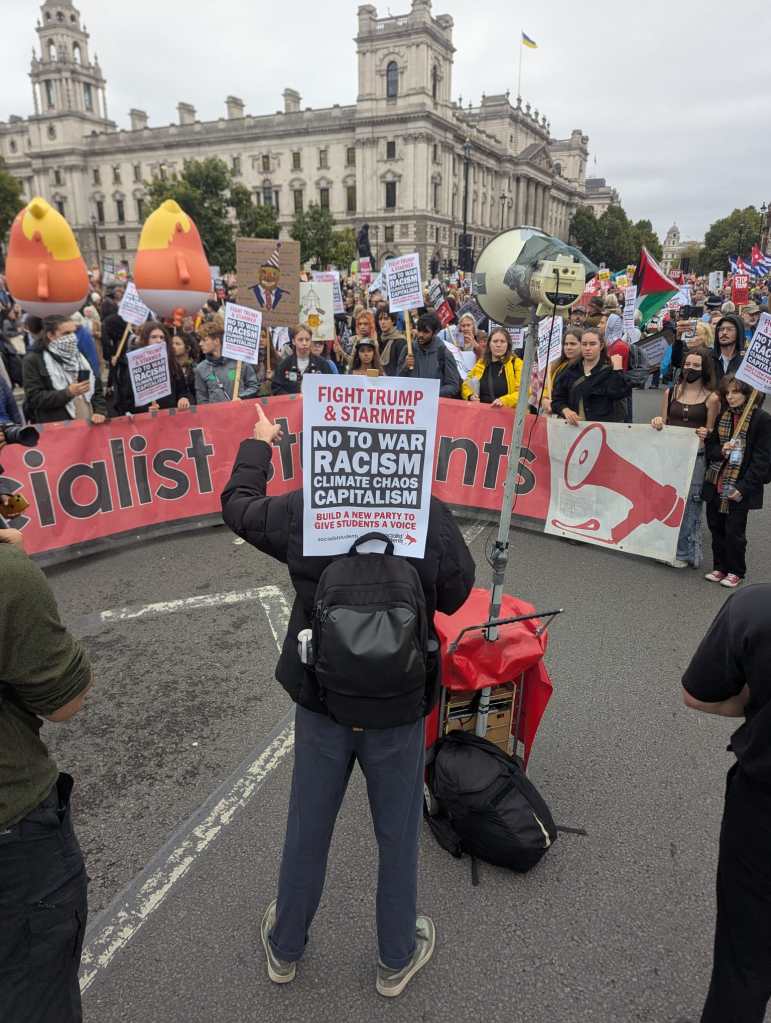
Hundreds of school and college students walked out to protest Donald Trump’s state visit to the UK on 17 September. On the thousands-strong protest through central London, the Socialist Students contingent was by far the most lively, youthful and politically bold. Our chants and slogans were not just drawing attention to Trump and the role he is playing, but also to Keir Starmer’s complicity in war, genocide, and defending the profits of the billionaires.
In Liverpool 75 walked out, there were 25 in Leeds, 15 from a Sheffield sixth form, 30 from one college in Nuneaton, 25 in Preston, and many more at youth protests around the country. The Trump walkouts showed that we can take matters into our own hands and have a voice when we organise and fight back.
Our walkouts forced their way into the national media. The government had been doing their best to keep Trump’s visit under wraps, knowing the anger it would provoke. But our campaign got onto ITV and BBC, into the Independent newspaper, even over the pond into Time magazine – which has twice named Trump ‘Man of the year’!
Right to protest
Hundreds walked out against Trump, but it would have been many more if not for the police being called on students to try to intimidate us into not exercising our right to protest.
In west London, about a dozen police officers were waiting at the tube station to try to intercept students travelling to the central London demo. In south London, a headteacher called the police on us, as well as ripping up leaflets that students were being handed as they were going into school.
In east London, hundreds of students spilled out into the playground at lunch, ready to walk out and join the protests in central London. They were prevented from doing so by a police van as well as about a dozen police officers at the school gates.
In north London, headteachers in Enfield were communicating with each other and the police to try and clamp down on student exercising their right to protest. That didn’t stop nine students walking out at one school.
Despite all the obstacles, when we are organised, we can overcome all the barriers put in our way. We can have a say over what goes on in our lives.
Schools, colleges, sixth forms… our entire capitalist education system is designed to strip away young peoples’ confidence to take action: restrictive rules try to teach us from a young age to obey authority; there is a complete lack of a say over our curriculum and what we get taught; gates are locked to keep us in all day, trapping us in prison-like conditions; students are thrown into ‘isolation rooms’ as punishment, facing a wall in solitary confinement conditions. All this is designed to make us feel powerless. And it’s not accidental.
This capitalist system we live under is about making profit for a tiny few at the top of society, a super-rich minority, at the expense of everyone else. It means mega wealth for the billionaires while poverty, war, and climate destruction become the norm. Capitalism will look for all the ways it can to maintain this unequal arrangement, that includes trying to drill into us from a young age, while we are in school, that we can’t fight back to change things.
The youth walkouts against Trump were a way to show that we can fight back. We sent a clear message to Trump, Starmer and the capitalist class that we won’t accept their agenda.
Build students unions
As a first next step, Socialist Students is calling on young people to build our own students unions. These can be spaces where students in a school or college can come together to share ideas about how to fight back and to make a plan of action. Why not organise a meeting of everyone who is interested, including those who joined walkouts and other supporters?
The meeting could take place in the playground, or a quiet indoor space, or there might be sympathetic teachers who are be open to allowing us to meet in their classroom, for example. A starting point could be to find out which teachers are trade union reps for the education unions in your school.
Then the meeting can decide collectively what campaigning issues to take up. There might be anger at what is going on in the world – war, poverty, climate catastrophe. But locally there might be anger at canteen prices, the cost of school trips, uniform policies… At some schools, students have been told that they are unable to wear political badges, for example.
Once a main campaigning priority has been agreed on, one idea could be to write a short protest letter setting out the issues, getting as many students as possible to sign it, and to take a list of demands to the headteacher. That pressure could be increased by organising a protest at lunchtime or outside the gates after school. A march to the local council offices could lobby a meeting of local councillors to ask what they are going to do to address the issues. There could also be a lobby of a local MP.
Students in east London prevented from protesting plan to write to their local MP Dianne Abbott to ask for her support in demanding the right to protest.
Socialist Students groups can also get together to attend protests outside of school or college. Socialist Students will have a contingent on the 11 October Gaza demo in London, for example. In Liverpool on 27 September, there is a protest outside of Labour Party conference, which Socialist Students will be attending – exposing all of the ways in which the Labour government is attacking our futures.
A new party fighting for our future
Events across the whole of society shape the conditions which we grow up in. We have a Labour government hiking uni fees, cutting funding to schools and public services, that has attacked benefits for disabled people including getting rid of PIP for under-18s.
Outside of schools and colleges, young people need a political voice. Many have been enthused by Jeremy Corbyn and Zarah Sultana’s ‘Your Party’. It is polling highest among 18 to 24-year-olds. Socialist Students calls for a new mass workers’ party that fights for a future for young people.
As leader of the Labour Party, Corbyn called for free education, mass council house building and a fully funded NHS, and many other policies to make the super-rich pay. Now young people again have a chance for a political party to fight for those things. There is the opportunity for a mass party that puts across an anti-war, socialist alternative to Labour, as well as to Reform. Socialist Students says any new party should be a democratic socialist party. We are holding meetings on 50+ university campuses across the country to discuss that.
Young people need a voice – our own students unions organising to fight in our collective interests. And a political voice, a party that links our struggles to those of other young people and the working class as a whole.
We have to fight for a future. That is linked to the struggle for a socialist society as an alternative to capitalism. That would be a system where the banks and major industries are owned and run by the working class, democratically discussing and collaborating to draw up a plan of how to use the wealth and resources in society to meet the needs of all. Internationally, that would lay the basis for an end to war and climate disaster. Join Socialist Students to fight for a future. Fight for socialist change.
More than half a million people signed up to Jeremy Corbyn and Zarah Sultana’s call for a new party within a few days of its announcement, with hundreds of thousands more since. Polls show that support for the potential new party is highest among young people, and would win among 18 to 24-year-olds – and that’s before the party has even been formed!
And no wonder there has been this enthusiasm for a political alternative, when you look at the world on offer to young people today.
In Gaza, Palestinians are suffering genocidal horror. The number of people fleeing war and persecution globally has never been higher. Capitalist politicians and the billionaires they defend just sit on their hands, while the climate crisis threatens humanity.
As students, we face the soaring cost of living, dismal housing, and more and more student debt. The prospect of one day having a good job and a decent home that we can afford seems more distant than ever.
None of the establishment parties have any answers to this situation. They are all united in their defence of a capitalist system that puts big business profits before the needs of humanity and our planet.
After 14 years of brutal Tory austerity, Labour has only offered more of the same: cuts to benefits, attacks on trans people and other minority groups, raising tuition fees, and supporting the Israeli state’s slaughter. Starmer has clamped down on the right to protest, to try and prevent even more opposition to his rule, but so far he has only provoked more anger.
Reform UK have tried to cash in, cynically posing as an alternative. But all they do is pose as anti-establishment, while offering no alternative to austerity in local councils, and all the while stoking racism and division which weakens our ability to fight back.
OUR CHANCE FOR A POLITICAL VOICE
For the thousands of young people who have signed up to Corbyn and Sultana’s initiative – ‘Your Party’ – the prospect of a new party will therefore be a ray of hope in the fight for a better future: ‘Finally, our chance to have a political voice that fights for us, not the warmongers and the billionaires’!
When Corbyn was leader of the Labour Party, there was huge enthusiasm among young people for his anti-austerity, anti-war policies. In the 2017 and 2019 general elections, Corbyn offered the chance for free education: an end to tuition fees, and maintenance grants instead of loans.
On election day, students literally queued around the block to vote for Corbyn. The capitalist media called it a ‘youthquake’ – not as praise, but out of fear of the mass movement that Corbyn’s programme generated.
Today, there is again the possibility of a major party that fights for free education, along with other policies that could make a real difference to our lives – like rent controls and mass council housebuilding, a minimum wage of at least £15-an-hour for all, and a massive ‘green transition’ away from fossil fuels. We could have a party that fights to defend the right to protest, and backs up movements fighting to end the Israeli state’s terror and occupation of the Palestinian territories.
To win all these things and more, the party will have to draw its strength from the mass mood to fight back that exists under this Labour government. By giving a lead to and reinforcing the collective action of working-class and young people, the party would be able to spearhead a movement capable of wrenching wealth, resources and control of society out of the hands of the super-rich and big business.
So if you want to discuss, campaign and fight now for a socialist alternative to the chaos facing our futures, then you should get involved in your local Socialist Students society this year.
But imagine how much further that fight would be strengthened if we had a new mass party giving a voice to student organisations, trade unions, anti-cuts campaigns, climate and anti-war movements, and more. A political voice linking our struggles as students to everyone else in society who is fighting back under this rotten capitalist system.
That’s why Socialist Students will be joining Corbyn and Sultana’s new party this year. And if you want to fight for this to be a democratic party, rooted in the struggles of working-class and young people, which fights for socialist policies – and join up with students in socialist societies on 50+ campuses doing the same! – then Socialist Students is the organisation for you.
Socialist Students hosting an ‘open mic’ at the end of the Trump Not Welcome demonstration in London, 17.09.25
Across the UK, students have walked out in protest against Donald Trump’s state visit.
Trump was invited by our prime minister, Keir Starmer, to join him for a luxury banquet with the King. Thousands of miles away from the royal palace, the Palestinians in Gaza meanwhile continue to starve – a horror that Trump and Starmer have backed up through their support of the Israeli state’s war of terror.
By walking out of school, college and university on September 17, young people have sent a clear message to Trump, Starmer and all the big business politicians: “We won’t stand for your agenda of war, poverty and discrimination. We’re ready to fight for our futures!”
The youth walkouts against Trump’s state visit show that young people can have a voice when we unite and fight together. Now we need to get organised in our schools and colleges, to make sure the voice of our generation is heard as loudly and consistently as possible, so that we can have a real say over what goes on in our lives.
We need a say in stopping our government supporting war in Gaza and all around the world. We need to demand and fight for our right to protest. We need a say in how our education is run. And that’s just the start of what we need to fight for, if we want a world where our lives come before profit!
That’s why Socialist Students is calling on young people to build students’ unions in schools and colleges across the UK, as the best way to continue the fight for our futures beyond September 17.
Students’ unions can give us a voice
A students’ union means young people coming together, sharing our ideas for how to fight back, and then all pulling together with a plan to win.
The first step is holding a meeting of everyone who is interested in campaigning in your school/college. You could start by inviting anyone who protested against Trump. But to get even more people involved, you could put up posters and give out leaflets to other students, advertising the date and time for your meeting.
In the meeting, everyone can have a chance to share their thoughts on what the main issues are facing students in your school/college, and what students should do about it. There might be anger at war, racism or the climate crisis. Or maybe students have had enough of high cafeteria prices, or the expensive cost of school trips. Students have the right to protest on all of this and more!
There are lots of ways to campaign on the issues students face. You could hold a protest at lunchtime. You could write a protest letter to your headteacher, explaining the issues you face and the changes you want to see, and get as many students as possible to sign it. You could all organise to attend an upcoming protest in your town/city, and make posters to bring with you.
The key thing is getting people to discuss and agree on an issue, make a plan to protest, and then do it – as a team! That’s the power of a students’ union.
Do you want help building a students’ union at your school/college?
Socialist Students is an organisation of young people who want to fight for socialism. We are active in schools, colleges and universities across the UK.
Socialism means a world where the needs of people come before the profits of big business and the super-rich. Socialism would be a world where people work together to end the problems facing humanity: war, climate change, poverty, racism and all forms of discrimination.
Socialist Students fights now for every step possible towards a socialist world. We know the wealth exists to give everyone a good life, but it’s in the hands of a tiny minority of super-rich people: the capitalists. In all our campaigns, we point towards the need for a movement of working-class and young people to take that wealth into our hands instead – for socialist change, not capitalist chaos.
Young people are bracing for yet another tuition fee attack from Keir Starmer’s austerity machine. Last year’s tuition fee rise, the first since the Con-Dem government tripled fees, may be the first of many, as the pro-big business Labour government tries to placate the markets by making us pay.
The broken funding model of marketised education, along with rocketing housing prices and collapsing services, has already plunged students into a cost-of-living crisis. Bereft of a political voice fighting in our interests, students on average have to work 20 hours every week on top of our studies just to cover our essential needs. The maximum maintenance loan of £10,544 covers just half the costs a first-year student faces.
Politicians and university bosses continue to make us foot the bill for their deepening crisis. Over 40% of UK universities will be dropping into deficits next year, with fee rises, staff cuts and worsening teaching standards to plaster over the central issue: there aren’t enough resources invested in education.
Some universities and private landlords have made a killing with an 18% increase in student rents in the last two academic years alone. Students have nothing left to give, 65% of us already cut back on food spending and other essentials to make ends meet. So the message from the campuses is clear: no to the cost-of-living crisis!
Polls suggest a Corbyn-led party would actually win a general election amongst 18 to 24-year-olds. No wonder there’s been enthusiasm amongst young people since Jeremy Corbyn and Zarah Sultana announced steps towards setting up ‘Your Party’. The Corbyn-led Labour Party electrified students and young people with the commitment to free education.
Socialist Students believes the launch of such a party would be a welcome challenge to establishment politics. A new party involving campus activists and trade unions to launch a serious fightback against both the failing marketised funding model, and the rotten capitalist system behind it would be a massive step forward. Thousands of cash-strapped students could be prepared to fight for a socialist programme for education: including an end to fees, grants not loans, an end to redundancies and the complete renationalisation of higher education.